3 Hard Times Friends

The latest episode of Everything Happens drove me home a few hours ago. The guest was Sam Wells, Vicar of St Martin-in-the-Fields in Trafalgar Square, London, since 2012. The conversation centered on this question: How do you stay close to someone whose pain you can’t fix, whose questions you can’t answer? I encourage you to listen.

In her conclusion, Kate shared these thoughts:

I loved Sam’s three categories for being a friend through hard times. There is being for someone. That’s all the actiony stuff that we can think of when someone is struggling. That’s the boy, oh boy are they helpful. Dropping off a meal, organizing a fundraiser, driving them to and from an appointment, just the like checking it, doing it in the mix. Then there’s the being in with someone. That’s practicing empathy of seeing and understanding someone’s painful realities, of not making them feel other. Like there’s this Plexiglas wall between you. And then there’s being with them. Now, this is the toughie. Being with means staying present without any words to say, any tangible comfort to offer, or any ability to fix their circumstance. Being a friend involves one or all of those three. Being for, in, and with

I was baptized into being with in a room at Baptist Hospital in Gadsden, Alabama. I was 12. My dad was the cancer patient in the bed needing his trachea tube suctioned periodically. There was no talking. There was little to do. There was little choice but to be with.

Over the last 44 years I’ve tried to be a hard times friend. There’s been a lot of being for. Not as much being in with, but some. But it’s been the last decade where being with has resurfaced the most. And I have to say it comes with a little “no thank you” mixed with “what an honor.” “No thank you” because it rarely comes without flashbacks. “What an honor” because it’s sacred, beautiful, and lifegiving.

I recognize with Kate that hard times friends can be one or all three. Truth is, we can rest in being the right one in the moment; there’s no pressure to be them all. As for me, I’m striving to recognize when it’s my time to be with, run toward the pain I can’t fix, and sit in the unanswered.

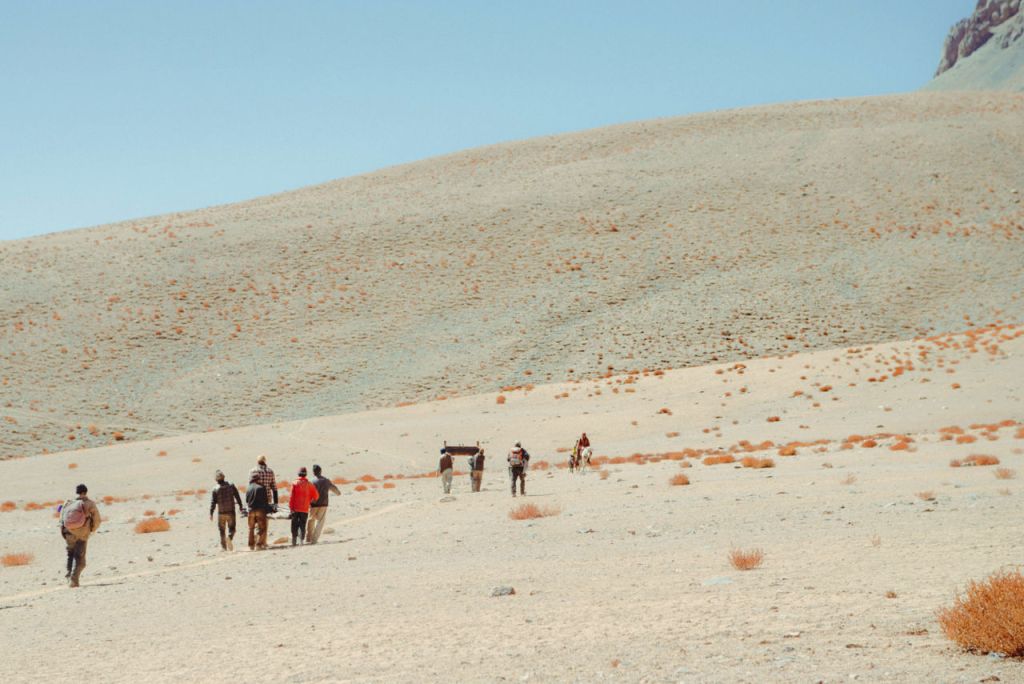
Photo by Frederic Köberl on Unsplash

Bruised

For a while now, part of my weekends is listening to the latest episode of 20 The Countdown Magazine.

The song at #7 this week has been on the countdown for 27 weeks. That says something.

The lyric that said something to me this morning was “I’m bruised but I’m not destroyed.” Based on 2 Corinthians 4:9, it seems like a relatable image to how many people in our community feel today.

I suppose it depends on their definitions of bruised and destroyed.

By the dictionary, bruised means damaged or wounded by or as if by being struck; destroyed means put an end to the existence of (something), defeat (someone) utterly, ruin (someone) emotionally or spiritually.

It’s hard for me to imagine most don’t feel bruised. It’s easy to imagine that many do feel destroyed.

I can’t say I align completely with the mindset behind this song. But I do hope for everyone, whether feeling bruised or destroyed, they will find peace that where they find themselves today is not the end. Fear and shame do not have to reign. Keep calling out from your woundedness. Healing and restoration await.

As You Live and Move and Breathe

Came across a song new to me today that voiced a prayer of personal need. Before sharing it, do you know or remember this one?

Matt Maher gave us this song 11 years ago, a prayer declaring an awareness and desperation regarding needing God. There are moments in life where this prayer song matches our spirit. In those moments, I believe God is like a father, thankful his child trusts their need with him.

The song I found today is also a prayer song about need, but the declaration isn’t a cry for help. Instead, the song is a declaration of belief in God’s ability to meet needs and, therefore, a desire to stay close to him. Why? Because he knows what we need. That “because” leaves the lyricist to declare something about himself. He wants everything he does and says to lead him back to the one who knows what he needs.

Two songs about human need. Two songs voicing a prayer of faith. Wherever your faith is today regarding your needs, chances are one of these songs captures it.

As you live and move and breathe, sing along. He’s listening.

Pursuing and Exiting Silence

The final segment from this podcast episode transcript to highlight focuses on the value of silence. Opinion: silence should be a love language.

Parker: I’m grateful to the Quaker tradition. I’ve been hanging around with Quakers since I was 35, I guess for 50 years, and I’ve learned a lot from them about the power, the value of silence, which I did not learn in my mainline Protestant upbringing… whenever the minister said in the church, I grew up in the Methodist church, now we’ll have a moment of silence. The organ broke into loud pouring for sixty seconds so that none of us could hear what we were thinking. Which was precisely the point.

Kate: Oh my gosh my son said something like that the other day. He goes, why do you keep, he said it so sweetly, but he was like, why do you keep bringing me to this place where they keep saying listen to God, but everyone’s talking.

Parker: Exactly, oh I like that a lot. Tell your son that’s so good. Exactly. So I learned a lot from the Quakers who don’t worship the silence. They worship in silence, and what they’re doing is listening. And Quakerism has its problems, just like every religious tradition or sect does. But I have seen wonderful things come out of that silence where people kind of touch a bedrock of truths. It emerges in vocal ministry, as Quakers call it. And community starts happening around those deeply held concerns. Because so often when we speak from that place of depth, we’re tapping into the aquifer that feeds all the wells. And it turns out that other people, as they tap in, are feeling that same thing or getting that same message. And then we’re poised to do something that’s real and could well make a difference in the world.

“They worship in silence, and what they’re doing is listening.”

Without question, my spiritual formation is strengthened by the amount of silence I naturally have living alone. In the silence I have been freed to listen which, with proper discipline, leads to worship.

In these last three months, I’ve done less writing and reading. When I heard this part of the conversation, I wondered if that may be attributed to my subconscious (mind/body/spirit) leading me to more silence in response to disaster and heartbreak.

Imagine what’s possible when silence is consciously pursued.

  • Healing
  • Forgiveness
  • Grace
  • Clarity
  • Direction
  • Humility
  • Surrender
  • Joy

Imagine what awaits as one speaks upon exiting silence.

Photo by Nathan Anderson on Unsplash

Heartbroken…There…I Said It

“How are you doing?”

It’s an ordinary, everyday question. But some people have a knack for asking it more like, “No, really. How are you doing?”

I’ve got more than my share of them. Over the last four days, three of them pried. I skirted one, dumped on the other, and indulged the last one.

It wasn’t until listening to the end of the podcast episode I posted about yesterday that the one word to describe how I’m doing surfaced. And it’s one I have never used for myself. I’ve felt and experienced it, just never declared it to be a current condition.

Heartbroken.

Kate: If we think of ourselves as a very sad but also kind of broken in certain parts person, it can feel like, well, that’s not the person who is going to be able to help very much, do very much. We’re already consumed by all the things that have made our lives difficult or tragic in the first place. We are already too aware of the fact that we are living inside of like crosscurrents of things we can’t fix. Kids with intractable problems. Parents with intractable problems. Jobs with intractable problems. But you and I both agree that there’s something weird that happens to the broken hearted, is that there’s like, a kind of an inside-out-ness that happens that can make us maybe exactly the right people to live in unfinished times.

Parker: I think so. This level of engagement, either in politics or in personal and communal life seems to me to require the kind of opening that can comes through broken heartedness. Absolutely. So just as you said, I’ve thought a lot about the fact that there are two ways for the heart to break. It can shatter into shards and just lie useless on the floor, never to be put back together again. Or you can exercise your heart on a daily basis by taking in the little losses, the little deaths, you know, those things that are feel hard to absorb, the news that’s hard to absorb, take it and let it exercise that muscle the way a runner exercises muscles so they won’t snap under stress, and the heart has a chance then to become so supple that it will break open into largeness rather than apart in into shards. And, you know, the most trustworthy people in my life are people who have known broken heartedness, and those who have known it in depths. Those are the people I can go to and say, and tell it the way it is for me. And then, and in the process, experience healing. They don’t have answers for me anymore than I have answers for them. But we can have a conversation rooted in broken heartedness and honesty about that experience that goes somewhere humanly, right?

In my inside-out-ness, I have to say I’ve probably been heartbroken for years without acknowledging it. The recent storms and reactions to the election have brought me to this awareness that I’m oddly thankful for.

I ask myself what’s this about. I didn’t personally experience loss from any of the three hurricanes. Nor did I personally lose a bid for public office. What’s there to be brokenhearted about?

The answer may seem obvious to you, but it’s not always been obvious to me. My Enneagram 1, Myers Briggs ISTJ self tends to be pretty cut and dry. But not recently. At least not these last three months.

I’m leaning into the belief that loving your neighbor as yourself means seeing ourselves as one. When the community hurts, you hurt. When the community loses, you lose. When any portion of the country cries and mourns, you cry and mourn.

The years of brokenheartedness I’m most aware of has to do with my personal church history. To see the church in the middle of the polarization of the country these last five years continues to cut deep. This last week, my heart jolted, even collapsed, as one side hurries to make false biblical comparisons while the other huddles in fear and shock. It’s war. And it’s heartbreaking.

On my run this morning I asked myself two questions: 1) How long do I allow myself to be heartbroken over these two things that personally don’t impact me? 2) What am I doing about this status?

I answered the first one with more questions:

  • Is there a formula? Like, three times the amount of time it takes for all the debris to disappear.
  • Isn’t there more to recovery than just removing and repairing the visible damage?
  • Feels like there’s grief everywhere, right? How long does that take?
  • God’s probably been heartbroken over the Church for longer than I’ve been alive. Where does that leave me?
  • Feels like heartbreak is part of life, and I’m just now owning it. Or at least on behalf of my neighbor. I’ve missed it for a long time, right?

As for question two, my best answer for my spirit was this: Don’t Rush.

  • Don’t Rush to Retort
  • Don’t Rush to Judge
  • Don’t Rush to Wholeness
  • Don’t Rush to Solutions
  • Don’t Rush to Fix
  • Don’t Rush to Start the Day
  • Don’t Rush to Comfort

To the one I skirted, I’m heartbroken. There. I said it.

Cover photo credit: https://www.instagram.com/theoriginalrtpix?igsh=MTkydWQ1MG9qMnJiaA==

Honoring Tiny Achievements

Along with back to blogging, I’ve renewed listening to podcast episodes. If I were so inclined, I’d post on a regular basis responses to these episodes. But rather than burden myself with that task, I most often choose to point you to them. But not this time. This episode is too rich. Here’s the first of three responses to a timely episode of Everything Happens.

In Kate‘s conversation with Parker Palmer entitled Standing in the Gap, he shares a twist on journaling worth exploring. Rather than narrow it down, here’s the portion of the transcript for you to hear Parker’s description:

I was talking with this therapist who said, what I want you to do in the midst of this despair you have about being nothing and nobody and of no use, a worm, I want you to start keeping a journal. And I just, you know, drew whatever energy I could and did the fair imitation of a depressed blow up which isn’t a real blow up because you just don’t have the energy for a real blow up. But I said, are you out of your mind? I can’t write a sentence. I can’t read a page. I get lost in the very act of trying to articulate a thought or absorb it sort from the outside. He said, well, I’m not talking about a lengthy discursive journal. I’m talking about a journal of tiny achievements. And I said, what does that mean? And he said, well, for example, you told me that you were finally able to get up at 10:30 this morning, having spent most of the night and morning just in a darkened bedroom hiding under the covers. He says, write that down in the journal. You also you also told me that today you were able to get out on your bike, which is your preferred mode of exercise, because you don’t have to talk to anybody when you’re on a bike. And in this state, you’re incapable of even a simple conversation with a neighbor. You were able to ride your bike for ten minutes. Write it down. Tomorrow, start a new page with a new date. What you’re going to find, if you are faithful to this simple, this journal of tiny achievements, you’re going to find that you’re getting up a little earlier from time to time. You’re going to find that you’re riding your bike a little longer from time to time. The day’s going to come when things are going to start feeling a little more normal from time to time. The pattern of depression is sawtooth. It’s sometimes better, sometimes worse, day in and day out. Now, I was a guy for whom an achievement was writing a new book, selling 100,000 copies, getting great reviews, being invited to give talks and workshops all over the country. That’s how I spent 40 plus years of my life. These didn’t seem like achievements at all. But I today, to this day, in good mental health and in times when things are a little dark, I have recalibrated my sense of what an achievement is, and I embrace myself over much smaller achievements. And at age 85, when I probably don’t have another book in me and I don’t have a lot of post-COVID travel in me, this is probably as important as it was to honor my tiny achievements as it was when I was in deep depression. It’s a tool. And for me, it worked.

Parker has journeyed through several bouts of clinical depression. This suggestion from his therapist has turned into a life-changing, long-lasting practice. He called it a tool. That it is.

I’d also call it a blessing. Why? My last conversation with my spiritual director resulted in my awareness of needing to revive a gratitude exercise I’d abandoned. It’s a tool that helps keep me focused on the best things. It’s grounding. That’s a blessing. I imagine acknowledging tiny achievements also a blessing. Often times, my statements of gratitude seem tiny as well. But boy do they offer recalibration. Seriously, sometimes it’s good to just be grateful for toothpaste and soap. Tiny things usher in humility.

Thank you, Parker Palmer, for encouraging me to not only be grateful for tiny things, but to also honor tiny achievements.

So here we go from the first half of my Sunday:

  • Stopping to get gas before the light came on
  • Retrieving a shopping cart out of the Winn Dixie parking lot bushes so the buggy guy had one less to corral
  • Saving over 30% on groceries (A big shoutout to the inventor of BOGOs…huge achievement)
  • Out of bed after the first alarm…no snooze button today
  • Posting for a second day in a row
  • Not giving in to the temptation to respond to divisive Facebook posts

I encourage you to utilize Parker’s tool before the end of the day. May you find value and peace in your honoring.

Photo by Markus Spiske on Unsplash

Take All the Time You Need

Unintentionally, it’s been a month since my last post. Pre-Milton. Pre-election. Gulf Coast residents have had a month.

I came back to Bradenton October 13th. For me, not much had changed. A few inconveniences. For my community, layers upon layers of change. Some visible. Some yet to be unearthed.

I’ve been struck by this image on my cul-de-sac.

It typifies how it feels to navigate response and recovery. Like the vegetation on the right, those in the line of work to lead response stand tall and strong, seemingly untouched by the winds of change. Those on the left, completely different. At least visibly.

They’re still here, but not the same. They’re bent but not broken. Their roots are exposed. They are vulnerable. They are in need. Recovery is a hope, but can feel untouchable. They lean in the direction of the tall and strong.

My neighbor who lives in the condo behind the leaning vegetation didn’t evacuate. She now leans also. She endured the long, uncertain, and terrifying night. She’s bent but not broken. The exposure of her roots is uncomfortable and has left her scurrying in the fog.

The night of October 9th, many may have felt like Jacob in Genesis 32. That night in Peniel changed him-he even got a new name. He said when it was all over, “I have seen God face to face, and I am still alive.” He left with a limp. He also left processing a life-altering encounter.

Disasters come in our lives. They limp us. We’re tempted to focus on the changes in our world to the point that we don’t stop long enough to notice and tend to the changes to our minds, emotions, spirits, and bodies.

It’s okay to pause. It’s okay to gaze. It’s okay to tend.

Take all the time you need.

This Is Us & Phil Wickham

Like many Florida Gulf Coast residents, I left home yesterday. If you took the time to pause when you locked the door, an extraordinary number of thoughts slammed your mind, body, and soul. These thoughts, built on a mix of emotions, will rise to the surface sooner or later, so it’s good to welcome them now, within reason.

Earlier I wrote this phrase in a message, “Not sure what comes next.” I wasn’t expecting the hit to my chest, the jolt to my brain that came with those words. So I paused to sit with them rather than stuffed them.

Two things followed.

One, I was reminded of a This Is Us scene where Randall and Beth played a game they called Worse Case Scenario. In this clip, Randall shares it with their three girls.

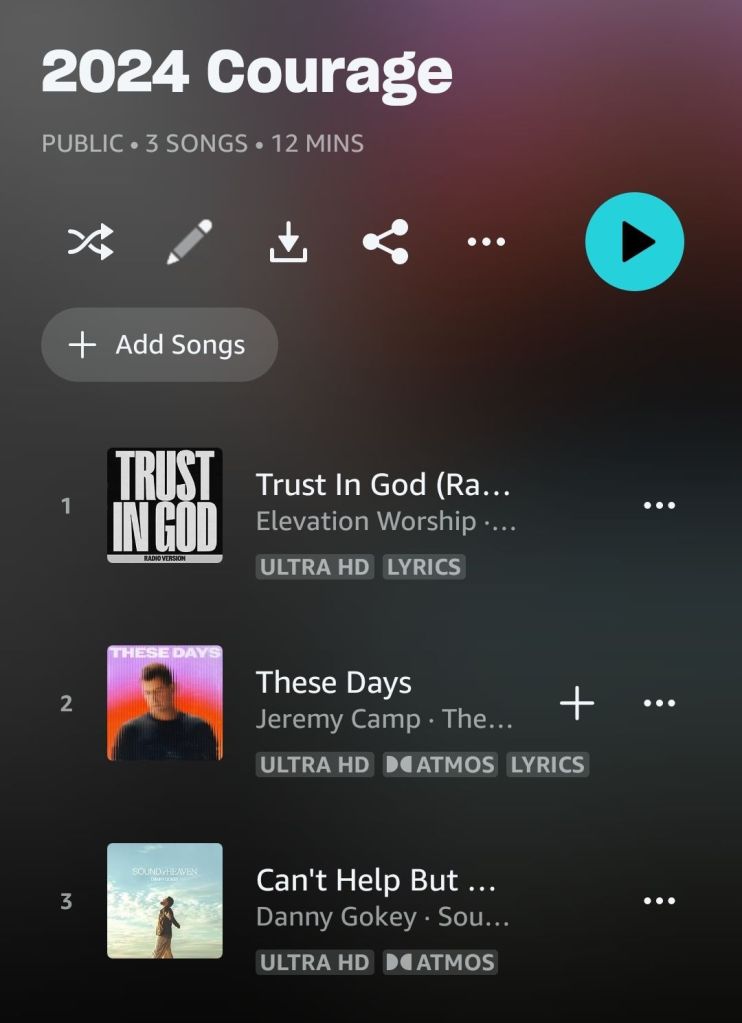
Two, I opened my 2024 playlist based on the word courage. This Phil Wickham song is at the top of the list.

Even in the worse case scenario, the Lord is my Shepherd. His goodness and mercy will follow me all the days of my life. I don’t have to fear; I know He is with me. The table is prepared; the right direction is ahead. All is well is my soul.

Deeper, Stronger Love

About this time last Saturday, I was sitting in the stands of Washington-Grizzly Stadium on the campus of the University of Montana in Missoula waiting for the Zootown Challenge 5k to start. Not too sure how the race would go due to fighting off altitude sickness the last 18 hours, I was anxious to get moving.

When they separated the competitors based on expected pace, I ended up standing by this guy, one of several competitors wearing the same shirt.

I asked, “Tell me about the shirt so many of you are wearing. Are you part of a team?”

“No,” he smiled. “We’re just all here to remember my brother, the guy on our shirts. He died last year. He ran this race the first two years it was put on, so we’re all here to honor him.”

“That’s really amazing. There are a lot of you. How many are there?”

“54. And he’s laughing right now. This is something I never do.”

We chuckled at that thought and ended the short chat with encouragement. Basically, no matter what, we’re going to get this done. The line started moving, and we eventually separated. I passed him once on the course with a nod to keep moving.

Nothing was said about how his brother died. A year later, that wasn’t important to share in a random conversation with a stranger. What was most clear was the brother left behind loved his lost brother and was doing things now because of what he saw and remembers. I’m guessing being in that stadium and running the course was a way for him to say, “I haven’t forgotten you. Odd to say, but I love you probably now more than ever.”

This was fresh in my mind as I had just read these words from Henri Nouwen’s book Life of the Beloved:

I am called to trust that life is a preparation for death as a final act of giving…If love is, indeed, stronger than death, then death has the potential to deepen and strengthen the bonds of love. It was only after Jesus had left his disciples that they were able to grasp what he truly meant to them. But isn’t that true for all who die in love? (Chapter 8, “Given”)

May your loves deepen and strengthen.

A Stroke on the Canvas

Last year I made a traveling decision. Whenever I could, visit art centers and galleries wherever I travel. I’m glad I did.

Reason #1: The beauty created and vulnerably shared by artisans deserves encouragement.

Reason #2: The many mediums available for artistic expression deserve appreciation.

Reason #3: Supporting artists with donations or purchases empowers them to continue producing works of beauty inspiring awe and wellness. You might say I’m making a stroke on the community art canvas. It’s something we all can do that doesn’t require legit talent.

Today I visited The Valley Art Center in Clarkston, Washington. Besides enjoying the displays, I was honored to speak with artist and board member Robin Harvey. She was a wealth of information and shed light on unique approaches the center has that were new to me.

I’d like to give a shout out to these other artists whose works I admired:

If you are in the Clarkston/Lewiston area, you won’t regret stopping by The Valley Art Center.

HINT: Before or after lunch is a good time as there are excellent restaurant options within walking distance.

Photo by Andrian Valeanu on Unsplash