Four Corners Quad Keyah Series Lesson #5

Sunday came. There were two obvious changes. 1) The start time was 30 minutes earlier. 2) The temperature was 12F, by far the coldest day of the weekend.

I thought I was ready. Sure, I was a little tired from the previous two days, but I’ve been more tired and sore at a start line. I felt like I was layered properly. I believed I had eaten and hydrated well. We were running the same course they had ran on Thursday, which I didn’t run. I had been told, however, that it wasn’t a hard course. My mindset was, “Pace yourself. This shouldn’t be too bad. Do what you got to do and hit the road back to Albuquerque.”

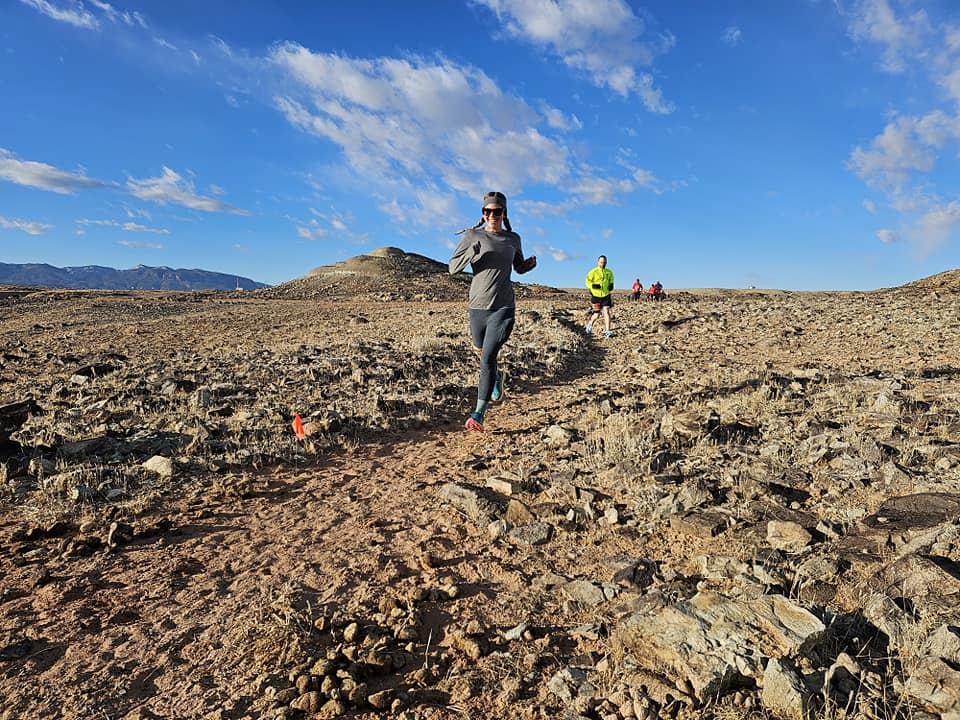
For this course, we first were to run a 5+ mile loop twice in a direction that was new to me. About a mile in it became apparent for the first time that we were gradually running uphill. No canyons on this course like the previous two days. Just straight, but up.

I had thought any concerns about elevation were over. It had not been an issue the entire trip.

It became an issue around mile two. The loop included a turnaround at the top of a hill roughly 2.75 miles in, the highest peak of all 39.3 miles of the weekend. I got there, but it was doing a number on my breathing. Thankfully, to finish this loop was downhill, and I could relax.

I came through the aid station. After getting some fluids, I headed back out for loop two. I knew what to expect. I knew it wasn’t going to be easy. What I didn’t know was my body was shutting down.

Lesson #5: Most likely, there is a way to finish what you started. PIVOT.

It was probably a combination of two things: dehydration and elevation. Hard to tell in the moment. But all the signs were there-at mile 6 of 13.1. Not a good place to be at 12F. 

Running the remaining miles wasn’t going to happen. PIVOT #1: Walk/run the rest of the race in order to finish.

I was layered to run in 12F, not walk. PIVOT #2: Keep moving and get to the car for a self-enforced medical timeout. 

That was a first. Thankfully, it was an option. Since we ran by the parking lot to finish each loop, I knew all I had to do was get back to my car to warm up and add another layer. That was my focus for the next four miles. Without the hope of a medical timeout, I’m not sure I would have finished that loop allowing myself to experience the coldest walk of my life.

Chances are wherever you find yourself on your journey there is a way to finish it. Yes, there are those times it’s not the best answer. In my 76-race history, that’s only happened twice. Those odds are pretty good.

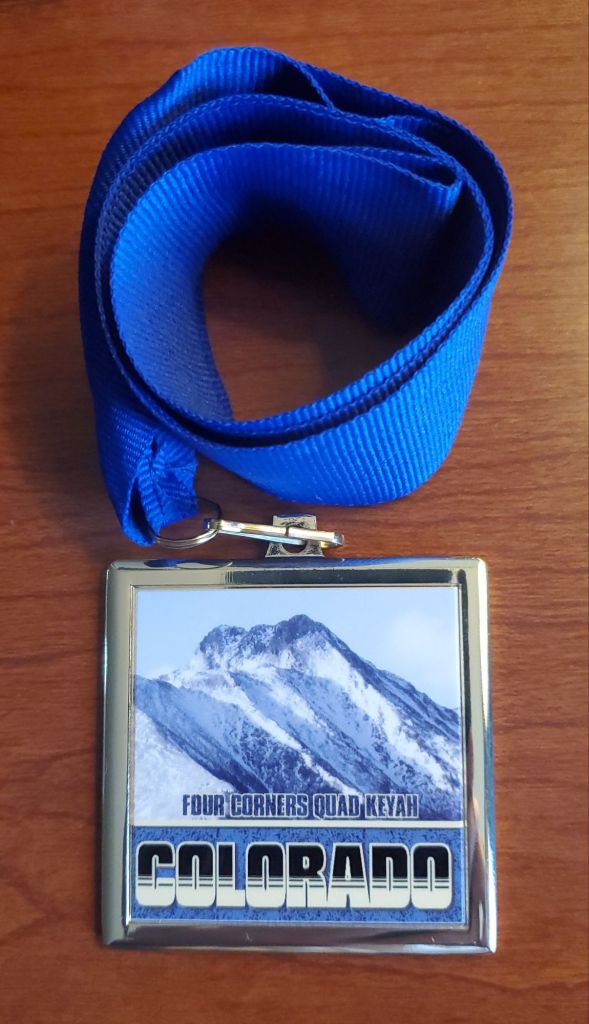
In the moment when it’s clear it’s time to pivot, don’t hesitate. There are options. Surrender to finding the best one and take it. The medal will still be waiting for you when you cross the finish line. This time it will say, “I hang around Pivoter’s necks the same way. Let’s go take a nap.”
Four Corners Quad Keyah Series Lesson #4

The day before I flew to New Mexico I got a massage. Mike keeps me ready to run.

In our conversation I told him I had prepared for this race series better than I had since 2012. That’s how well I knew I had trained. I set goals and met them all. Nothing left to do but run.

Lesson #4: Prepare the best possible. But accept you can’t control everything.

For example, Race #1, starting temperature, 37F. Race #2, starting temperature, 25F. Race #3, starting temperature, 12F. But hey, no precipitation.

Next: At the start of Saturday’s race they announced a change in the course. Not that I really knew the difference, but still. Running down the side of a steep canyon to start the race was not what I had in mind. But hey, the easier course meant I finished 20 minutes faster than Friday.

Then came Sunday. More on that later. Suffice it to say, it was a day I’ll not soon forget. Pretty sure I’ve never been that cold. But hey, the rental car heater was amazing.

This is life. Prepare the best you can for the test and your nerves rattle your memory. Prepare the best you can for your wedding day and people turn out to be unreliable. Prepare the best you can for retirement and a diagnosis changes everything.

Part of the best preparation is accepting there is no way you can control all things. You can control your preparation. You can also control your response to what you can’t control. 

SUGGESTION: Purposefully place yourself in new or uncomfortable situations. Try a new route to work. Try a new recipe with your dinner guests. Go for a run in the rain. Let the kids decide where to go for dinner. 

With some practice, 2024 could be the year you accept it’s impossible to control it all.

Four Corners Quad Keyah Series Lesson #3

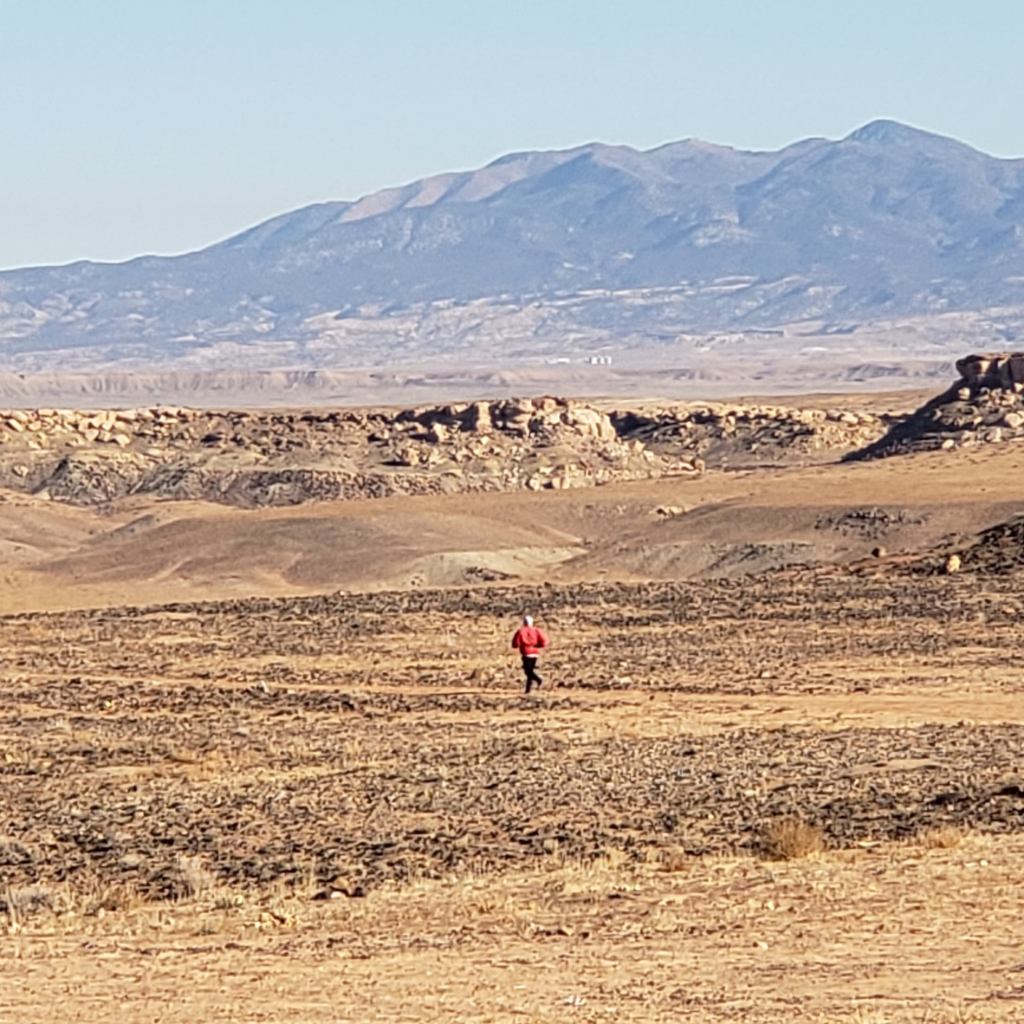
The race courses for Friday and Saturday were pretty much the same. Saturday we basically ran Friday’s course backwards minus the climbing. Much to my relief, day two was a lot easier. My quads said, “Thank you very much!”

Don’t get me wrong-the paths were still narrow, and the declines were still steep. In fact, some of the twists had so little margin off the side you were best to walk than run. Otherwise, you’re the coyote flying off the side of the canyon while the road runner meeps along.

Lesson #3: Know your lane and your strengths. Don’t expect the same results when you’re out of them.

Canyons are cool for runners who can train properly. That doesn’t describe Florida runners. Even when you run on trails in Florida, they are flat. 

I had already figured that I should expect to run at least a minute slower per mile on average running on trails versus roads. I had hoped that I could average finishing each half in 2:20. 

Day 1: Not only were we running on trails…hold up. You ran when you could. There were some spots that were too steep or too twisty to run. I saw in the first mile my hopes were not going to be realized. The only thing to do was adjust.

Being outside your strengths does not mean you are destined to fail. You do not have to quit. Adjust and keep moving. You can finish, just not the way you envisioned.

Learning your lane and discerning your strengths is incredibly valuable. One way to do those two things is to press on when you find yourself in another lane with your weaknesses glaring. 

Relax. It’s part of growth. At the finish line, you’ll get a medal that whispers, “You grew today. Congratulations!”

Four Corners Quad Keyah Series Lesson #2

To get to the Four Corners Monument where this race series was staged, I chose to fly into Albuquerque then drive four hours to Colorado. This being my first time in New Mexico, that drive was quite breathtaking. It felt like I was on some amusement park ride. One scene after another left me saying “Wow” over and over again.

Roughly an hour into the drive, I started sneezing. At first I didn’t think much about it. But when I was sneezing about every three minutes, I was puzzled. I’ve had allergic reactions in the past that started like this, but this made no sense.

The next two hours were miserable. Short version: I used every available tissue in the rental car and stopped to get some allergy meds. Nothing was working.

Until, I put on a toboggan cap. Seriously, it was like magic. This Southern boy only had a toboggan in his bag assuming it would come in handy when potentially running in sub-20 degrees. Who knew it was necessary while riding in the car? (The toboggan was swag from running in Naperville, IL, by the way.)

Lesson Number 2: Never underestimate the impact of exposure. Left unaddressed, illness results.

There are many reasons we experience exposure. Ignorance-ours and the other party. Inexperience-mostly ours. Pride or Curiosity-100% ours. Manipulation-purposeful other parties, some intentionally harmful. 

Some are very subtle. You hardly notice what’s happening. Some are gradual, so they appear unnoticeable. Others-like sneezing attacks-leave little doubt something’s wrong. 

From my experience, whenever the exposure is revealed the sooner the response the better. Just like learning to respect the cold’s effect to exposed skin, awareness of all exposures requires swift response. Repeated small exposures are like paper cuts; over time they add up. All the harmful exposures to our senses matter. And every exposure matters.

As for the large exposures that leave traumatic canyons, they cannot be ignored or considered irrelevant. Reality, they won’t be. They will find a way to be addressed. The injury requires healing by something more than a beanie.

I have a new respect for my toboggan cap. I also have a deeper appreciation what it means to be exposed.

Four Corners Quad Keyah Series Lesson #1

December 8-10 was another three-in-a-row race trip to check off three western states: Utah, Colorado, and New Mexico. Texting with a friend about it, I mentioned I have lessons from the trip. I’ve come up with six that I’ll share in separate posts.

Number 1: Single lane running paths test all the fruits of the spirit, in addition to grace.

Truth be told, I didn’t conduct major research about the courses. I read what was posted on the race series website, which was pretty basic. So imagine my surprise when on the first course right out of the gate we were basically running single file down a rocky, windy path into a canyon. WAKE UP CALL! What in the world have I signed up for?

These Florida legs weren’t trained for this. But more challenging was the mind game going on when I realized I was trapped behind runners whether I wanted to be or not. There was no safe, nice, respectful way around slower runners, better yet, walkers who had no intention of running. That’s a recipe for frustration.

And this was mile 1 of a three-day, 39.3-mile journey. Let the self-talk begin.

In this case, the self-talk was mostly in the line of, “Pace yourself…You’ve got miles to go…Does it really matter how long it takes?…Surely the whole course can’t be like this, right?”

Thankfully, no. The course was a loop course. To complete the half marathon, you had to run the course 3 1/2 times. So after the first loop, you knew what to expect. For me that meant, “Now I can relax.”

First loop challenge: Keep my frustration in check and don’t take it out on anyone. How did I achieve that? I literally had to think less about myself and more about those around me. Were I to be a jerk, selfish, or impatient would cause someone serious injury due to the rocky, steep, windy path we were navigating.

We’ve all been there. Stuck. Frustrated. Surprised. Stressed. How in the world did I get in this position? In those moments, on those paths, we have the choice to look out for those around us or to be all about ourselves. Choice 1: Lean in to how we want others to treat us (follow the Spirit’s lead); Choice 2: Be self-absorbed demanding everyone to get out of our way (ignore the Spirit’s lead).

Choice number one results in everyone staying safe, feeling respected, and enjoying the journey. Choice number two, somebody’s getting hurt-probably a lot of some bodies.

I’ve seen enough and made enough wrong choosing. Thankfully, on this Friday morning in Utah, we all made the right choice. We passed the test and got the medal to show for it.

Lesson on Southwest Flight #1061

First announcement shared when we boarded Southwest Flight #1061 in Sarasota bound for Houston: “Warning: Rough Flight Ahead. No services will be provided by the crew.”

Second announcement shared as we sat on the plane: “Update: Delayed due to military training over the Gulf of Mexico. Restricted airways require us to submit new flight plans.”

Third announcement shared before we left 40 minutes late: “The new route is longer, but we’ll get you there as soon as possible.”

Fourth announcement shared midflight: “Due to the current smooth ride, the crew will be able to serve drinks.”

Experience: Smooth Flight arriving only 30 minutes later than scheduled.

Lesson: Some delays produce better journeys.

Photo: Setting sun sky somewhere between Houston and Albuquerque

Learning to Walk in the Dark (book review)

I enjoy a writer who makes you think, or at least presents something ordinary unordinarily. Barbara Brown Taylor is definitely in this category.

In this second of her books I’ve read she gives you a different approach to thinking about darkness.

One beautiful way she does this is by showing you the value of darkness in biblical stories. She says the night sky was a key player in Abraham’s decision to trust God when he was told to “count the stars.” She spends a great amount of words on Moses’ encounters with God in the dark.

The God of Moses is holy, offering no seat belts or other safety features to those who wish to climb the mountain and enter the dark cloud of divine presence. Those who go assume all risk and give up all claim to reward. Those who return say the dazzling dark inside the cloud is reward enough.

Chapter 2, The Fear of the Lord

As you can imagine, much of the book addresses the emotions that come from fearing the dark. She believes that’s actually an indicator of something going on inside of us.

Our comfort or discomfort with the outer dark is a good barometer of how we feel about the inner kind.

Chapter 3, Hampered by Brilliance

A fascinating approach to her research for the book included cave exploration. With aid from professionals, she spent time sitting in the dark in caves and exploring portions of caves that demanded she address her fears. One takeaway: new life starts in the dark.

Whether it is a seed in the ground, a baby in the womb, or Jesus in the tomb, it starts in the dark.

Chapter 6, Entering the Stone

A spiritual book about darkness is most likely not complete without a chapter on the dark night of the soul. Taylor’s coverage is exhaustive from both sides of the topic as well as from the individual to the communal. The most helpful section was her description of the difference between faith and belief. Sharing about her observations as a college professor, she gives this distinction about questions college students are asking or are being asked:

When I listen to college students talk about faith, beliefs are what interest them most: Do you believe in the virgin birth? Do you believe that Jesus died for your sins? Do you believe that only Christians go to heaven? No one asks, “On what is your heart set?” No one asks, “What powers do you most rely on? What is the hope that gives meaning to your life?” Those are questions of faith, not belief. The answers to them are not written down in any book, and they have a way of shifting in the dark.

Chapter 7, The Dark Night of the Soul

I’ve already suggested this book to a few folks-one running friend who avoids running in the early morning hours, one coaching client who feels distant from God. Whether you are struggling with physical or spiritual darkness, I’d encourage you to give this book a read. See what you learn.

An Altar in the World, Meditation #6

On recommendation, I recently read An Altar in the World by Barbara Brown Taylor. It’s subtitled A Geography of Faith. In the spirit of that lane, rather than offer a review I’ve selected my top highlights and will offer a meditation post for each one. Here’s the final quote:

Anything can become a spiritual practice once you are willing to approach it that way-once you let it bring you to your knees and show you what is real, including who you really are, who other people are, and how near God can be when you have lost your way.

Chapter 5, The Practice of Getting Lost

Chapter 5 is a ride. Taylor takes something bane like getting lost to illustrate her point that anything can become a spiritual practice.

I can’t say I get lost on purpose, but I understand her point. Getting lost viewed through the lens of “maybe there’s a reason” certainly requires some discipline and regulation. What I have done on purpose is take new streets, driving or running, just to see what’s on them. This past Saturday, in fact.

I had an event to attend downtown Sarasota Friday night. Instead of driving home to West Bradenton afterwards, I booked an Airbnb just south of downtown. Main reason: to run the Ringling Bridge the next morning. It had been too long, so I felt like it was worth it. Of the overall 7.28 miles of the run, besides the bridge, I had never ran any of those streets. I purposefully returned back a different way than I had approached the bridge. The two best sections of the run was by the Bay on Mound then through and around Payne Park.

I agree with Taylor. Growth happens when you lean in to purposefully embrace the unfamiliar. And whether that unfamiliar was planned or not, your peace and trust are revealed. Who couldn’t benefit from that?

Now I’m remembering running on some very unknown streets in 2012. That summer I took my first international trip, to Belarus of all places. The purpose of that trip wasn’t to run or pleasure traveling, but to teach ESL classes through a supporting church. Many disciplines were bundled together on that trip; they still bring me to my knees, show me what is real, who I am, and who other people are. I may never forget running in that country. It was spiritual.

What practice of yours, if looked at differently, could become spiritual? Grilling? Baking? Fishing? Painting? Ask God to show you the way. May you find a new altar in your world.

8 “Give Me’s” for Waiting

4AM. Not my preferred alarm setting. But you do what you got to do.

I decided what I had to this morning in order to start this day right was to get in a run before having to be in my car by 6:15. After my run around 5:15 while stretching, I found myself taking a longer than usual time to spend some time praying. Very unexpectedly, I got an answer for a prayer I’ve been in for several months, actually most of this year. Maybe that story will come later; but for now, I’m focused on the reality that some prayer answers are a long time coming. That means a lot of waiting.

So it shouldn’t have surprised me that on the same day this answer came an email came to my inbox this afternoon with a prayer entitled “Prayer for the Waiting Time.” It not only was timely, but also affirming.

If you find yourself in waiting time, take your time to read through this prayer by Nicola Slee. These eight requests may be the support you need to carry on, to wait well, and to keep listening.

Give me the resolution to say ‘no’ to the good so that I will be ready to say ‘yes’ to the better.

Give me the courage to keep living in the open-endedness of the future without foreclosing the mysterious work of your Spirit in my haste or fear.

Give me the persistence to stay in the wilderness of unknowing until I am ready to receive your call.

Give me the strength to keep still and keep waiting when all about me is pushing towards movement and activity and choice.

Give me the acceptance to live these days in uneventfulness, simplicity and hiddenness, without craving excitement, distraction, or change.

Give me the grace to live in the emptiness of ‘not doing,’ without the rewards of achievement, fulfillment, or success.

Give me the wisdom to discriminate between my own impatience to move forward and your Spirit’s deep stirring of my spirit when the time is right to move.

Give me the faith to trust in your obscurity, the obedience to stay faithful to your mystery, the courage to keep trust with your inscrutability.

Photo by Şahin Sezer Dinçer on Unsplash

An Open Letter to the Walker with the Cane

We first met at the north end of the G.T. Bray baseball field’s parking lot. It was still dark, around 6:30 this morning. We greeted each other as I ran by, probably both assuming that was “one and done.”

After I finished my loop of the south end of the softball fields, I passed you again less than 10 minutes later as we headed to the east entrance of the park. We didn’t speak.

Another 20 minutes had passed when I came upon you again, this time not too far south from our first passing. You had made the entire loop, and I was circling back to leave the park by the west entrance.

As I got closer to you, you moved to your right, sensing someone coming. I thought to myself, “Good for him for keeping a steady pace. It can’t be easy to convince yourself to do another loop when you’re walking a slow pace using a cane.”

As I ran by this third time, we both spoke. I started first.

“Have a good day!”

In almost the same moment you said, “You’re making me feel bad.”

In the moment, I knew what you meant. My quick reply was a feeble effort to encourage you. “You’re doing great!”

Unfortunately, I never got a good look at you. The first passing was in the dark; the other two, I came from behind. Other than you had on a yellow shirt and sporting a head bandana, all I could tell was you were out for an early morning walk through the park, moving at a respectable pace for someone depending on a cane for support.

Had I not been on a tight schedule, I would have stopped to learn more. Have you been injured recently? Did you have surgery and now in rehab? Is this a lifelong challenge for you or just a temporary season of healing? I don’t know. But let me tell you four things I do know.

During my hour-long run, I passed a total of seven other people. Everyone else was walking, with the exception of the lady we both passed sitting on the park bench by the soccer fields. You were one of seven folks up and at it this morning. Whatever it took for you to get up and to the park and on the trail, you outdid thousands of others. That’s something to feel good about.

As for those other walkers, no one else was reliant on a cane. You didn’t let your dependence stigmatize you. You didn’t allow it to be an excuse. You had the determination to do the best you could in your current situation. That’s something to feel good about.

Another reply to your comment that I said to myself on my final half mile was, “Dude. You’re aren’t six feed under. You are not in bed. You are up and moving.” I don’t know what it took for you to be moving that early, but that’s something to feel good about.

The final thing I know is something I’ve told myself many times during runs and especially during races. Whatever someone else is doing that I’m tempted to compare myself to-pace, distance, etc.-it isn’t about what they are doing. It’s about what I’m doing. I know what it took to get to the start line. I’ve got an idea what it’s going to take to cross the finish line. I’m going to stick to what I’m doing. Good on them for what they’re doing.

My guess is you did at least two loops around the park this morning. You started before the sun rose. You did it alone. And you got it done. You, walking with a cane, did more than the average well-bodied person will do today. That’s something to feel good about.

Based on how your started it, odds are the rest of your day was good. Here’s to seeing you in the park again on another good day!

Photo by david Griffiths on Unsplash