Journaling For Beginners, Part 2: 30-Day Challenge

Another approach to journaling is answering a pre-determined set of questions. I’ve come across two this year that I’ve engaged.

The first one I started on Easter Sunday. It was a 30-Day challenge created by Alex Banayan, author of The Third Door.

Now, before you dismiss it thinking you can’t commit to something 30 days in a row, here’s your better option. Think 30 consecutive journal entries. Some missed days along the journey are to be expected and shouldn’t be viewed as failing. I took 40 days. No guilt or shame.

The focus is similar to yesterday’s post-a review of your day. But answering three questions may take a little more time and thought. Here they are:

  • What filled me with enthusiasm today?
  • What drained me of energy today?
  • What did I learn about myself today?

The balance in these questions is healthy. You give yourself an opportunity to engage what fills you, to overcome what drains you, and to grow in understanding yourself.

Banayan encourages this reflection as a final entry following the challenge: Read back over your entries to identify patterns for all three questions. That exercise will take some time. No rush. I didn’t do that in one setting, by the way. Took one question at a time over a couple of days.

What I liked about this challenge was that it led to progress. If you’re wanting more from your journaling than reflection, this challenge is for you.

Photo by Jac Alexandru on Unsplash

Becoming Rooted (book review)

Each aging day I’m realizing it’s a fantasy to think there is another human being who thinks and acts exactly like me. Some days I wallow in it. Most days I accept reality.

Example #1: Not all my running friends agree with me about ideal running conditions. Mostly the disagreement is temperature. The longer the run the cooler the preferred temperature (upper 40’s-lower 50’sF). For 4-6 mile runs, just keep it out of the 60’s, please.

Example #2: Even more of my friends don’t view engaging politics and current events how I do. Some would say I need to pick a side or at least stay more informed. I’m pretty adamant that the best approach is meeting in the middle and pursuing unity over division.

As I read Randy Woodley’s Becoming Rooted, I thought about several of my friends. Some would never read this book. Some would thoroughly enjoy it. And there I sit in the middle, perfectly content.

Although it’s designed as 100 meditations to read daily, I chose to read several in a sitting. The meditations are grouped under 10 sections, 10 meditations each. Just a couple of pages, each meditation punches a thought ending with an action step. Thoughtful and practical. Challenging and unifying. Welcoming disagreeing friends into a conversation to remind you that you are connected to each other and therefore rooted to one another.

Woodley sums up his efforts through the meditations with this list of values in the final one:

  • Respect: Respect everyone. Everyone and everything is sacred.
  • Harmony: Seek harmony and cooperation with people and nature.
  • Friendship: Increase the number and depth of your close friends and family.
  • Humor: Laugh at yourself; we are merely human.
  • Equality: Everyone expresses their voice in decisions.
  • Authenticity: Speak from your heart.
  • History: Learn from the past. Live presently by looking back.
  • Balance work and rest: Work hard, but rest well.
  • Generosity: Share what you have with others.
  • Accountability: We are all interconnected. We are all related.

Back to my fantasy, maybe more friends will choose to read this book than I imagine.

Praise: A Well-Taken Reminder

For the last three weeks I’ve been focused on a question, a personal spiritual dialogue that I’ve shared with a few others. The question could be stated several ways, but what I’m after is an answer that enriches/refreshes relationship with God. Here are variations of the question:

  • Which is more important, focusing on what God does for us or who He is to us?
  • In my experience in the Church, is the focus on what God does or who He is?
  • What do my prayers reflect, a focus on works or on identity?
  • How do believers achieve balance between doing for and with God versus being with and knowing God?

In ways I’ll never be able to explain, the timeliness of reading the right book at the right time surfaced again this afternoon. I recently picked it up off clearance at Books A Million.

In Chapter 4 entitled “Jesus’ Prayer of Praise,” McHenry shared that Richard Foster says adoration has two forms, praise and thanksgiving. Thanksgiving expresses appreciation for what God has done; praise acknowledges who God is.

This struck me through a simple word-praise. I have been contrasting the words adoration and thanksgiving without thought to the word praise. Accepting this teaching that they are really all the same brings some relief to my analytical brain.

That final question in the list above comes from how I’ve been approaching prayer the last three weeks. I’ve leaned more in the adoring lane than the thanking or asking lane-an effort to discipline my focus on relationship. A reminder to praise is well taken.

By the way, in this chapter McHenry shared a terrific list to help us all improve our adoration. Seemed worth sharing.

A Good Name

Left this morning for my first 2024 race trip. Checking off three states between Friday and Monday.

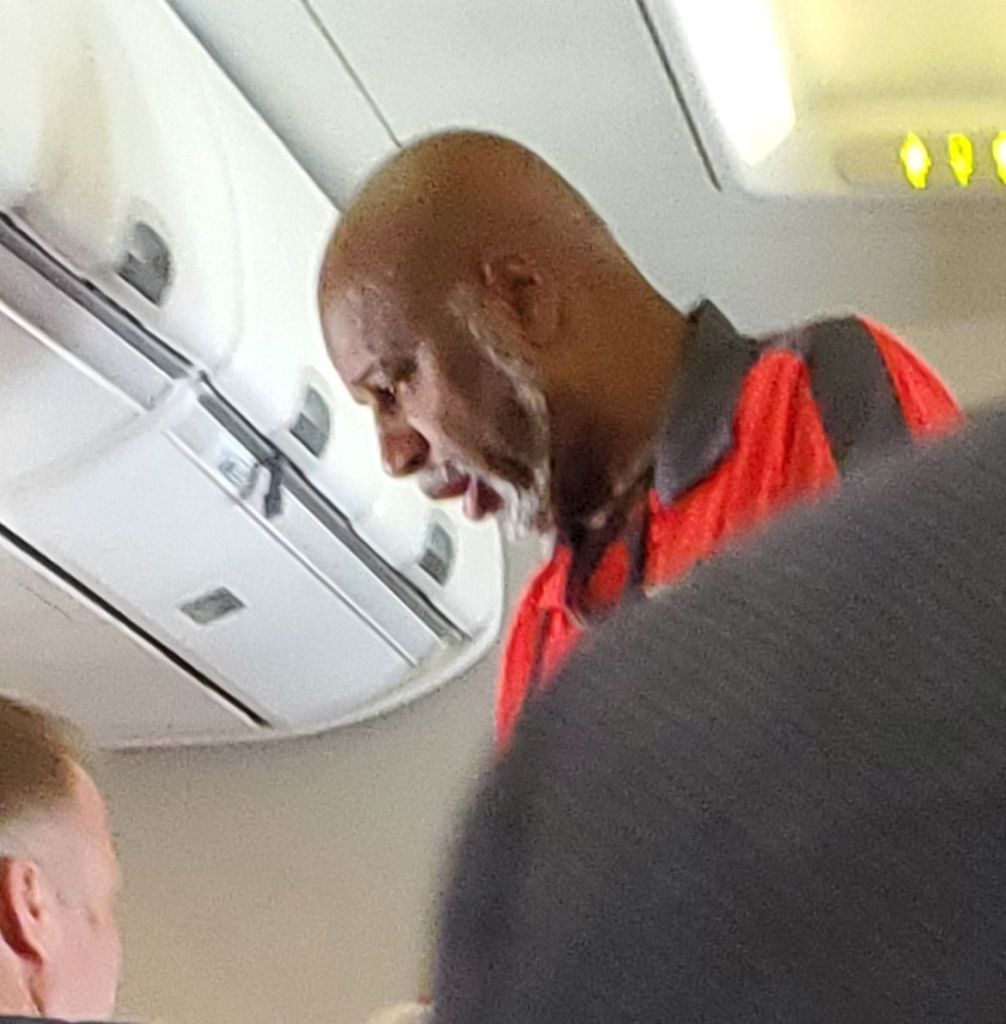
I pretty exclusively fly Southwest. And I want to give a shoutout to this guy.

Lead Flight Attendant,
Flight 4811 from MDW to TUL

From what I observed, a lunch conversation with him would be fun. He’s got a story or two, no doubt.

But my shoutout is due to his leading a flight in a way I’ve never witnessed. Here are six ways he did it.

  • It was his cabin. There was no question who was in charge.
  • He set the tone. There was no question about how any craziness would be addressed.
  • He cared more than usual. He asked and reasked passengers about their wants and needs unlike any flight attendant I recall.
  • He balanced firmness with laughter. Firmness first,  followed by plenty of relaxed engagement.
  • He led a unified crew. They followed his lead and appeared to respect and enjoy each other.
  • He was comfortable in his own skin doing things his way. He knew how he wanted things to go and enjoyed doing it.

It wasn’t appropriate as we deplaned, but I wanted to tell him employees like him give Southwest a good name. More importantly,  for all the people he’d say he represents, he gives all of them a good name.

Well done, Sir!

Four Corners Quad Keyah Series Lesson #6

As shared in the previous post, “Easy like Sunday morning” was not playing in my head on the drive back to Albuquerque. I had three things on my mind: Heat. Food. Fluids.

Well, there was a fourth thought going on. 

Lesson #6: If no one else cares how long you took to finish, let that be a sign. Caring trumps Competing.

As far back as I can remember I’ve been driven by achievement. Guess that explains why one of my top StrengthsFinder is Achiever. Setting goals and self discipline are second nature for me. Two balancing acts that come with that are competition and perfectionism.

This journey to run a race of any distance in all 50 states has certainly improved that balance. I can set goals all day, but there’s no guarantee of meeting them. And at the end of race day, I’m still learning it’s more about the journey than the finish time.

On Sunday in New Mexico, two runners illustrated this to me. We had been on these courses together for three days. We didn’t share names, but we shared encouraging words. And on the day they recognized I was struggling, they made sure to check in on me. Caring for a fellow runner was more important than competing against them.

On these long runs in unfamiliar places with complete strangers, you learn a lot about yourself and others. I’m grateful to be reminded over and over of the more important things. 

Personal achievement is one thing. Loving others and creating community is a better thing.

There’s a Reason They’re Called Sweet

We all have them. Some have many, or at least they’re told. Some are told they don’t have any, but they know that’s a lie. We all know that lie.

They are those things or moments that are unexplainably easy. Mostly likely, they also bring a sense of unmatched joy and satisfaction.

See if you recognize any of these:

  • Creating a spreadsheet for a new project
  • Hosting a baby shower
  • Coaching your child’s sport’s team
  • Baking for your new neighbor
  • Sitting with the elderly
  • Leading a volunteer team
  • Organizing the family vacation
  • Being on stage
  • Analyzing data
  • Writing thank you notes
  • Grilling for the July 4th block party
  • Sketching what you see at the beach
  • Laying out a floor plan
  • Onboarding new personnel

It’s that thing that when you’re done, people commend you and all you can say is, “That was fun,” or “I love doing it,” or “It just comes natural to me.” And they reply something like, “I can tell,” or “I wish I could do that,” or “Please don’t stop. I love watching you do it. It brings me joy.”

These things, these moments, these skills, these practices are what many like to call sweet spots.

You’re familiar with the term. But, like me, maybe you’ve not actually taken a moment to think about why. That question came to me way to early this morning, but I was glad.

I was glad because otherwise I wouldn’t have had these answers:

  • They’re called sweet because they bring pleasure-to their source, to their user, and to their receiver.
  • They’re called sweet because they have balance-not too much, not too little, just right.
  • They’re called sweet because they produce joy-during the prep, through the delivery, and by the memory.
  • They’re called sweet because they feel effortless-in the right lane, nothing blurred, nothing magnified.

Life can’t always be sweet. With intention, it can certainly be sweeter.

You have sweet spots. There’s a reason you have them.

Know them.

Own them.

Enjoy them.

Photo by Charles Etoroma on Unsplash

You’ve Got Ink

A couple of weeks ago the devotional read during our staff meeting asked an interesting question: How do you view a pen that has ran out of ink?

The obvious answer is it’s no longer useful. File 13. A pen without ink is useless, right?

True. But another view gives us a more life-giving response. In an inanimate way, what if we viewed that pen as having given all it had? Yes, it ran out. But what if instead of only discarding it since it no longer can give what it once did we acknowledged all that it did faithfully give.

An alternate perspective from a simple life routine. Appreciate the pen for what it did instead of what it no longer can.

Pretty sure I’ve blogged about this before, but it brings to mind our need to maintain balance between being filled and pouring out. Unlike the pen, we don’t want to completely deplete ourselves. To serve community well requires all of us to pour out, which requires us to steward how we are being filled. It is a constant process. With great attention, it is a thing of beauty.

So let’s check ourselves. Right now as you read this, how much “ink” do you have left? Where/how/when do you best get refilled? Which parts of that does your calendar contain between now and Monday?

One more thing. Most likely you’ve been doing quite a bit of pouring out this month-a lot of ink has been flowing. Take a moment to remember where it flowed, what that did for you/others/God, and the story that ink wrote because you allowed it to flow.

TAKEAWAY: You’ve got ink to steward. Be Filled & Pour.

Photo by Laura Chouette on Unsplash

Balancing Precision and Fluidity

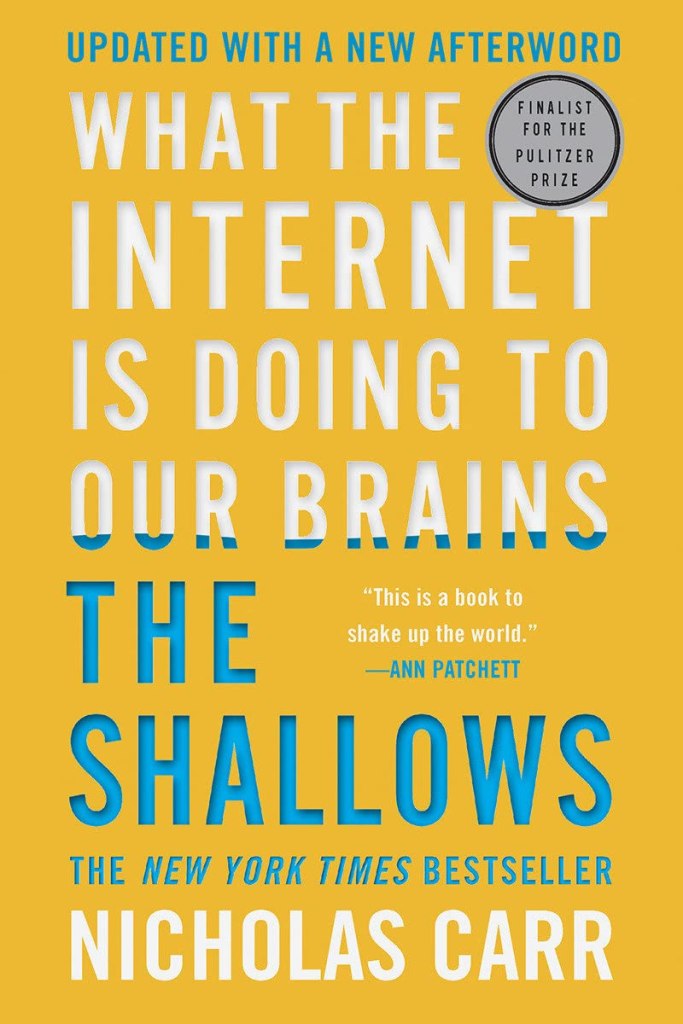
You never know what you’re going to learn by reading a book. Such was the case while reading chapter three in The Shallows by Nicholas Carr.

Chapter Three, “Tools of the Mind,” shares the history and impact of maps, clocks, and language on intellectual development. Carr includes these three in the same technology category, the intellectual technologies. He wrote that maps expanded man’s spatial technology. What maps did for space, clocks did for time.

To describe life before the creation of clocks, Carr quotes French medievalist Jacques Le Goff who said life was “dominated by agrarian rhythms, free of haste, careless of exactitude, unconcerned by productivity.” Hard to imagine such a life. Thinking about it presents a mixture of envy and gratitude.

Carr then shared this bit of history relaying how and why clocks came to be:

Life began to change in the latter half of the Middle Ages. The first people to demand a more precise measurement of time were Christian monks, whose lives revolved around a rigorous schedule of prayer. In the sixth century, Saint Benedict had ordered his followers to hold seven prayer services at specified times during the day. Six hundred years later, the Cistercians gave new emphasis to punctuality, dividing the day into a regimented sequence of activities and viewing any tardiness or other waste of time to be an affront to God. Spurred by the need for temporal exactitude, monks took the lead in pushing forward the technologies of timekeeping. It was in the monastery that the first mechanical clocks were assembled, their movements governed by the swinging of weights, and it was the bells in the church tower that first sounded the hours by which people would come to parcel out their lives.

Like Carr, I don’t share this to make a slam, but to make an observation. Balance is a tricky thing. Some would even say it’s an impossible thing. But like holiness, it’s worth pursuing.

When it comes to time, we can get imbalanced by rigidity and carelessness. We can get lost in the black and white as well as the disregard for parceling and regimentation.

As those seeking to walk in the Spirit, may we follow his lead in the moments when precision is best and when fluidity is lifegiving.

Photo by Aron Visuals on Unsplash

Preach, Terry!

One of the best TV shows is Running Wild with Bear Grylls. I don’t keep up with when seasons start and end, so I catch the episodes On Demand. And Season 6 is available. I’ve watched three of the eight episodes.

Episode 2 was one of the best yet. His celebrity guest was Terry Crews, and Bear took him to Iceland.

Terry Crews reveals the seagull egg he’s kept safe for the entire journey to Bear Grylls. (National Geographic/Ben Simms)

In the scene pictured above as they eat Bear’s survival-cooked egg for breakfast on Day 2, Bear asked Terry what he tells his children about life. Here’s part of Terry’s answer:

You are no better than anybody else. You are not one ounce less than anybody else. Every problem I’ve ever had was because I thought I was worse than someone or I thought I was better than someone. Know you are equal. Balance.

Terry used the words superiority and insecurity. They stuck with me. And they resonated with Bear. He said that’s a message the world needs to hear, and Terry said he’s going to keep preaching it.

Preach, Terry!

You Have Cookies?

Dialogue at the end of my drive-through order at Wendy’s earlier today:

Wendy’s: Would you like any sauce?

Me: No, thank you.

Wendy’s: Would you like to add a cookie to your order for only $.99?

Me: You have cookies? 

Wendy’s: Yes, we do.

Me: Wow! I didn’t know that. Yeah, I’ll have a cookie (with a no-brainer tone).

Later I enjoyed my Wendy’s double chocolate chip cookie.

Why do you need to know this?

  • Future orders
  • The power of offering
  • The blessing of knowledge
  • Runners eat cookies, too. Well, this one does.
  • Imagine that cookie with your Frosty!

Post credit: G2