“I Don’t Feel Safe”

In episode 10 of Season 11 of the Being Known podcast, Dr. Thompson named something that I instantly honed in on because I’ve experienced it.

Over the last few years, I’ve experienced several instances where someone explained their reaction to an event or moment with the phrase, “I didn’t feel safe.” That immediately appeared to me like a learned expression, something they’ve been educated as a way to express their reaction. Yet, that phrase in and of itself left me with questions. But they were questions I kept to myself lest I upset the person any further or potentially came across as not hearing them or lacking empathy. Frankly, I walked away wondering how best to respond.

Dr. Thompson explains his opinion about the usage of this phrase in this two-minute clip.

“The reality is I don’t know what you mean when you say you feel unsafe.”

I connected with that statement. It feels like the work of repair is somehow all on the other party, but it doesn’t seem clear where to start. Changing the statement to what is actually being felt instead of what is not being felt makes things clearer for both parties.

I’m curious about your experience of either using this phrase or being on the receiving end of it. How do you respond to Dr. Thompson’s thoughts about it?

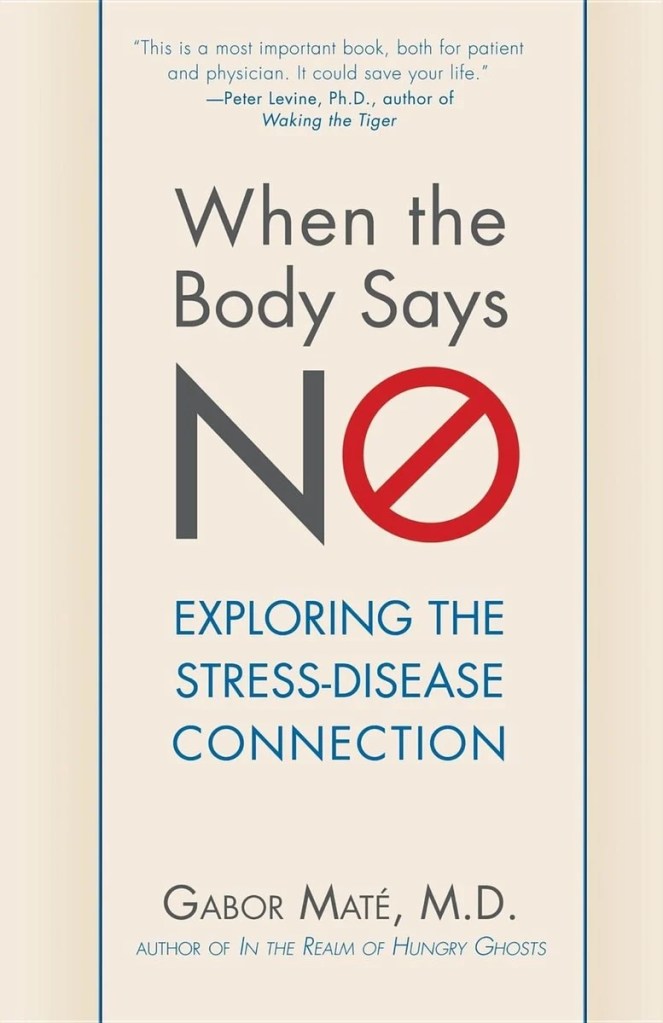
Centering Prayer and Inner Awakening (book review)

If you identify as one of these people, this book may be for you:

  • Contemplative
  • Meditative
  • Pursuing Spiritual Formation

Chances are the terms Centering Prayer or Welcoming Prayer are new to you. They were to me, which drew me to the book.

The first three sections of the book include 10 chapters teaching the method, tradition, and psychology of centering prayer.

The final section focuses on inner awakening and introduces welcoming prayer in chapter 13. That chapter by far was the most resourcing. This tool is meant to help surrender be an underlying attitude and practice for meeting daily life.

The welcoming prayer follows a three-step process:

  1. Focus and Sink In: Focus on how emotions or physical pain are being experienced in your body. Stay present without analyzing.
  2. Welcome: By welcoming the emotion or pain, you are not attempting to eliminate it but disarm it.
  3. Let Go: Two ways to go about this. 1) Short: “I let go of my anger,” or “I give my anger to God.” 2) Litany using the following formula: “I let go my desire for security and survival. I let go my desire for esteem and affection. I let go my desire for power and control. I let go my desire to change the situation.”

This quote sums it up quite well:

Here now, is the right place for you to wrestle before the divine face. If you remain firm, if you do not bend, you shall see and perceive great wonders. You will discover how Christ will storm the hell in you and will break your beasts. -Jacob Boehme

I don’t know about you, but I welcome the image and reality that the hell in me doesn’t have to be battled alone. I challenge you to try the welcoming prayer in the next 48 hours. Remain firm. Don’t bend. Welcome the beasts.

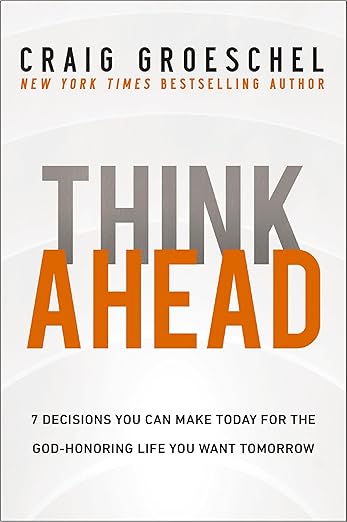
Think Ahead (book review)

Books aren’t like movies. Some movies you can watch over and over (at the top of my list, Moneyball). There are few books I’ve read that I thought to myself, “I would read this over and over.” Actually, outside of The Bible, I’ve only said that about a couple of books.

ALERT: Craig Groeschel‘s latest book Think Ahead makes the list.

What constitutes a book being re-readable? Well, compare that to the benefits of regular exercise. You do it because it’s good for you-you need it to improve your quality of life.

There you go. I believe there are books worth reading more than once because they improve quality of life. That’s the top criteria.

Similarly like regular exercise, there are books that reading it once isn’t enough. Going to the gym only on January 1st annually isn’t enough. There must be multiple visits. Only once doesn’t cut it. Some books have the level of content that you know when you read it, “I’m going to need this again down the road.”

To be honest, the big idea of Think Ahead comes pretty naturally to me. That idea is the power of pre-deciding. In his epilogue, Groeschel says this about that power:

  • Pre-deciding reduces the number of decisions to make.
  • Pre-deciding reduces the fear of deciding wrong.
  • Pre-deciding prevents emotion from taking over.

Whether pre-deciding is a natural way of living for you or not, here’s the deal: no one is perfect. Decision-making can become overwhelming in unforeseen circumstances. Some decisions are harder than others urging paralyzing fear. In either of these scenarios, emotions can lead us astray.

After one read in 2024, I’m pretty sure Think Ahead deserves a second read. And if it is going to improve my life quality, I guess I’m pre-deciding-Think Ahead is on the list to read for 2025.

This Is Us & Phil Wickham

Like many Florida Gulf Coast residents, I left home yesterday. If you took the time to pause when you locked the door, an extraordinary number of thoughts slammed your mind, body, and soul. These thoughts, built on a mix of emotions, will rise to the surface sooner or later, so it’s good to welcome them now, within reason.

Earlier I wrote this phrase in a message, “Not sure what comes next.” I wasn’t expecting the hit to my chest, the jolt to my brain that came with those words. So I paused to sit with them rather than stuffed them.

Two things followed.

One, I was reminded of a This Is Us scene where Randall and Beth played a game they called Worse Case Scenario. In this clip, Randall shares it with their three girls.

Two, I opened my 2024 playlist based on the word courage. This Phil Wickham song is at the top of the list.

Even in the worse case scenario, the Lord is my Shepherd. His goodness and mercy will follow me all the days of my life. I don’t have to fear; I know He is with me. The table is prepared; the right direction is ahead. All is well is my soul.

Six Steps to Writing Your Laments

I’m guessing if the majority of us were asked if we had anything to lament over we’d have more than one answer.

  • A relationship
  • Religion
  • Politics
  • Finances
  • Physical aches

I’m guessing if the majority of us were asked if we had a proper approach to lamenting we’d struggle to lay it out. Thankfully, Krispin Mayfield has offered some help.

In his book Attached to God, he gives six steps to writing a lament. Why? When we express our most difficult emotions to God, we draw closer to him. Intimacy with God is found in a balance of praise and lament.

In the tradition of the Psalms, here are Mayfield’s six steps:

  1. Tell God something you wish were different in your own life or the world, such as a health condition, difficult relationship, life stress, poverty, or racism.
  2. Tell God what you feel when you think about this issue; additionally, write down any emotions you might feel considering God’s inaction regarding this issue.
  3. Tell about a time in your own life or someone else’s where God intervened.
  4. Ask God to step in and address this suffering.
  5. Tell God you’re confident that your prayer is heard.
  6. Praise or recognize one of God’s attributes or characteristics, based on your past or present experience.

Sharing some of your uncomfortable emotions with God might feel strange. But you can unlock the basement when you’re assured that both God and your faith tradition can hold the parts of your experience. When you are sad, scared, or angry, your emotions aren’t signs of a lack of faith, but rather evidence that you are exactly where you need to be-at home with a God who is waiting to hear your emotions and give you the reassurance you need. (chapter 8, “From Shutdown to Engaged”)

Photo by Joshua Earle on Unsplash

Try Softer (book review)

I first heard of Aundi Kolber on an episode of The Rise & Fall of Mars Hill. But it wasn’t until I heard her book Try Softer mentioned on a different podcast that I took notice.

I finished the book today. It’s one of those that after you’re done you think, “I could have used that information a long time ago.”

You are not required to set yourself on fire to keep other people warm.

Chapter 5, Boundaries Bring Us Life

Kolber is a licensed professional counselor in Colorado where she’s been practicing since 2009. In Try Softer, she utilizes her own trauma, training, research, Scripture, and client’s stories to illustrate what she means by trying softer. My paraphrase, trying softer is practicing gentleness through life rather than white knuckling it.

People who are aware of and know how to attend to their feelings are truly awake.

Chapter 8, Try Softer with Your Emotions

One of Kolber’s continued messages is to understand you and everyone around you is on a journey. She takes the first five chapters to examine that “process of becoming.” They include research about the brain, a look at the importance of early relationships, the value of boundaries, and a definition of your window of tolerance.

Research shows that taking longer to exhale than to inhale signals to our nervous systems that we are safe, stimulating the vagus nerve. Both help us stay in our window of tolerance.

Chapter 4, Too Hot, Too Cold…Just Right: Finding Your Window of Tolerance

Most of my highlights come for the final five chapters where Kolber offers ways to practice trying softer with your attention, body, emotions, internal critic, and resilience. All ten of the chapters end with exercises and questions to get you started in trying softer. If that sounds overwhelming, each time she reminds you to take your time with them, maybe even note them for later work.

It matters that leaders, parents, and pastors are aware of their own wounds and do their own emotional work.

Chapter 6, Try Softer with Your Attention

Many of us may get tense just thinking of the idea of trying softer. I think Kolber’s statements about surrender sum up how valuable this approach and mindset could be. In the final chapter on resilience, these two thoughts encourage us to take a step toward surrender.

This is what I mean when I talk about surrender: it’s feeling safe enough to release our grip…Paradoxically, when we choose surrender for the right reasons, it empowers us.

Chapter 10, Try Softer with Resilience

My spirit is boosted after reading Try Softer. I invite you to check it out and give yourself a boost to end the year.

Pick Them Up

When a baby is distressed, they’re distressed because they are sleepy, hungry, uncomfortable, cold. And the way we respond to newborns is we pick them up…We are helping them begin to learn that when you are in distress you express your distress and someone comes to comfort you.

Curt Thompson, MD

Several takeaways from this statement in Episode 7, Season 1 of Being Known.

  • It’s normal to express distress. We were born doing it.
  • It’s normal to comfort someone who is expressing their distress. The majority of us have been comforted and can reciprocate it.
  • Comforting someone is picking them up. We pick each other up when we respond to distress cries with comfort.
  • The ultimate picker-upper is God. We express our distress through prayer. He comforts. He picks us up.

Are you in distress? Who are you sharing it with? Where can you trust to go for comfort? Have you expressed your distress to God?

Do you know someone in distress? How can you pick them up today? Have you prayed for God to pick them up?

Psalm 113:1-9 (The Message)

113 1-3 Hallelujah!
You who serve God, praise God!
    Just to speak his name is praise!
Just to remember God is a blessing—
    now and tomorrow and always.
From east to west, from dawn to dusk,
    keep lifting all your praises to God!

4-9 God is higher than anything and anyone,
    outshining everything you can see in the skies.
Who can compare with God, our God,
    so majestically enthroned,
Surveying his magnificent
    heavens and earth?
He picks up the poor from out of the dirt,
    rescues the forgotten who’ve been thrown out with the trash,
Seats them among the honored guests,
    a place of honor among the brightest and best.
He gives childless couples a family,
    gives them joy as the parents of children.
Hallelujah!

Photo by Heike Mintel on Unsplash

The “Right” Quest

I just finished reading Boundaries For Your Soul by Kimberly Miller and Alison Cook. Chances are, since you’re human and created with a soul, you will glean help for your life when you read this book.

Questions you could ask yourself that would indicate so:

  • Are there emotional parts of me that I don’t like?
  • Are there emotional responses I have that I don’t understand?
  • Is there something I’m burdened with that needs resolution?
  • Do my prayers about these things seem unheard or useless and have left me wondering if God cares?

We’ve all had these questions. These ladies have some help for us in their work.

An example from the last chapter entitled “Boundaries With Challenging Parts of Others” involves some insight based on brain science. They discuss the difference between the “thinking” brain and the “emotional” brain. In their discussion they show how important it is to know the difference and to achieve the balance possible when both brains work together. The quote I found intriguing was actually from another Christian psychiatrist’s, Curt Thompson, book Anatomy of the Soul.

We are more interested in knowing right from wrong (a dominantly left-brain hemisphere function used to cope with fear and shame) than knowing God, which requires the integration of all parts of the brain. Our quest to be “right” – a cognitive activity – can actually keep us from deep connection and a holistic knowledge of God and others.

Oh, how many Christians need to be done with the “right” quest, including me.

See what I mean now? Get your hands on this book and see what other insights await you.

3 Keys in Trying to Do it Right the First Time

My niece has a first coming. In three months, she and her husband will have another mouth to feed (pictured below). But more importantly, they will be first-time parents. She told me, “I can’t deny it. I’m a little nervous.” Yep.

We all have firsts. These come in experiences like our first day in kindergarten, our first time driving on an interstate, our first time praying in a group setting, our first time going for a job interview, or our first and hopefully only time to say, “I do.”

And they keep coming. Life is a journey of firsts. Last year my firsts included planning a sabbatical, running two half marathons in one weekend, researching for a book, and stepping up to the mic in a studio. These were firsts I chose to do. Not all firsts are chosen, though. Remember Noah? Chosen or not, all firsts come with moments of, “I’m a little nervous.”

I was more than a little nervous for my senior recital in college. You can say I chose it because I chose that field of study, but a 30-minute recital singing in various languages wasn’t shared in the catalog description. But I was buoyed by two things: my accompanist was the best on campus and my commitment to doing this right. My goal was to walk off stage thinking, “This is what I wanted to feel and experience.”

So how does one walk away from a first experience believing they did everything they could to get it right? Sounds audacious. Maybe even too lofty. But what’s that saying your probably heard from some mentor along the way, “If it’s worth doing, its worth doing right”? So from my efforts in trying to get firsts right, here are three keys to grasp:

  • Embrace your Emotions

    Your first could bring a myriad of emotions. Fear. Elation. Anxiety. Excitement. Doubt. Drive. I encourage you to deal with it all. Why? When someone deals with all their emotions, they grow in dealing with the negative and the positive. You learn your personal lane of balance. Some people are fearless and therefore are going to crash sooner or later; they need to find a balance of embracing healthy fear. Some people are born doubters and are constantly stunting their chance to go further; they need to find a balance of embracing healthy courage. Rather than falsely believing in the futility of balance seeking, we give ourselves a better chance of doing things right the first time when we embrace our emotions.

    • Stand in Your Why

      Convictions, purpose, values, vision: whatever your call them, they give you the stability to go after something for the first time. You must know them and ferociously guard them. Is your why clear? Do your methods live out your why? If you could state your why in five words, what would it be? Yes, your marriage should have a why. Yes, your parenting should have a why. Yes, your first 90 days on the job should have a why. We give ourselves a better chance of getting it right the first time when we stand in our why.

      • Be Fully Present

        Are you a “what-ifer”? Or a “if only-er”? Too much living in the past or for the future can stunt doing things right in the present. Using the example of parenting, research says that the core of who we are is established by age five. If that’s true, the parent concentrating on getting that child into Harvard while they’re in the pottytraining stage may miss some key elements in doing the parenting thing right. Live in the moment. Yes, plan for the future and learn from the past. But give yourself the best chance of doing this thing right the first time by being fully present now.

        Here’s to my niece, the first-time business owners, the first-time writers, and all first-timers! May God bless your efforts in trying to do it right the first time.

        “There’s No Crying in Baseball”

        (This is the eighth post in a series on wisdom from baseball co-written with Mark Stanifer.)

        It’s a movie line. It’s funny. It’s memorable. But it’s not accurate. 

        We may try to maintain an “it’s only a game” mentality in our recreational endeavors. But like it or not, our passions have a way of seeping out. Positive and negative, character and opinions, warts and all. 

        In the 1992 movie, A League of Their Own, actor Tom Hanks plays character Jimmy Dugan. Dugan is a washed-up former ball player, who’s now a drunk managing a women’s baseball team. Not exactly how he thought his life would turn out. Dugan didn’t want his players showing any emotion that wasn’t related to the game. He didn’t care about his player’s personal lives. He wasn’t interested in contributing to their lives off the field. Why? Largely because he wasn’t managing his own life off the field very well. Here’s the truth: You can’t lead, manage, or contribute well to a team when you aren’t managing yourself well.

        Suppressing your emotions isn’t managing yourself well. Crying along with other forms of expression is our body’s relief mechanism. Hurt or joy. Confusion or celebration. Frustration or praise. Disappointment or worship. Doubt it? Watch the World Series. Guaranteed there will be tears from these men, both the winners and the losers, once the final game has been played.

        As fans, we understand this, expect it. In a way, it makes these superheroes of their sport somehow more human. We can relate to them more this way.

        What about non-baseball life, the emotions of average life day to day? Many people choose to join Hanks in deceiving themselves into believing this line, “There’s No Crying in Life.” The reasons why are varied: perceived as weakness, doesn’t help the situation, there’s no time, real men don’t cry. These are all based on concern about how you will be perceived by others.

        Perception can feel like reality, but that doesn’t make it true or beneficial. Brené Brown addresses some of this in her book Daring Greatly. She writes,

        “We’ve come to the point where, rather than respecting and appreciating the courage and daring behind vulnerability, we let our fear and discomfort become judgment and criticism. We love seeing raw truth and openness in other people, but we’re afraid to let them see it in us. Vulnerability is life’s great dare. It’s life asking, “Are you all in?””

        The reality is there is crying in life. Choosing to live otherwise leads to many wrong efforts in dealing with life. Frankly, it’s full of pride and selfishness which tears down a team rather than unites it.

        With my best Hanks impression I’ll say this, “Get over it. Crying is a good thing. Go ahead. Let it out. It’s part of life. Your teammates will thank you. And mostly, so will you.”