Now I Know Why

Rarely do I regret reading a book. Actually, if I think that’s going to be the case, I don’t finish it. Again, that’s rare.

However, often I finish a book and think, “I’m glad I read it. It’s not for everyone, but maybe there’s someone I’ll be able to share this book with.” That’s exactly what happened today.

The last book I read was Finding God in the Waves by Mike McHargue. Actually, I listened to it through Hoopla on audio. I believe I came across it by reference in another book I read earlier this year, so I put it in my queue.

I hadn’t heard of McHargue. But apparently his writings and podcasts have created a stir. I see why, which is why I know his book isn’t for everyone. But I met Dave today, and it was obvious I had to share this book with him.

Why isn’t important. What’s important is that sometimes we’re fortunate to experience firsthand, and even within days, what God is up to. We can wonder and be curious. Sometimes we see it; sometimes we don’t. I counted it a rich moment to say to Dave, “Now I know why I read that book.”

Photo by kaleb tapp on Unsplash

An Altar in the World, Meditation #4

On recommendation, I recently read An Altar in the World by Barbara Brown Taylor. It’s subtitled A Geography of Faith. In the spirit of that lane, rather than offer a review I’ve selected my top highlights and will offer a meditation post for each one. Here’s quote #4:

Our bodies remain God’s best way of getting to us.

Chapter 3, The Practice of Wearing Skin

One might argue there are other ways just as impactful that God gets to us, but Taylor makes an interesting point. Whether through our body loathing, our seasons of suffering, or our comparing our bodies to our neighbor’s, we certainly have many opportunities for more of God.

I believe a good chunk of these opportunities revolve around the work of acceptance. Accepting the diagnosis, the loss, the genes, the future produces humility, alignment, focus, and peace that may only come through the avenue of our bodies.

I’ve had few physical challenges in my 55 years of life. The main one I’ve dealt with in recent years is a Schatzki’s Ring. If that’s a new term to you, you’re not alone. Bottom line: I have to be careful and alert to food getting stuck in my esophagus.

It’s more annoying than anything, but it has caused me to attune to myself and others in ways I hadn’t before. It all started in a Miami restaurant in 2014 when I had no idea what was going all. All I knew was my chest was tightening, and everything I had eaten wasn’t going to stay in my body. Since then this has happened in friend’s homes, multiple restaurants, even on stage this past Sunday. That was weird. Try singing with a wedged orange slice on the verge of shooting out of your mouth-a whole new method of God getting your attention.

I’ve learned many lessons from these situations. I believe the key one is the value of lowering our guards. Here are three lived examples of what I mean:

  • Lower your guard rather than hiding behind any sense of embarrassment or shame when you have to excuse yourself from the table.
  • Lower your guard rather than exploding in anger or pride when you have to seek help for something you can’t explain or fix.
  • Lower your guard rather than ignoring the obvious and making matters worse for you and those in your company.

How does that connect to God getting to me through my body, in this case a Schatzki Ring?

  • My guard hinders his releasing my shame.
  • My guard halts his providing my desperately needed healing.
  • My guard eliminates his growing and maturing me and therefore my community.

May we pray, “God, even in my body, get to me however you want. I’m all yours.”

An Altar in the World, Meditation #2

On recommendation, I recently read An Altar in the World by Barbara Brown Taylor. It’s subtitled A Geography of Faith. In the spirit of that lane, rather than offer a review I’ve selected my top highlights and will offer a meditation post for each one. Here’s quote #2:

Human beings may separate things into as many piles as we wish-separating spirit from flesh, sacred from secular, church from world. But we should not be surprised when God does not recognize the distinctions we make between the two.

Chapter 1, The Practice of Waking Up to God

Taylor’s quote comes at the end of the chapter where she has offered the teaching that God can show up in any space or through any means he chooses. In that moment, we have the opportunity to erect an altar-take note and mark that spot where God revealed himself. Her biblical example is Jacob’s reaction to the ladder dream. Because he knew he had encountered God, he paused and created a marker of significance.

Makes me think of Paul David Tripp’s teaching about two-drawer living. God doesn’t instruct us to live two separate lives-one for him and one for ourselves. Everything belongs in one drawer. The challenge is to view more and more of life as an encounter with him, a journey with him, an alertness that he’s always here.

Case in point: Sunday after church I had three hours to kill before attending an event in another town. I decided to google a new place to eat, try something different. I ended up at Blu’ Island Bistro. When I pulled in the parking lot, I wasn’t quite sure. But I said to myself, “Trust the reviews.”

It’s not a big place, but it has charm. I immediately felt it when I walked through the door. And here’s the thing: IT NEVER STOPPED.

Besides the quick seating, the perfect plate portion, the excellent tacos, and almost just right sweet tea, no one, and I mean no one, lacked joy. Not a customer. Not an employee. Everyone seemed happy to be there. I literally said to myself, “I should tell my pastor that I found the restaurant that feels like church.”

I stopped counting how many servers checked on me. I believe it was six. That’s a little crazy. And I don’t mean annoying crazy. I mean “thank you for your care” crazy.

I didn’t just encounter God between 10:00 and 11:00AM Sunday morning. I encountered him at the restaurant, then at the beach, then at the ice cream shop, and then at the event. How? I was looking for him. And the altar I erected? I gave the restaurant a Google review, I’m posting this blog, and I thanked God for putting everything in one pile.

Photo by Jack B on Unsplash
Whose Voice Matters Most

It’s Labor Day weekend here in the U.S. May mean you have more time to think. Here’s a reminder for you: Who God Says You are Matters Most.

In my thinking time already, I reviewed three conversations this week where descriptions were painted about someone. All were offered in constructive ways. Regardless of the intention or the relationship, human evaluations are limited. That’s not the case with God. Here are three reasons why:

Time known…God’s known you from conception…No one’s known you longer. Someone we knew in college may not recognize us today. It’s like that statement some middle-age adults make to a current friend: “If we’d known each other in college, we probably wouldn’t have been friends.” God’s been around for all the years. That history gives him the most information to back up what he says about you.

Depth known…God’s known you from formation…No one’s known you as deeply. The revelations we get from personality assessments make us say, “How did they know that? That’s so accurate.” It was no surprise to God. He wired you. He’s also been part of the ins and outs of life that have continued to form you, to mature you, to change you to the core. He knows you the most deeply, so his words about you carry the most weight.

Relationally known…God knows you by connection…No one’s more connected. Some people wear many hats in our relationship with them (family, boss, friend, neighbor, coworker, etc.). Naturally, we want to lean in to what they say. We long to be known by them. But there are many hats that only God can wear. When we are aware of them all, respect them, honor them, give thanks for them, the magnitude of what he says about us expands. Often, we forget just how much we most want to be known by him, but he cannot know us any more.

During this weekend, find some time to give him space to speak. Tune in to his voice. It matters most.

Photo by Megan Bucknall on Unsplash

Small Christian Living

Dear, dear Corinthians, I can’t tell you how much I long for you to enter this wide-open, spacious life. We didn’t fence you in. The smallness you feel comes from within you. Your lives aren’t small, but you’re living them in a small way. I’m speaking as plainly as I can and with great affection. Open up your lives. Live openly and expansively!

2 Corinthians 6:11-13 MSG

Earlier this week the explanation for division amongst Christians that resonated with me was how small we’ve made God…without seeing it. The next morning these three verses were part of my daily devotional reading. Sync.

When believers sing “How Great is Our God” but refuse to drive onto the campus of another church whose theology doesn’t perfectly align with theirs, Paul says, “You fenced yourself in…and God.”

None of us have all the answers. And the second we believe we do, God no longer sits on His throne. He’s lost any signs of “omni” because we’ve lowered him to our image, the reverse of our beginning.

Forgive us.

Forgive us for our reductive pride.

Forgive us for yielding to the temptation to make you in our image.

Forgive us for we know not what we do.

Photo by Ronny Sison on Unsplash

God Is Saying Something

I’m not sure what’s going on. Maybe God is just saying, “I see you.”

I altered my plans for tomorrow morning by leaving for Vermont this afternoon. Tomorrow will be much better survived because of it.

I booked an Airbnb in Tunbridge, so I only drive 40 minutes to the start line in the morning. Bearable. What I didn’t know when I booked it and started on my drive was the following:

  • I’d pass signs for the birthplaces of two notable religious figures.
  • When I stopped for gas and food it was 5PM. The Congregational Church bells across the street started playing the hymn Softly and Tenderly. The lines of the chorus start, “Come Home, Come Home.” Again, it was 5PM.
  • My Airbnb host is a college track coach. He lives in the mountains. I can hear water running down the mountainside from my room window.

God is probably saying something more like, “Good thing I gave you common sense, and you decided to use it.”

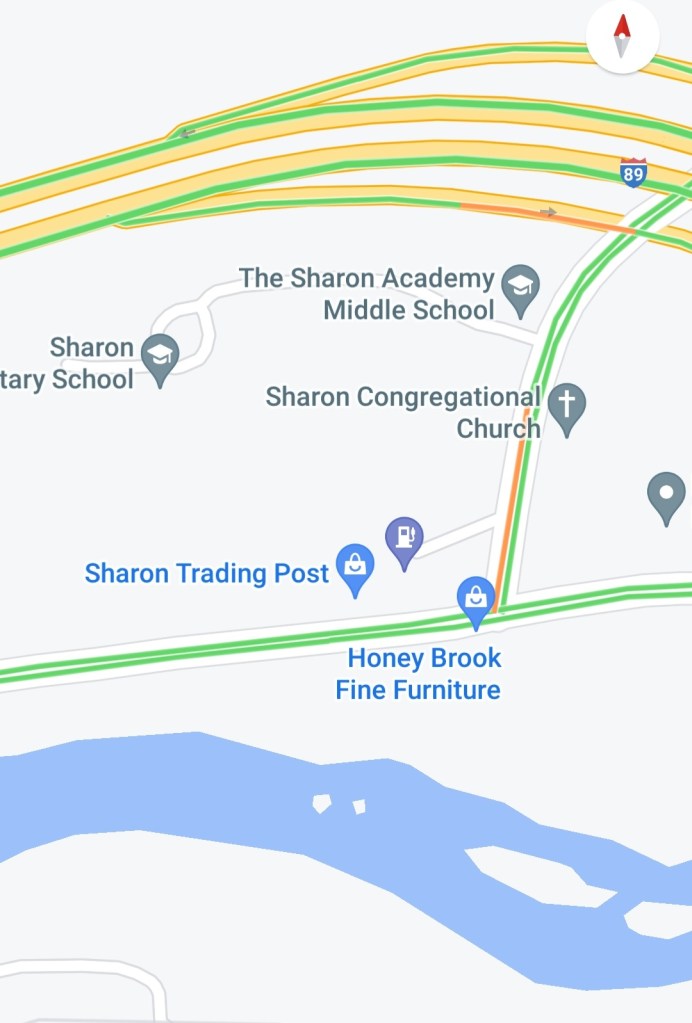
Just for you, Sharon
Coach Bob’s yard
Maybe these guys can “run with me” in the morning (Photo in the room).
All the sounds of the mountainside

Wound’s Intentions

Just finished listening to the final episode of season 6 of the Being Known Podcast. Never disappoints.

Curt said something about the story of Adam and Eve that probably only a psychiatrist would come up with. It had to do with wounds. Here’s the quote:

The intention of God wounding Adam in Genesis 2 is for creating beauty and goodness. The intention of the serpent’s wound to Eve in Genesis 3 was to destroy her.

Dr. Curt Thompson

We wound others. Others wound us. Sometimes we intend beauty and goodness; sometimes we intend destruction. So many things could be said about these truths. But I want to take a different direction. However, here’s an interesting question now in my head about emotional wounds: What were the intentions?

It’s Easter weekend. Yesterday I kept a ritual of watching Mel Gibson’s The Passion. So much realistic wounding in that film.

True to form, Jesus’ enemies, both human and spirit, were after destruction.

True to form, Jesus was after beauty and goodness.

Be encouraged. It’s normal for wounds to take time to heal. It’s normal to hate the wait, to wish the pain away, or to rush happiness. But without the waiting and the pain, the healing isn’t complete.

Jesus, thank you for turning intended destruction into eternal goodness…for the beauty of your wounds…for completing your intentions.

Photo by David Clode on Unsplash

Making God

In Psalm 115, the writer describes the gods of other nations besides Israel’s. He makes an interesting comment in verse eight. He says those who make their own gods will become like the gods they trust.

It certainly is convenient to make your own god. Making a god allows for the worshipping of that god to also be up to the maker. So the philosophy can go something like “make your own god, make your own rules, make your own values, make life what you want it to be and you should be happy and fulfilled.”

The challenge of making your god is that your god is confined to the stuff you used to make it. Since that stuff was determined by a human, then that god can only serve humans within their own limits. For me, I need something more. And I’d rather become like something more.

When the Maker and Ruler of the universe expresses a desire to be my god, I’m drawn to consider that option over any other option. He has the best chance to work outside of what I can do, make, or value. I choose to let Him continue to make me, in essence continue to create me into His likeness. I’ll take my chances on fulfillment and happiness in becoming like the god who made me rather than any god I could make.

Photo by Jackson David on Unsplash

Meaningful Life Light

“Everyone you meet is a rough draft of the final story God is writing for their life.”

Jamie Erickson, Holy Hygge

This quote is still with me. Not because we haven’t already heard the analogy about life being a story, having a story to tell, our stories being unique, or next chapters. This particular quote highlights three thoughts casting a meaningful light.

“Everyone you meet…” God is writing everyone’s story. Not just the people close to you. Not just your coworkers. Everyone.

  • The Indiana Snowbird
  • The Hotel Desk Clerk
  • The Ice Cream Shop Scooper
  • The FedEx delivery guy
  • The AC repair guy

There isn’t anyone alive, all eight billion, whose story God isn’t writing.

“…is a rough draft of the final story…” It’s not done. The plot is unfolding. The future isn’t fixed.

  • The divorcee’s story isn’t final
  • The addict’s story isn’t final
  • The college dropout’s story isn’t final
  • The early retiree’s story isn’t final
  • The great grandmother’s story isn’t final

Today is the next page in everyone’s final story.

“…God is writing…” The story’s author determines its outcome. Big question: what happens when I steal the pen from God…

  • …in my financial story?
  • …in my family story?
  • …in my faith story?
  • …in my vocational story?
  • …in my golden year’s story?

There’s freedom in trusting God to write the story.

Photo by MJ S on Unsplash

Some Texts Are Better Than Others

A couple of months ago I got this text from my pastor:

How can I be praying for you today? You’re always asking me…

11/1/22

I responded with a 15-minute phone call-too much to explain in a text. I told him I knew what I wanted to do regarding a decision, but I wanted to take the time to see if it aligned with what God would have me do. The final thing he said was something like, “Be open. You might be surprised with the answer.”

I thought about our conversation when I read these thoughts this morning in my devotional plan:

When we ask God for wisdom, we must be willing to accept that wisdom and follow it, no matter what. Going to God is not like going to another person for advice. People are flawed. When they share their opinions, we have the right to disagree and disregard their advice. Not so with God. He is perfect, and His wisdom is flawless.

God will always guide us into what is best for us. His wisdom may not always be what we want to hear, but it is always true, always right. If we want to retain our rights to do whatever we please, we might as well not go to God in the first place. Until we are ready to lay down our rights, they will always be tugging at our souls. When we choose, however, to disregard our own desires and to follow God’s truth, we will receive the wisdom and guidance that will always lead us into His perfect plan for our lives.

YouVersion plan “Morning Coffee With James”

That November conversation came to mind pretty easily because what I wanted to do was not how God answered me. However, within days of “disregarding my own desire,” God clearly honored that decision in a way that only he could.

Here are three takeaways from this layered interchange:

  1. Offer to pray for someone. It could be direction-changing.
  2. Be open to God’s answers. They can be surprisingly good.
  3. You have options when seeking wisdom. Leaving God out isn’t a good one.

Photo by Austin Chan on Unsplash