Deliver Me (book review)

Meeting writers after you’ve read their book or blog is an interesting experience. My experiences have always been positive. I can’t think of an interaction when I walked away saying, “They weren’t at all what I expected.”

There’s a whole different vibe when you know them before they are published or start a blog. If you thought you knew them well beforehand, you find out pretty quickly that they have layers, stories that have made them the person you know. In many ways, you walk away from reading their work saying, “What a gift they just gave the world!”

That’s my response to reading my friend Dawn Van Beck‘s latest book Deliver Me. Only having crossed paths this last year, we are still learning our layers and stories. Well, I guess I can’t say that as much now since that’s pretty much what Dawn does in this book. And she doesn’t hold back.

Dawn’s raw vulnerability as she addresses regrets, shame, forgiveness, and letting go relays her healing journey to freedom. You can imagine she states many life-giving lessons, but here’s the one that I most appreciated.

That’s what happens when you give God a little-He creates more. (chapter 11, “Releasing the Shackles”)

In describing a dream where she experienced the release from shame and the gift of forgiveness, Dawn paints a clear picture of what I believe she did by writing this book. One belief of mine: I believe she gave more than a little. She gave a whole lot more. And God is creating even more.

Dawn, thank you for giving. Thank you for sharing your story. I pray God continues to create more.

Four One Liners from The Shack

Hullabaloo is not a party I enjoy. So forgive me if I’m eight years late to The Shack conversation (referring to the movie; 18 years since the book publication).

My free evening in Las Vegas was not going to be about hullabaloo either. So I turned on the TV for the first time in four days to see what I could find to watch. Up popped The Shack. It was time.

Papa (Octavia Spencer) and Mack Phillips (Sam Worthington) in “The Shack.” (Photo Credit: Jake Giles Netter) 

As the story unfolded, I was drawn to all the one liners; so I started this draft to share the ones that got my attention the most. Here are those four.

“Don’t forget we love each other.”

Nan, the wife, said this to Mack, her husband. He was withdrawn, and she wanted to find a way to reach him. This was a good reminder for those who are tempted to isolate when dealing with pain. Remember that people love you…and that you love them.

“Love always leaves a mark.”

God said this to Mack. Mack was expressing doubt and lack of trust in God’s love due to all the pain in his life. He learned that he was judging God, blinding him from just how much God loved him and everyone in his life, even the ones who had hurt him. This line was God expressing the extent of his love for Mack.

“You have no idea how much I’m doing right now.”

Mac was trying to make a joke about what God was doing. And his judgment brought this response. What a reminder! Our finite minds find it hard to comprehend exactly what all is going on in the universe and God’s part in it. Our humility grows when we consider the magnitude of that work.

“Does what I do really matter?”

This was Mack’s question toward the end of the movie. It caught my attention because it somewhat seemed to come out of left field. Yet, anyone floundering in their pain would most likely eventually ask this question. Purpose has a way of healing wounds.

Yes, one could dislike the movie and the book for theological reasons. Being late to the party, I’m choosing to listen and grow, one line at a time.

What? We’ve Been Fasting?

Chances are, if you grew up in church, you can count on one hand the number of sermons you’ve heard that mentioned fasting. Church folk like their food, right?

Chances are most likely even higher that any mention of fasting didn’t reference Isaiah 58. That’s what crossed my mind this morning when I read it as part of a Thanksgiving-themed devotional plan. Check out verses 6-12.

Isaiah 58:6-12 NIV
[6] “Is not this the kind of fasting I have chosen: to loose the chains of injustice and untie the cords of the yoke, to set the oppressed free and break every yoke? [7] Is it not to share your food with the hungry and to provide the poor wanderer with shelter— when you see the naked, to clothe them, and not to turn away from your own flesh and blood? [8] Then your light will break forth like the dawn, and your healing will quickly appear; then your righteousness will go before you, and the glory of the Lord will be your rear guard. [9] Then you will call, and the Lord will answer; you will cry for help, and he will say: Here am I. “If you do away with the yoke of oppression, with the pointing finger and malicious talk, [10] and if you spend yourselves in behalf of the hungry and satisfy the needs of the oppressed, then your light will rise in the darkness, and your night will become like the noonday. [11] The Lord will guide you always; he will satisfy your needs in a sun-scorched land and will strengthen your frame. You will be like a well-watered garden, like a spring whose waters never fail. [12] Your people will rebuild the ancient ruins and will raise up the age-old foundations; you will be called Repairer of Broken Walls, Restorer of Streets with Dwellings.

If you’ve been involved in anything mentioned in this passage, SURPRISE! You’ve been fasting.

  • Loosing the chains of injustice = FASTING
  • Feeding the hungry = FASTING
  • Sheltering the poor = FASTING
  • Clothing the naked = FASTING
  • Not turning from your family = FASTING
  • Doing away with finger pointing and malicious talk = FASTING

As we’ve watched many of these actions in our community these last few months, we didn’t use the word fasting to describe them. Two words I did hear were light and healing. If you take this passage to be a promise, imagine what’s coming because of the fasting. Not only will this fasting result in literal repairs of walls and restoration of streets and homes, but it will also shine light and nurture healing as God replies to our cries by saying, “Here I Am.”

Photo by jean wimmerlin on Unsplash

Bruised

For a while now, part of my weekends is listening to the latest episode of 20 The Countdown Magazine.

The song at #7 this week has been on the countdown for 27 weeks. That says something.

The lyric that said something to me this morning was “I’m bruised but I’m not destroyed.” Based on 2 Corinthians 4:9, it seems like a relatable image to how many people in our community feel today.

I suppose it depends on their definitions of bruised and destroyed.

By the dictionary, bruised means damaged or wounded by or as if by being struck; destroyed means put an end to the existence of (something), defeat (someone) utterly, ruin (someone) emotionally or spiritually.

It’s hard for me to imagine most don’t feel bruised. It’s easy to imagine that many do feel destroyed.

I can’t say I align completely with the mindset behind this song. But I do hope for everyone, whether feeling bruised or destroyed, they will find peace that where they find themselves today is not the end. Fear and shame do not have to reign. Keep calling out from your woundedness. Healing and restoration await.

Be Light

As the Community Care Director for a counseling center, it’s not uncommon to be in conversations about suicide. Yet, no matter how common it may be, it has yet to feel normal.

And the reason why is because it’s not. It’s a sign of hurt and pain. We live in a broken world, which can result in people’s minds taking them down this dark road. And it’s no respecter of minds.

  • The middle-age pastor’s mind that goes home after leading a Sunday service and questions why he should go on.
  • The twelve-year-old middle schooler’s mind that leads her to a parking lot where she chooses to end her pain.
  • The senior citizen’s mind that says, “I’m done fighting this battle with my body.”

As I witnessed again this morning, when a hurting mind is met with love, empathy, and strength, healing is available. It’s not instantaneous; it’s one step at a time. A step, however small it may be, toward the light may be all that mind needs to stop spiraling into darkness.

Be light to those you know or suspect are lonely, hurting, or in pain. That is normal. And it needs to be more common.

Photo by Melissa Askew on Unsplash

Loss Ungrieved

Every loss in life deserves an appropriate season of grieving, whether you’ve lost your favorite person or you’ve lost your favorite pen. Grieving is a way in which we take the emotional upheaval and bring it up to the Lord…If we don’t let emotions up and out before God, those emotions internalize. They give us physical, psychological, and spiritual problems.

-Terry Wardle

Wardle calls these problems ungrieved losses. I heard him say this today in a podcast episode with ChurchPulse Weekly Conversations. It took me a long time to learn this, but I can definitely tell you he’s right.

Sure, we all grieve differently. But grieve we must.

Sure, we all attach in different degrees which determines our level of loss. But lose we do.

I didn’t grow up grieving well. And the biggest opportunity to improve came at age twelve (still growing up) when my father died. And for at least the next twelve years, I needed to let it up and out. The only avenue I took was the piano. I see it now, but I didn’t know it then that the hours I spent at the piano were hours of grieving.

What I know now that I didn’t know then was the sooner you grieve the better, the sooner you allow the emotional upheaval the better. Healing begins. The weight lightens as you name the loss, acknowledge the emotions attached, then invite God into your grief (read this blog post by Joshua Reich).

In the last year, we’ve all lost. Have you considered naming your losses? I encourage you to name them. They may feel obvious and unnecessary to name, but you may be surprised the longer you sit in them the more you have to name. And those internalized emotions will start rising, inching up and out.

Fear. Loneliness. Sadness. Disappointment. Confusion.

Meanwhile God doesn’t move. He stays with you. He begins to touch and heal your wound-that loss ungrieved.

Photo by Yanna Zissiadou on Unsplash

Neon Flashes

The topic of writing surfaced three times today. Only one was planned. It was first…and rich. Made the following two neon flashes.

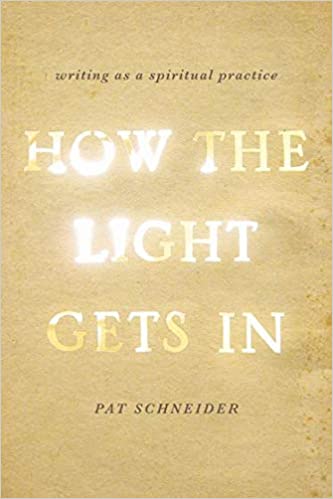
The planned conversation introduced me to this book:

Added to my “to read” list.

A few ponderings about “writing as a spiritual practice”-its purpose and potential:

  • What if writing gives our spirit voice?
  • What if writing connects our spirits?
  • What if writing opens our spirits to commune with God?
  • What if writing nurtures our spirit’s healing and wholeness?
  • What if our spirits need to write?

Words

I decided a few weeks ago this is a time to read through Proverbs. Many messages from many directions demands wisdom be supreme.

Written and spoken words are crucial. They can help or hurt, confuse or assist, push away or bring forward…

As reminders, here are some lines from Proverbs 15:

  • A gentle answer turns away anger
  • The tongue of the wise makes knowledge attractive
  • The tongue that heals is a tree of life
  • Pleasant words are pure
  • The mind of the righteous person thinks before answering

Words have power. May we use them well.

Photo credit: Unsplash/Brett Jordan

5 Leadership Lessons from 5 Worship Leading Stints

Over the last 20 years, I’ve been given the opportunity to lead worship for five different stints on three church staffs. Might sound confusing, so let me explain. For one stint I was actually hired to be the worship leader; I was there for four years. Three of the other four stints came while I was on staff serving a different role, but there was a vacancy for a period of time when I put on the worship leader hat also. That leaves one more, which I really didn’t want to do but God told me to say yes. Not the first time. News flash: He’s always right.

I recently finished stint number five. In reflective mode, I’ve taken a look at these stints to remember what I learned, how I grew, and what God showed me. To bottom line it, here are the five leadership lessons these stints taught me.

Lesson #1-Just because you can doesn’t mean you should.

It’s possible you have a talent that everyone validates but God has other purposes for you outside that talent. It’s possible putting all your energy on the obvious talent stunts the hidden talent that only God can nurture when you say yes to him and no to the obvious. It’s possible that the best avenue for you to understand this is to give the obvious a shot and find that there is more.

Lesson #2-If you’re the best person for the job, step up.

It’s possible the very reason you are where you are is God put you there to fill a hole that only you can fill. It’s possible that God put you there to help you see what he’s capable of helping you achieve when you make it less about you. It’s possible that unless you step up, everyone will miss God’s best.

Lesson #3-Because you can, sometimes you should.

It’s possible the best way to healing is to do something you have no desire to do. It’s possible that following the accomplishment of a very hard thing your next thing should be an easy thing. It’s possible the only way another person can get unstuck is for you to offer your hand.

Lesson #4-Leading transition is like crossing a bridge-you’re just helping people cross from one side of the river to the other side.

It’s possible not everyone wants to cross over. It’s possible you’re the last one to cross. It’s possible that the only way to finish the job is to keep your eyes on the other side.

Lesson #5-Some leadership seasons are more for you, but you won’t know why until they’re finished.

It’s possible that the only time you can be refilled is when you are willing to be completely emptied. It’s possible that why doesn’t matter. It’s possible that at the end of the season you can walk away fuller than when you entered.

(Photo credit: Randy Tosch)

31 Proverbs Highlights: #15-The Tongue

(A simple series highlighting verses from each chapter of the book of Proverbs)

The tongue of the wise makes knowledge attractive, but the mouth of fools blurts out foolishness…The tongue that heals is a tree of life, but a devious tongue breaks the spirit…The mind of the righteous person thinks before answering, but the mouth of the wicked blurts out evil things. (‭Proverbs‬ ‭15‬:‭2‬,4,28 HCSB)

Tongue Principles from these verses:

  • Our words can attract people to knowledge and wisdom
  • Blurting is unattractive
  • Our words can bring healing, nourishment, purpose, rejuvenation
  • Breaking another’s spirit is destructive 
  • Righteous words are preceded by thought
  • Blurting eeks our wickedness