Redeeming Conditioning

This was the first point in yesterday morning’s sermon: You always find what you’ve been conditioned to find. I was immediately reminded of a blog post from a few years back, “We See What We Look For.”

Being conditioned is certainly a thing, a thing that many are quick to point out about others who are on the opposing side. I often wonder how much we consider our own conditioning.

For example, politically. The deeper in one gets, the more conditioned they become to seeing only one viewpoint and thus responding in defense of it. The conditioning seems impenetrable.

And unfortunately, the same seems to go for spiritually. It’s as if our identity in both of these realms cripples our ability to recognize our personal programmed perceptions and responses that leave our minds and spirits untapped.

I’ll give two examples. A few years ago I answered a question of why I believe God exists by how I believe I’ve experienced His involvement in answering prayer. Two people in the conversation immediately locked eyes and jinxed each other with their reply of, “That’s just positive manifestation.” Wall up. Dialogue over. (If this is new language to you, check out this blog post.)

This past week I was at an event where we were discussing the usage of microphones. I made a comment that I didn’t have a clue came across as judgmental. One person replied gently, “We try not to judge here.” He’s conditioned to protect against judgment; I’m a work in progress of overcoming judgment as a natural response.

May I suggest we all address conditioning in the following ways:

  1. Acknowledge you have been conditioned
  2. Consider the probability that your conditioning needs redeeming
  3. Thank God for his redeeming conditioning work
  4. Offer grace to others who find their conditioning in need of redemption

Photo by Edi Libedinsky on Unsplash

Loss & Pain & Redemption

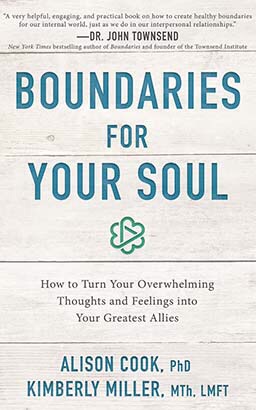
About a month ago, I walked through a situation that I could only explain with one word: sad. So when I came to chapter 11 entitled “Boundaries with Sadness” in the book I’m reading (Boundaries For Your Soul), I was ready. 


Of my many highlighted quotes in the chapter, this was the most helpful:

It’s helpful to think of the causes of sadness in three categories: sadness as a response to the loss of something good, the loss of something bad, and the loss of what might have been.

Categories one and three I get and I’ve used to befriend my personal sadnesses recently. But category two tilted my head…until I read Maria’s story. 

Maria, a bright woman, dated an abusive, addicted man for four years. When asked, “What keeps you from leaving?” she answered honestly, “I don’t want to face the pain.” She had given four years of her life to loving someone who had hurt her repeatedly. A part of her didn’t want to accept the reality that she had wasted so much time on a destructive, dead-end relationship. So she was choosing the pain she knew over the pain she didn’t know – and was missing an opportunity to move forward with her life.

I instantly understood category two. Choosing the pain we know can be crippling. Most likely we don’t know this is what we are doing until someone or some happening makes it clear to us. The strength and comfort when we allow the Spirit of God to assist us in facing that unknown pain is worth embracing to free us to move forward and start over. 

However long it takes, the freed life-found by trusting God to help us face the unknown pain-awaits us. Rather than run from the sadness, we should turn into it. Why? Here’s a final quote from the chapter:

Pain becomes redemptive when it causes you to draw near to God and experience his power.

Living with Judas

10 Questions to ponder when you think you know a “Judas”:

  1. How am I praying for them?
  2. What role might I play in their redemption?
  3. Has anyone approached them with the truth?
  4. What is missing from my knowledge of their story that would help my encounters with them?
  5. What wholesome character traits are shown by their behaviors? What damaging traits?
  6. Has grace been offered? If so, is there room for more? When does the grace end?
  7. When will it be time to withdraw? What’s the line that when crossed severs the relationship?
  8. What may be the root of cyclical behavior?
  9. What choices do you have when no offense has occurred but their character indicates it’s just a matter of time?
  10. What does God want me to learn from this relationship?