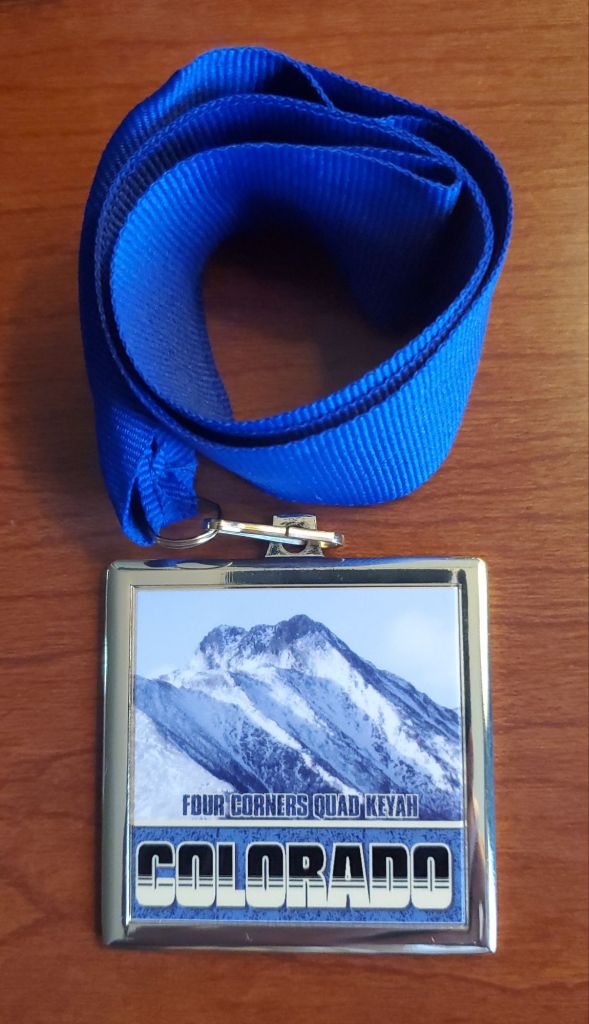
Four Corners Quad Keyah Series Lesson #4

The day before I flew to New Mexico I got a massage. Mike keeps me ready to run.

In our conversation I told him I had prepared for this race series better than I had since 2012. That’s how well I knew I had trained. I set goals and met them all. Nothing left to do but run.
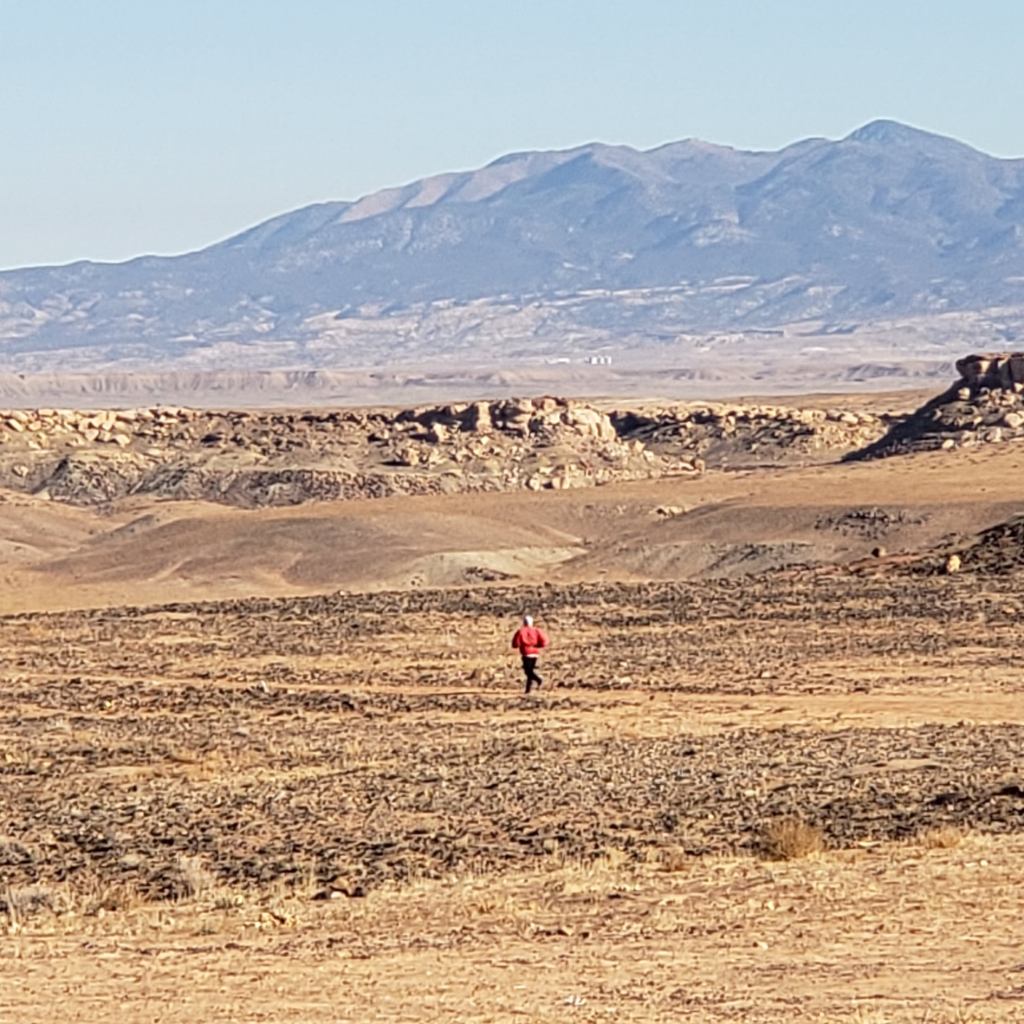
Lesson #4: Prepare the best possible. But accept you can’t control everything.

For example, Race #1, starting temperature, 37F. Race #2, starting temperature, 25F. Race #3, starting temperature, 12F. But hey, no precipitation.

Next: At the start of Saturday’s race they announced a change in the course. Not that I really knew the difference, but still. Running down the side of a steep canyon to start the race was not what I had in mind. But hey, the easier course meant I finished 20 minutes faster than Friday.

Then came Sunday. More on that later. Suffice it to say, it was a day I’ll not soon forget. Pretty sure I’ve never been that cold. But hey, the rental car heater was amazing.

This is life. Prepare the best you can for the test and your nerves rattle your memory. Prepare the best you can for your wedding day and people turn out to be unreliable. Prepare the best you can for retirement and a diagnosis changes everything.

Part of the best preparation is accepting there is no way you can control all things. You can control your preparation. You can also control your response to what you can’t control. 

SUGGESTION: Purposefully place yourself in new or uncomfortable situations. Try a new route to work. Try a new recipe with your dinner guests. Go for a run in the rain. Let the kids decide where to go for dinner. 

With some practice, 2024 could be the year you accept it’s impossible to control it all.
Four Corners Quad Keyah Series Lesson #3

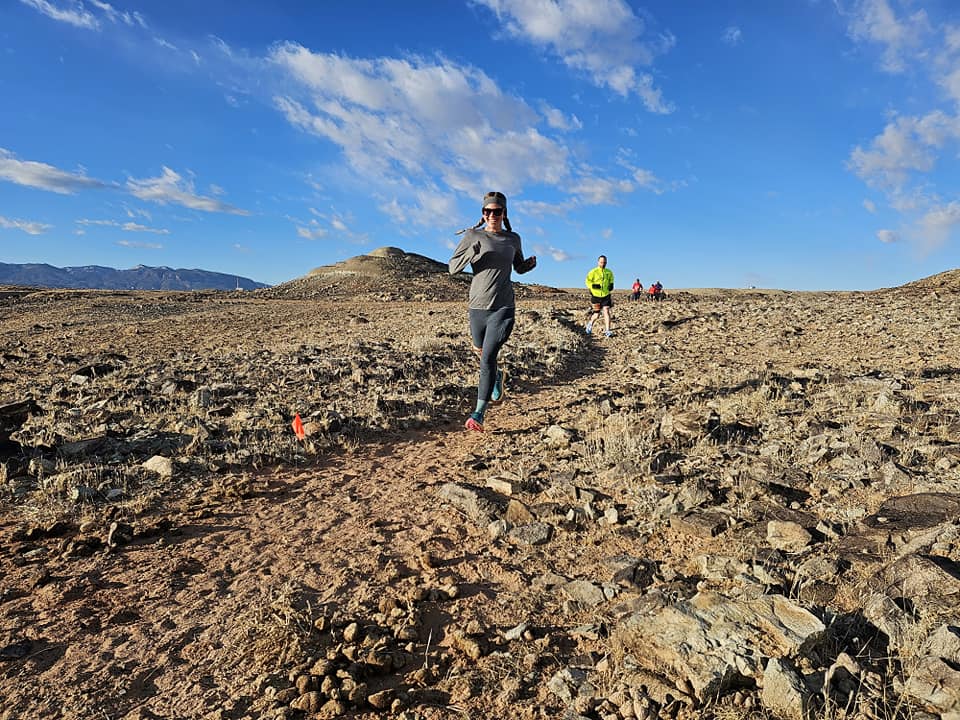
The race courses for Friday and Saturday were pretty much the same. Saturday we basically ran Friday’s course backwards minus the climbing. Much to my relief, day two was a lot easier. My quads said, “Thank you very much!”

Don’t get me wrong-the paths were still narrow, and the declines were still steep. In fact, some of the twists had so little margin off the side you were best to walk than run. Otherwise, you’re the coyote flying off the side of the canyon while the road runner meeps along.

Lesson #3: Know your lane and your strengths. Don’t expect the same results when you’re out of them.

Canyons are cool for runners who can train properly. That doesn’t describe Florida runners. Even when you run on trails in Florida, they are flat. 

I had already figured that I should expect to run at least a minute slower per mile on average running on trails versus roads. I had hoped that I could average finishing each half in 2:20. 

Day 1: Not only were we running on trails…hold up. You ran when you could. There were some spots that were too steep or too twisty to run. I saw in the first mile my hopes were not going to be realized. The only thing to do was adjust.

Being outside your strengths does not mean you are destined to fail. You do not have to quit. Adjust and keep moving. You can finish, just not the way you envisioned.

Learning your lane and discerning your strengths is incredibly valuable. One way to do those two things is to press on when you find yourself in another lane with your weaknesses glaring. 

Relax. It’s part of growth. At the finish line, you’ll get a medal that whispers, “You grew today. Congratulations!”

I-35 Lesson #2

This photo is a description of a marathon training plan devised by the Hanson brothers. I came across it years ago and loved it the first time I followed it. This plan, in many minds, is not conventional. Why? One main reason is that you never run more than 16 miles. Most plans and trainers would include running at least one 20-miler.

This summer, I had to take an even more unconventional approach to preparing for the I-35 challenge. If you count the number of runs in this plan that are at least 10 miles, there are 21 over the 18 weeks of training. Here’s my total of 10+ mile runs in the five months before race weekend: 4. And the longest…11 miles.

I-35 Lesson #2: Convention may not be necessary.

Summer heat kills any conventional sense for my training for a Fall race. In previous years, I’ve curtailed the summer heat by running on gym treadmills. Due to bad habits forming from too much treadmill running, this summer I swore off treadmills forever-dropped the gym membership completely. Big step.

That step led to figuring out how to train in the heat. And unfortunately for me, that meant running more days and less miles. Even less miles than the Hanson brothers designed. So I knew going into a weekend of 39.3 miles, my approach to getting to both finish lines couldn’t be what I’d prefer.

What’s the lesson here? There is a way to get to the finish line. In fact, just like driving from my home to the office, there are dozens of ways. If you are okay with slower, longer, pauses, breaks, you have many choices. In the end of these choices, you get there.

The majority of us are not elite. So does it really matter what we do to get there? Does it not count if we finish 3,009 instead of 309 or 39? Of course not. What counts is that you did what you could to get to the start line…and then you did what had to do to cross the finish line.

Convention is good, but it’s not necessary.

Somewhere in Kansas City. Photo by @sportsphotoscom

Half Marathon Training Plan

Occasionally people inquire about what training plan I follow before a race. If you’re reading this post as a result of a Google search, then you have no doubt found many other plans to consider. The race distance you are preparing for certainly determines the plan you should follow. However, this plan pictured below (taken from Runner’s World) is the plan I like most and the one I modify based on the race distance.


This plan is for full marathon preparation, but I modify it for preparing for my half marathons. As you look over it, there may be reasons that this plan looks overwhelming, too much, or maybe undoable. Maybe this is your first half, like my friend who signed up to run with me in September. Maybe you don’t want to run six days a week. Maybe you’re trying to work in cross training. In order to help you modify it, here are some things I’m currently doing that is working for my prep for two halves this fall.

  • I’m only running four days a week the first seven weeks. Weeks 8-13, I’ll probably throw in some extra runs.
  • Two days a week I cross train. What works for me is a 30-minute stairmaster workout at a progressive pace finishing at the highest level of the workout. Each week I’m pushing the pace to set new workout results.
  • I follow the speed and strength workout guidelines as suggested (on Thursday though, not Tuesday) but push the pace to reflect prep for the half versus the full.
  • My modifications to the MP workout is to cut the distance in half and to run it on Sunday, not Thursday.

These are ideas that you can consider and also modify to fit your level. Feel free to message me with any thoughts or questions. I’d also encourage you to consult a running coach to get a full plan in place to reach your race goals.

Following a plan will benefit you tremendously. Figure yours out. Tweak it as needed. Enjoy the training. Celebrate your results.