Sealing Hope for ’25

Recently gave my Kindle away. Just lying around, it was time to give it a new home.

When I was looking through the library I had built on it before deactivating it, there was one book that I knew I’d want to find a way to keep. GOOD NEWS: It’s on Hoopla!

If you’ve been following this blog for any amount of time, this book will most likely sound familiar. Why? Because since 2016 I’ve read it every year. I just finished the ’24 reading. It may be the last time I hold to an annual commitment to read it. No doubt, I glean relevant takeaways each time I read it. And, interestingly, with each reading, I also observe personal growth based on the lens of my reading and my responses.

Paul David Tripp’s Awe is the book. This reading, chapters 7, 10, and 13 received the most highlights. Chapter 10, “Worldview,” is always a great reminder of how to look at current circumstances:

Your idea of God will never be either accurate or stable if you’ve arrived at it by trying to figure out what he is doing in the situations in your life…when you wear the glasses of Isaiah 40 you can understand yourself, others, meaning and purpose, right and wrong, identity, morality history, and the future properly.

Chapter 13, “Work,” I’ve blogged about before. What stood out today was Tripp’s many references to rest, which is my word for 2025.

Success is not about accruing power but about resting in God’s power…Awe of God teaches me that, by grace, my life of work can now be an expression of rest and not worry.

Chapter 7, “Complaint,” is consistently corrective, which oddly can be encouraging. The meat of the chapter discusses five questions that Tripp says steal or seal our hope; Tripp believes we answer these questions every day:

  • Is God good?
  • Will God do what he promised?
  • Is God in control?
  • Does God have the needed power?
  • Does God care about me?

I encourage you to sit with these questions this week. They may renew your awe for what’s happened in ’24. They may seal your hope for what’s going to happen in ’25.

Photo by Kelly Sikkema on Unsplash
Lunch was Joyful

I had a four-hour drive yesterday. Lots of podcast listening.

One episode shared this quote about joy from an author new to me.

Joy is the experience of being with someone who is glad to be with you. –James Wilder

It resonated with me because of my lunch encounter Thursday. I used the word joy to describe it, believe it or not.

I left the office around 1:30 not sure where lunch would find me. Turning left on Bee Ridge, it hit me. I wasn’t in a hurry, and I felt a little celebratory. I knew where to go.

Focaccia Sandwich and Bakery!

From the minute I walked in until I left, my heart was full. Besides the fact that Nick makes great food (the sandwich in the photo was the best yet), the shop exudes life. And joy is a perfect descriptor.

So why do I say Wilder’s quote applies to Nick, the owner?

Reason #1: Nick remembers everyone’s name. He makes you feel like he made that sandwich just for you. And when I say made, I mean the recipe, the presentation, the ingredients-the whole process. He wants his food to bring you joy. He’s glad you are there.

Reason #2: Nick works with joy. I’ve yet to see him have any look on his face but a mixture of pleasure, contentment, and happiness. His shop is just eight months old and has every sign of being around a long time. People want to be around joy.

I say thanks to Nick and all those in my life who bring joy. Who are those people in your life? Return the joy. Let them know you are grateful.

Working From not For

This is my third and final post reflecting on Dutch Sheets’ The Pleasure of His Company. Chapter 29, “The Connection,” was the highlight for me. Maybe because he references Old Testament characters I’ve been reading about the last few weeks. But I’m pretty sure it’s because he drills down on a topic I’ve been chewing on, again, for the last two weeks. What matters more, who you are or what you do?

That’s not really his intention, but that’s where it goes. And, for the record, he doesn’t really give you an answer. Here are my four highlights for illustration:

  • “At times, the most spiritual thing we can do is the most natural and practical. Work is practical yet very spiritual; feeding hungry people is, as well; nurturing our children is practical, time-consuming, tiring-and very spiritual. Keepin’ it simple is sometimes keepin’ it spiritual.”
  • “To be holy doesn’t mean being separate ‘from sin,’ but rather ‘unto God’…Holiness isn’t sinlessness.”
  • “…strength lies not in the perfection of my outward performance but the connection of my inward heart.”
  • “There’s a vast difference between performing for acceptance and performing from acceptance.

There’s a noticeable difference when a relationship has shifted to from away from for. Sometimes others can see it better than you; sometimes not. If you’re really not sure, the best person to check in with is your Creator. He knows what it means to live from illustrated by instructing Moses to tell everyone, “I AM sent me.”

Go with what He tells you. If He says your offering brings him pleasure, that’s all you need. You’re in good company.

Photo by Jon Tyson on Unsplash

God’s Nature: Lording or Loving?

Sheets continues in the next chapter of The Pleasure of His Company to dig into aspects of our relationship with God. He zeros in on a belief that God’s nature is misunderstood. A misunderstanding of God’s nature would certainly explain why worship can lack passion, be endured, or even resisted.

I don’t believe the problem with most believers’ worship is hypocrisy or insincerity. I think the majority is trying to honor God by giving Him His dues and fulfilling their obligation to Him as the Creator. I doubt if most of them understand, or have even heard, that God is a lover as well as a Lord. And it wasn’t his lording nature that prompted him to create us-He could have made a few billions more angels had that been His desire. It was his loving nature. God is a Father at heart.

Chapter 2, “The Seeker”

This morning I got to talk with a guy at church for the first time and found out he works for a local, family-owned business. Between their six locations, they have over 800 employees. Describing being employed there he said, “You work hard, but it’s like family. We have a hard time finding good employees, but we continue to grow and I love working there.”

He’s describing a work place that isn’t only about lording. We all pretty well can tell the difference between lording and loving. If you come from a faith setting that focuses more on a lording view of God’s nature, it’s probably long overdue for your relationship to take a shift and consider his loving nature.

Photo by Rod Long on Unsplash

Putting Ourselves in the Center

My annual reading of AWE by Paul David Tripp last month was timely. It also was impacted by growth in the last 12 months. I read through a different lens. Result: I continue to appreciate the big idea that checking our awe is valuable.

The first quote that stood out to me in this reading was from chapter 4, “Replacement”:

When we put ourselves in the center of the story, not only do we become rebels against God, we become a danger to ourselves and others.

Is putting ourselves in the center of the story a battle? For everyone. Is the thought that this means rebelling against God and endangering everyone mainstream? Nope. Maybe that’s why everyone battles it.

We don’t have to agree with Tripp. What we can do is challenge our mind and spirit to check our heart when we find ourselves in the center of the story. Is God on my heart’s throne right now? Are any relationships struggling right now? How is my joy and rest?

The second quote that stood out was from chapter 13, “Work”:

If you look to achievement to feel good about your life, to feel secure, or to have a life of meaning and purpose, then you will be dissatisfied with today’s success.

This sounds familiar (check out this post). The buzz of achievement dies. That buzz will not be satisfied by another achievement. Funny how my achievement also puts me in the center of the story.

When we find ourselves in the center of today’s story looking for the next buzz, it’s time for an awe check.

Photo by Austin Neill on Unsplash

Five Questions To Nurture Culture

Today I was honored to be interviewed by leaders from one of our nonprofit partnering agencies. After answering the list of questions, I was asked if I had anything else to share. Here’s what I said:

The one thing I’d like to comment on is the culture of your organization. There are many words-all good-that come to mind. First, your team is united. You are all on the same page and seem to enjoy working together. Two other words that come to mind are passionate and caring. You deeply go after your mission, and your clients feel cared for. This was clear at your last event. But the word that most describes your culture is joy. It’s always present. It’s felt. Whoever’s responsible for maintaining this culture, they are doing a great job.

Culture has been on my mind the rest of the day. Every organization has a culture. There are many questions to make sure it’s the culture you want to experience and to display. If you have any part of creating that culture, consider the answers to these five questions:

  • What is the culture we aspire to maintain?
  • Is that the culture we have?
  • How do the employees know about this aspiration?
  • Who are the keepers of the culture?
  • When and how do we evaluate the culture?

Start here. Be willing to add to it. Watch what happens when you nurture culture.

Photo by Hannah Busing on Unsplash

Mile 4

Pat Schneider’s writing is inspiring. Needed attempt at brain pressure release.

Unsuspected I approach

They meander

Pacing and pecking, flapping and feeding, united and unique

Unsurprised I pause

They pass

busy and bothered, noticed and noted, caught and captured

Unhesitant I acknowledge

They came

sent and selected, happy and harmonious, celebratory and committed

Reflecting on seeing the flock of ibis on my run this morning, the day after my birthday, and my friend who joked I work like them. “The family flew in.”

Make a Difference

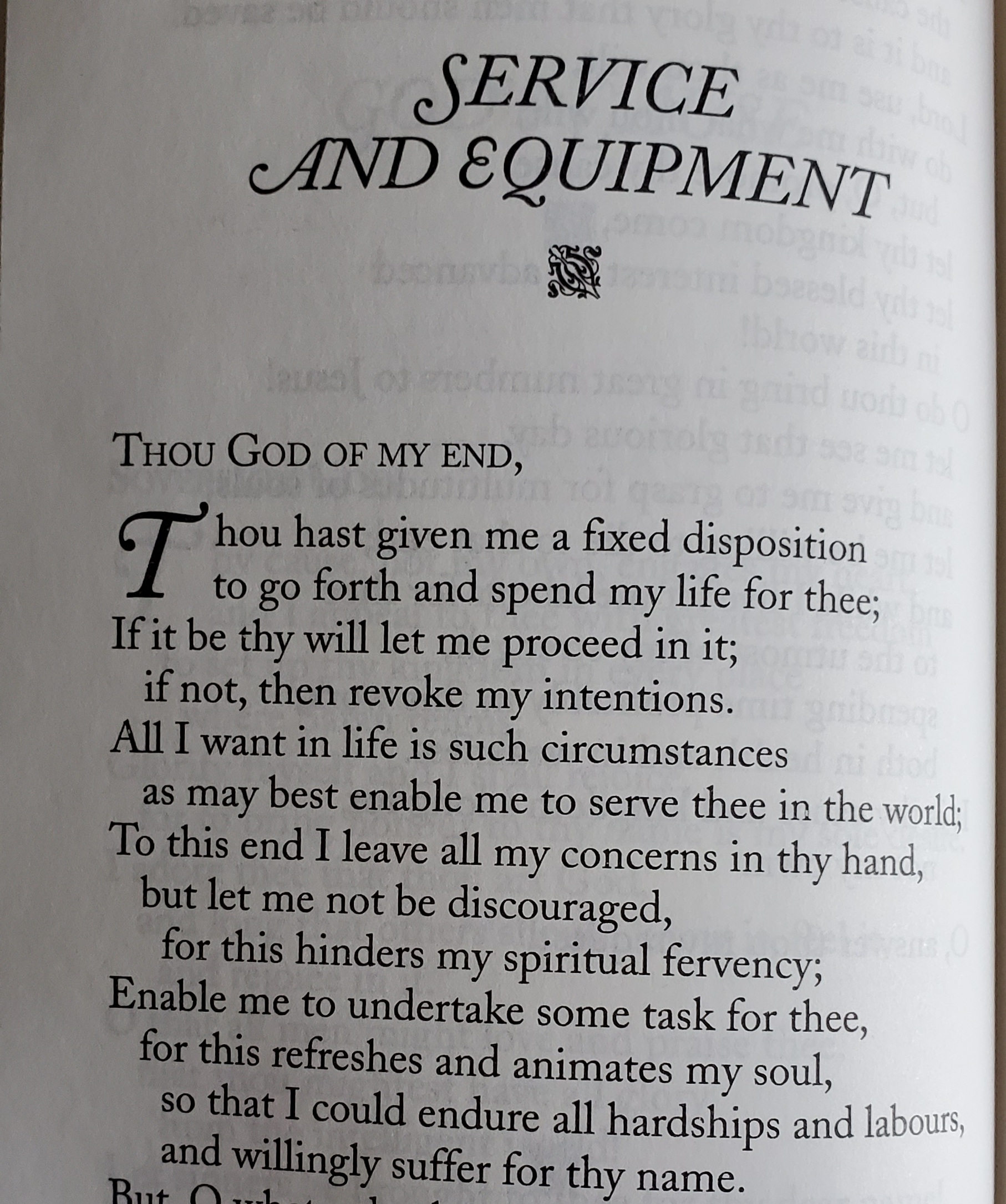
Recently I was given a book of Puritan Prayers and Devotions entitled The Valley of Vision.

This photo is an excerpt of the prayer I read before sitting down to my desk to start work this Monday morning.

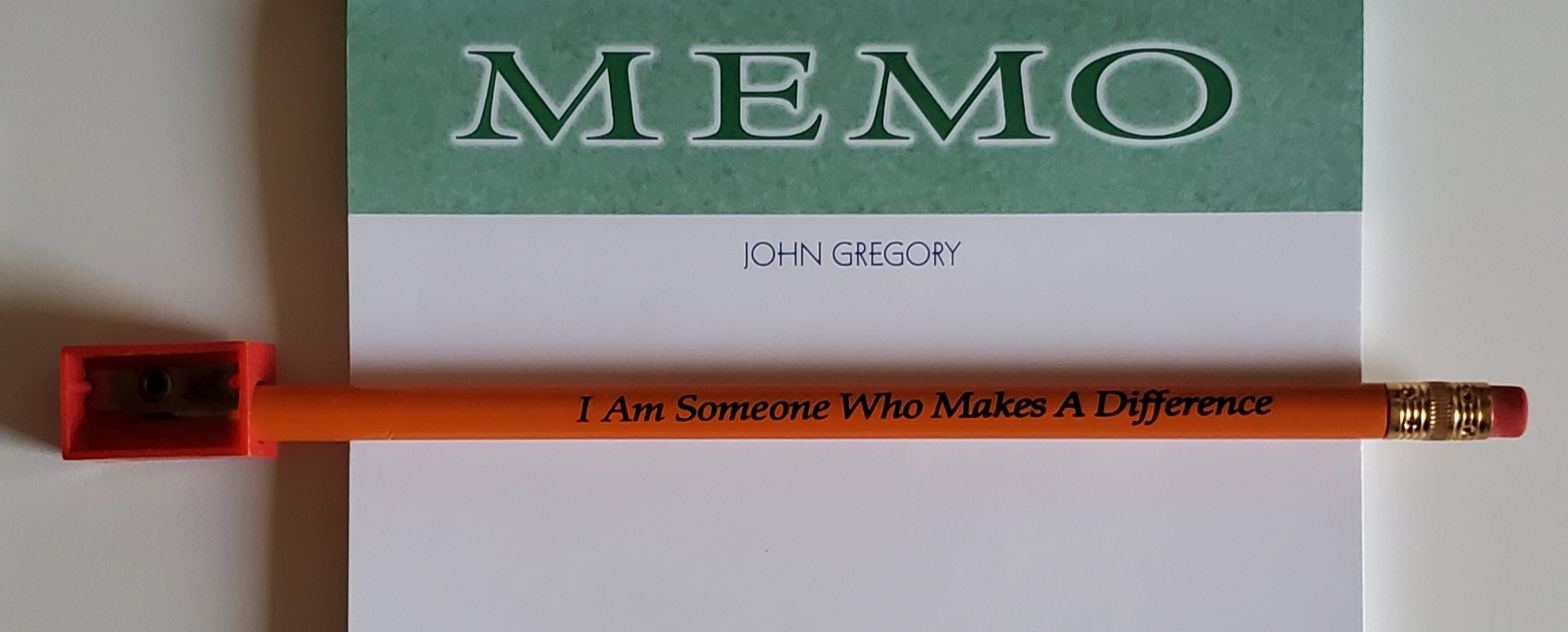
Only a few minutes in, I went to find a pencil in my collection of unused writing utensils. The first one I grabbed had the engraving “I Am Someone Who Makes A Difference.”

I saw a connection that we could all use. May we all pray to submit ourselves to make a difference in our God-given disposition. May we walk, therefore, confidently, purposefully, and observantly to make a difference.

5 Months in the Mirror

My friend Larry and I had breakfast yesterday. Without question, that conversation always includes sports and politics. But since being able to meet again after COVID lockdown, the conversation is more about what we’re observing and experiencing through these unusual times.

One thing we both agreed on: who people are is being exposed. 

  • If they are go-getters, they are still getting it. They may have to do it differently, but they are still going, still getting.
  • If they are glass-half-emptyites, they are having a hard time even picking up the cup.
  • If they are people people, they are figuring out how to stay engaged and connected.
  • If they are get-by-with-as-little-work-as-possible apostles, they may never vote to come back to an environment built on responsibility.

A reference was made that we’ve all been forced to look in the mirror. Some are fine with what they saw because they were already, for the most part, used to looking in the mirror and making adjustments. Others, well, they were taken back by what they saw. So they had a choice to make-which is the reality we all have when we look in the mirror. And good on us when we choose to do something, make adjustments, with the stuff we observe that needs improvement.

Larry stopped shocking me years ago; however, when he started a sentence with,”My favorite Michael Jackson song,” I thought he might be showing his first symptom of a new virus strand. When I let him continue, he made a good connection. 


So after five months of looking in the mirror, what are you doing with what you see? What conversations are you and God having about what you are both seeing?

Uniquely

Recently-well, before “stay in place orders”-a ministry leader stopped by the office to leave some information. He was with The Bivocational and Small Church Leadership Network. Check out their website; you’ll learn some things like I did.

One of the pieces this leader left with me was a book, Uniquely Bivocational: Understanding the Life of a Pastor who has a Second Job, which I’m reading now.


For sure, there are unique things to consider about a man finding himself living this out. However, after reading chapter 8, The Need for Balance, there are general things for believers, and particularly any ministry leaders, to keep in mind. For instance, here’s the list of twelve keys to achieving balance Gilder mentions:

  1. Put God first in your life
  2. Establish priorities
  3. Link your calling to your calendar
  4. Have a clear purpose and direction for your life
  5. Be proactive rather than reactive
  6. Maintain a clear conscience
  7. Find an accountability partner
  8. Have a family council
  9. Find the secret of contentment
  10. Realize you are not superman
  11. Make regular deposits into your emotional bank
  12. Do what you do as unto the Lord

Look like a list that could help your balance? 

Yes, I’m reading this book as designed. But I’m finding that much of it could be generally applied to anyone desiring to live as God would have them-Uniquely.