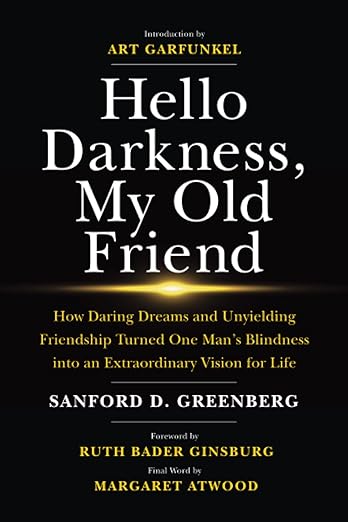
Hello Darkness, My Old Friend (book review)

First, I want to think my friend Megan for gifting this book to me. And I’m going to regift it as suggested.

You’re not alone if the name Sanford Greenberg is new to you. After reading his memoir, I suggest taking the time to get to know him.

His life is triumphant in numerous ways, most notably the journey of taking the tragedy of going blind and living life to the fullest in spite of it. How he accomplished finishing college and going after other degrees is one thing. But continuing to dream big and go hard in all areas is equally inspiring.

Knowing I’m regifting the book, I didn’t do any highlighting. Out of many elaborative thoughts and quotes, I’d like to share just one from chapter 14, “The Start of Something Big.”

I was bitten by some kind of bug. Once someone gets his or her resolve up and running, and gets it focused in a direction, it is hard to put on the brakes. In a word, there is momentum. Also, aggressive work habits form. For us blind people, it is especially hard to hold back because we are always concerned about security. Like those who survived and prospered long after the Great Depression but could never shake the habit of stockpiling food and cash for a rainy day, we never feel comfortable, in our guts, about sitting back and saying ‘Okay, that’s it. I’ve done enough.’

Sitting back. It seems to be an art form of sorts. Or at least some form of discipline that some do naturally and others work hard to pursue.

Security. It seems to be more and more pursued yet less and less attained.

Greenberg’s journey of learning to sit back and where to find security led him to this conclusion: “The only worthwhile things in the world are people and ideas.” These drove him to an extraordinary life that may have only been possible due to overcoming tragedy, striving for the light.

I’m richer for having read Sanford Greenberg’s memoir. I’m glad we met.

If it’s doubtful you’ll read it, enrich yourself by watching this video about his lifelong friendship with Art Garfunkel.

Honoring Tiny Achievements

Along with back to blogging, I’ve renewed listening to podcast episodes. If I were so inclined, I’d post on a regular basis responses to these episodes. But rather than burden myself with that task, I most often choose to point you to them. But not this time. This episode is too rich. Here’s the first of three responses to a timely episode of Everything Happens.

In Kate‘s conversation with Parker Palmer entitled Standing in the Gap, he shares a twist on journaling worth exploring. Rather than narrow it down, here’s the portion of the transcript for you to hear Parker’s description:

I was talking with this therapist who said, what I want you to do in the midst of this despair you have about being nothing and nobody and of no use, a worm, I want you to start keeping a journal. And I just, you know, drew whatever energy I could and did the fair imitation of a depressed blow up which isn’t a real blow up because you just don’t have the energy for a real blow up. But I said, are you out of your mind? I can’t write a sentence. I can’t read a page. I get lost in the very act of trying to articulate a thought or absorb it sort from the outside. He said, well, I’m not talking about a lengthy discursive journal. I’m talking about a journal of tiny achievements. And I said, what does that mean? And he said, well, for example, you told me that you were finally able to get up at 10:30 this morning, having spent most of the night and morning just in a darkened bedroom hiding under the covers. He says, write that down in the journal. You also you also told me that today you were able to get out on your bike, which is your preferred mode of exercise, because you don’t have to talk to anybody when you’re on a bike. And in this state, you’re incapable of even a simple conversation with a neighbor. You were able to ride your bike for ten minutes. Write it down. Tomorrow, start a new page with a new date. What you’re going to find, if you are faithful to this simple, this journal of tiny achievements, you’re going to find that you’re getting up a little earlier from time to time. You’re going to find that you’re riding your bike a little longer from time to time. The day’s going to come when things are going to start feeling a little more normal from time to time. The pattern of depression is sawtooth. It’s sometimes better, sometimes worse, day in and day out. Now, I was a guy for whom an achievement was writing a new book, selling 100,000 copies, getting great reviews, being invited to give talks and workshops all over the country. That’s how I spent 40 plus years of my life. These didn’t seem like achievements at all. But I today, to this day, in good mental health and in times when things are a little dark, I have recalibrated my sense of what an achievement is, and I embrace myself over much smaller achievements. And at age 85, when I probably don’t have another book in me and I don’t have a lot of post-COVID travel in me, this is probably as important as it was to honor my tiny achievements as it was when I was in deep depression. It’s a tool. And for me, it worked.

Parker has journeyed through several bouts of clinical depression. This suggestion from his therapist has turned into a life-changing, long-lasting practice. He called it a tool. That it is.

I’d also call it a blessing. Why? My last conversation with my spiritual director resulted in my awareness of needing to revive a gratitude exercise I’d abandoned. It’s a tool that helps keep me focused on the best things. It’s grounding. That’s a blessing. I imagine acknowledging tiny achievements also a blessing. Often times, my statements of gratitude seem tiny as well. But boy do they offer recalibration. Seriously, sometimes it’s good to just be grateful for toothpaste and soap. Tiny things usher in humility.

Thank you, Parker Palmer, for encouraging me to not only be grateful for tiny things, but to also honor tiny achievements.

So here we go from the first half of my Sunday:

  • Stopping to get gas before the light came on
  • Retrieving a shopping cart out of the Winn Dixie parking lot bushes so the buggy guy had one less to corral
  • Saving over 30% on groceries (A big shoutout to the inventor of BOGOs…huge achievement)
  • Out of bed after the first alarm…no snooze button today
  • Posting for a second day in a row
  • Not giving in to the temptation to respond to divisive Facebook posts

I encourage you to utilize Parker’s tool before the end of the day. May you find value and peace in your honoring.

Photo by Markus Spiske on Unsplash
Six Steps to Writing Your Laments

I’m guessing if the majority of us were asked if we had anything to lament over we’d have more than one answer.

  • A relationship
  • Religion
  • Politics
  • Finances
  • Physical aches

I’m guessing if the majority of us were asked if we had a proper approach to lamenting we’d struggle to lay it out. Thankfully, Krispin Mayfield has offered some help.

In his book Attached to God, he gives six steps to writing a lament. Why? When we express our most difficult emotions to God, we draw closer to him. Intimacy with God is found in a balance of praise and lament.

In the tradition of the Psalms, here are Mayfield’s six steps:

  1. Tell God something you wish were different in your own life or the world, such as a health condition, difficult relationship, life stress, poverty, or racism.
  2. Tell God what you feel when you think about this issue; additionally, write down any emotions you might feel considering God’s inaction regarding this issue.
  3. Tell about a time in your own life or someone else’s where God intervened.
  4. Ask God to step in and address this suffering.
  5. Tell God you’re confident that your prayer is heard.
  6. Praise or recognize one of God’s attributes or characteristics, based on your past or present experience.

Sharing some of your uncomfortable emotions with God might feel strange. But you can unlock the basement when you’re assured that both God and your faith tradition can hold the parts of your experience. When you are sad, scared, or angry, your emotions aren’t signs of a lack of faith, but rather evidence that you are exactly where you need to be-at home with a God who is waiting to hear your emotions and give you the reassurance you need. (chapter 8, “From Shutdown to Engaged”)

Photo by Joshua Earle on Unsplash

Two Tips for Journaling

Finished the last page of my current journal this morning. Always produces more thoughts and musings. Figured I’d share two of them for other journalers out there.

Question #1: Do I really need to keep them forever?

A few years ago a coaching client revealed they had every journal they’d ever written. So when they revealed how attached they were to them and expressed their bondage to the past, we went down the road of determining what might be healthier when it comes to keeping old journals. After they did some purging, they genuinely felt free from some of their past.

I since have developed a boundary of only keeping journals from the past five years. That’s my healthy mark. If you have never thought about this, it’s worth pondering. It’s possible there’s some freedom available for your heart, mind, and spirit.

Question #2: How often should I look back?

It’s another question based on what’s healthy for you. I took a few minutes this morning to purge and remember. The timing that seems right for my looking back is roughly twice a year. What I noticed this morning were two interesting emotions. Some entries still resonated strongly, strong enough to keep for future remembrance. Other entries that seemed intense when they were experienced were easy to release.

I have no idea how other journalers approach purging and remembering. If you have reflections to share, please do. Or maybe chew on it in your next entry. Either way, may your journaling continue to bring you health and freedom.

Meaningful Life Light

“Everyone you meet is a rough draft of the final story God is writing for their life.”

Jamie Erickson, Holy Hygge

This quote is still with me. Not because we haven’t already heard the analogy about life being a story, having a story to tell, our stories being unique, or next chapters. This particular quote highlights three thoughts casting a meaningful light.

“Everyone you meet…” God is writing everyone’s story. Not just the people close to you. Not just your coworkers. Everyone.

  • The Indiana Snowbird
  • The Hotel Desk Clerk
  • The Ice Cream Shop Scooper
  • The FedEx delivery guy
  • The AC repair guy

There isn’t anyone alive, all eight billion, whose story God isn’t writing.

“…is a rough draft of the final story…” It’s not done. The plot is unfolding. The future isn’t fixed.

  • The divorcee’s story isn’t final
  • The addict’s story isn’t final
  • The college dropout’s story isn’t final
  • The early retiree’s story isn’t final
  • The great grandmother’s story isn’t final

Today is the next page in everyone’s final story.

“…God is writing…” The story’s author determines its outcome. Big question: what happens when I steal the pen from God…

  • …in my financial story?
  • …in my family story?
  • …in my faith story?
  • …in my vocational story?
  • …in my golden year’s story?

There’s freedom in trusting God to write the story.

Photo by MJ S on Unsplash

A Hygge Life is a Peaceful Life

Last year I was introduced to a new word, hygge (HYOO-guh). The friend who shared it with me passed along a book that I believe she’d say has greatly influenced her way of living. That book was Holy Hygge by Jamie Erickson. (Follow the link to get an idea about the book.)

As a single guy who doesn’t entertain many visitors, I’m not Erickson’s audience. So I was tempted to not start the book, let alone finish it. But I decided to approach it like visiting a new church. If you look hard enough with an expectation to receive at least one reason you were there, you’ll leave satisfied.

I actually highlighted several things in the book, so I got more than one reason to have finished it. But these three highlights seem to weave the overall theme I received:

  • “Everyone you meet is a rough draft of the final story God is writing for their life.”
  • “Resolve to be tender with the young, compassionate with the aged, sympathetic with the striving, and tolerant of the weak and the wrong. Sometime in life you will have been all of these.” -Lloyd Shearer
  • “Don’t feel pressured to carry something that is not yours to carry.”

Erickson uses dozens of words to describe a hygge home, even a hygge life. When I read these three highlights, the woven theme is peace.

Peace is available to me and everyone I meet when life is viewed as a work in progress, a story being written by the Author of life.

Peace is available to me and everyone I meet when I offer tenderness, compassion, sympathy, and tolerance since I need them also.

Peace is available to me and everyone I meet when I respect the value of carrying what is mine and mine alone.

If You Were a Flower Arrangement…

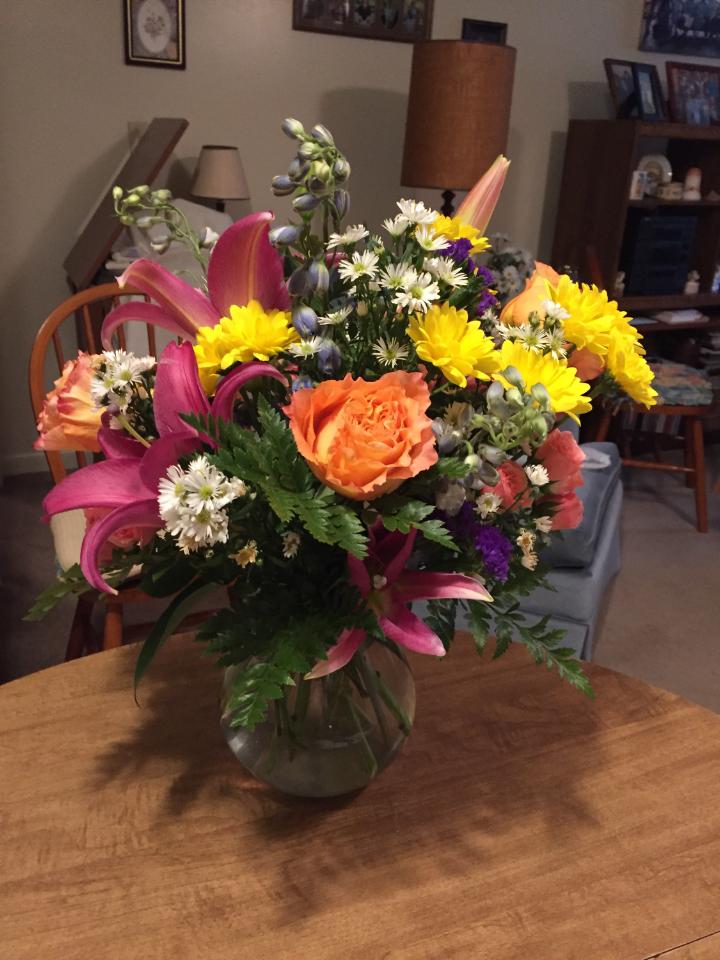
Today I had a terrific call with a coaching client. As they shared their reflections on the year, an interesting symbol came to my mind. It was somewhat fresh in my mind because I had just received it in a text this morning.

This image seemed appropriate to share because of symbolism we had used in the coaching work when we first began. The imagery was based on the petals of a flower. The exercise was to determine how many petals make up the different elements of one’s life and to create an image based on the importance of those elements – in essence, use the image of a flower to put your life in perspective.

That imagery for this client set the tone for eight months of work. Listening to them describe how they see themselves now and where they are on their journey, this idea came to mind. What if the exercise where expanding from the image of one flower to a bouquet of flowers?

So I pulled up this image to screen share:

This was an arrangement my mother received just this morning. After I pulled it up, I simply challenged my client to consider this: “How would a flower bouquet of your life eight months ago compare to one today?” As a person of vision and words, that spoke to them.

If that speaks to you, go ahead. Get out a pad. Write, draw, or both. Take an inventory. How would your life look as a flower arrangement? If you’d like it to look different, what are some things to address as you enter 2022? Pick one flower and start beautifying your bouquet.

Here’s to a nicer bouquet!

Mile 4

Pat Schneider’s writing is inspiring. Needed attempt at brain pressure release.

Unsuspected I approach

They meander

Pacing and pecking, flapping and feeding, united and unique

Unsurprised I pause

They pass

busy and bothered, noticed and noted, caught and captured

Unhesitant I acknowledge

They came

sent and selected, happy and harmonious, celebratory and committed

Reflecting on seeing the flock of ibis on my run this morning, the day after my birthday, and my friend who joked I work like them. “The family flew in.”

Neon Flashes

The topic of writing surfaced three times today. Only one was planned. It was first…and rich. Made the following two neon flashes.

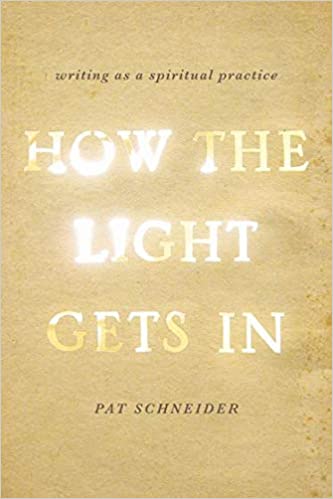
The planned conversation introduced me to this book:

Added to my “to read” list.

A few ponderings about “writing as a spiritual practice”-its purpose and potential:

  • What if writing gives our spirit voice?
  • What if writing connects our spirits?
  • What if writing opens our spirits to commune with God?
  • What if writing nurtures our spirit’s healing and wholeness?
  • What if our spirits need to write?