Problems to Society

“Beatitude people aren’t problems to society.” -J. Paul Nyquist, Prepare (2021 book #2)
Students of the New Testament understand that adjective beatitude. It’s a reference to the first part of Jesus’ Sermon on the Mount found in Matthew. Chapter 5 verses 3-12 contains a list of eight descriptors for people that Jesus taught are blessed. These descriptors run, just like they did then, contrary to society’s thoughts about being blessed, being happy. Take a look at this summary by Pastor David Jeremiah, and you’ll see why:
  1. The humble (those poor in spirit)
  2. The hurting (those in mourning)
  3. The harnessed (the meek)
  4. The hungry (those seeking righteousness)
  5. The helpers (the merciful)
  6. The holy (those with a pure heart)
  7. The healers (the peacemakers)
  8. The harassed (the persecuted)
A different worldview describes happiness and blessing by what you own, by getting what you want, and even more by what you deserve. That worldview potentially leads to a society full of self-indulged citizens who, unintentionally and intentionally, cause problems. For those hungry for peace in their hearts and in their world, we must take the lead. We must be beatitude people. Will we be perfect? No. So in those moments, we’ll need other beatitude people around us. People who say, “I’m for my society more than myself. My worldview is different. I am a beatitude person. I’m not perfect either, but God gives me grace. I’m going to share that grace and decrease problems in our society.” Photo by Sabine Van Straaten on Unsplash

A Toe-Dip Re:Christian Nationalism

I follow Pastor Jarrod Jones’ blog. His last post expressed his feelings following January 6. The title? No More of This. Pretty well expressed my sentiments.

In the blog, Pastor Jones used the term “Christian Nationalism” three times. This line of content and dialogue isn’t my normal pool, but I’m going to dip my toe in. Why? Because I believe most of my fellow American Christians need to enter the dialogue. And I’d rather not sit this one out.

I felt pretty good about what I understood the term meant, but I decided it would be helpful to read how others-more learned and versed-were defining it. And it wasn’t hard to find their viewpoints. In an article published in December by The Gospel Coalition entitled “Christian Nationalism vs. Christian Patriotism” by Thomas Kidd, Matthew McCullough was quoted to define American Christian nationalism as “an understanding of American identity and significance held by Christians wherein the nation is a central actor in the world-historical purposes of the Christian God.” 

I then found notes from Christianity Today‘s Quick to Listen podcast episode that aired January 13. The episode title was “Christian Nationalism is Worse Than You Think” and featured Paul D. Miller, a research fellow of the Ethics & Religious Liberty Commission. Miller said this: “Christian nationalism is a political ideology about American identity. It is a set of policy prescriptions for what the nationalists believe the American government should do. It’s not drawn from the Bible. It draws political theory from secular philosophy and their own version of history as well.”

These definitions are alarming. They are most alarming to me because they convey what I’ve observed more and more in my own experience in the church. I must add, in the American church. Why the addition? I haven’t traveled much internationally; but in the three nations I’ve visited (Belarus, Jordan, Guatemala), I had the opportunity to visit and attend worship with fellow Christians. On reflection of those visits as I returned to worship in the States, a glaring difference emerged. Those believers love their countries; they are proud to share about their cultures and accomplishments to the visiting American Christians. But that doesn’t lead them to expect what American Christians expect when it comes to politics and freedoms. They seem to know where the line is between worshipping God and worshipping country. For example, the idea of arguing over the placement of national flags in their worship center would be foreign to them and would never reach the pitch of causing permanent division in their church body. So imagine their reaction to seeing the usage of Christian flags in the Capitol’s desecration.

One day following January 6, Relevant, in an article about the rise of Christian Nationalism, recounted the April 2019 shooting in California where 19-year-old John Earnest walked into a synagogue and opened fire, killing one woman and injuring three, because he believed killing Jews would glorify God. We Christians, who love our country but love God more, have the opportunity to set things right, like Reverend Mika Edmundson. Reverend Edmundson is the Presbyterian pastor of the church where John Earnest attended. He expressed after the shooting that his church bore some of the blame for Earnest’s beliefs. “It certainly calls for a good amount of soul-searching. We can’t pretend as though we didn’t have some responsibility for him.”

Church leaders, American Christians, we can’t pretend we don’t have some responsibility for January 6. We can’t pretend any longer.

Photo by Štěpán Vraný on Unsplash
Two Things God Thinks of Me

In the last few days I’ve been struck by two ways to know what God thinks of me. They sound similar yet carry different meanings.

The first came from a devotional that highlighted Hebrews 11:16:

But as it is, they desire a better country, that is, a heavenly one. Therefore God is not ashamed to be called their God, for he has prepared for them a city.

To be clear, no, Hebrews 11 is not about me. It’s a list recalling Old Testament lives of faith. And the writer pauses in the list to say, “God was not ashamed to be called their God.” Why? Their faith. Their faith to build an ark. Their faith to leave their families. Their faith to wait. Their faith to give up everything. Their faith to trust. Their faith to desire heaven over earth.

When I have and act by that kind of faith, I know God is not ashamed of me.

The second came from the book I’m reading by J. Paul Nyquist, Prepare.

“God never blesses anyone or anything He doesn’t approve of.”

Nyquist says this based on the beatitude: “Blessed are you when others revile you and persecute you and utter all kinds of evil against you falsely on my account.” (Matthew 5:11) He begins chapter four of his book with this verse to support that persecution isn’t a curse but a blessing. So in the face of false accusation, reviling, and evil, I can know God approves of me.

When I face evil attacks, I know God approves of me.

I don’t have to doubt what God thinks of me when my faith is steadfast. He approves. He is not ashamed.

Photo credit: Allef Vinicius on Unsplash

Looking for Book #1?

Book #1 for 2021 done. And it was a good choice to kick it off.

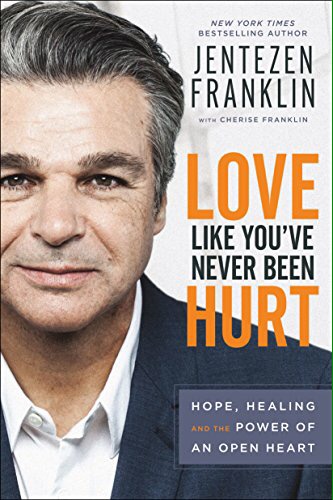
It’s time to let God heal you. It’s time to let God restore you. It’s time to let God do a mighty work.

Franklin takes the first half of the book to define and describe love.

Don’t speak to the fool in others; speak to the king in them.

Chapter four, “Stop Keeping Score and Start Losing Count,” by title alone moves you in the right direction. He had this to say about Jesus’ work on forgiving:

Before he could leave this earth, Jesus had to forgive those who were torturing him, those who were mocking him, those who were blaspheming him. This was important because God’s hands will not touch spirits that do not release forgiveness. Wherever you release forgiveness, you release the power of the Spirit of God.

For several chapters, Franklin focuses on the family. Why? Perhaps because it’s the place where we learn about love and also where we are most prone to be hurt by it.

You cannot be so spiritual that you neglect natural things. And you cannot be so natural that you neglect the spiritual things. God’s will is somewhere between Martha’s kitchen and Mary’s altar.

The final three chapters address one’s love relationship with God. He argues that the enemy’s goal is to create distrust. And what happens often is instead he pushes us to pray more, to run to God, and to increase our faith-particularly when we love like we’ve never been hurt.

Franklin wrote a Keeper.

What’s Left

God is still the God of what’s left. -Jentezen Franklin, Love Like You’ve Never Been Hurt


This quote is in chapter 11, “Fight for Your Family.” Franklin’s point is that whatever the status of one’s family there’s still something left. Now is the time to let God be God of whatever’s left. Encouraging. Hope-filled.

How ’bout we broaden the story? Like…

  • God is still the God of what’s left of your company
  • God is still the God of what’s left of your marriage
  • God is still the God of what’s left of your friendship
  • God is still the God of what’s left of your finances
  • God is still the God of what’s left of your church
  • God is still the God of what’s left of your neighborhood
  • God is still the God of what’s left of your government
  • God is still the God of what’s left of your health
  • God is still the God of what’s left of your education
  • God is still the God of what’s left of your parenting
  • God is still the God of what’s left of your career
  • God is still the God of what’s left of your retirement
  • God is still the God of what’s left of your life

Neon Flashes

The topic of writing surfaced three times today. Only one was planned. It was first…and rich. Made the following two neon flashes.

The planned conversation introduced me to this book:

Added to my “to read” list.

A few ponderings about “writing as a spiritual practice”-its purpose and potential:

  • What if writing gives our spirit voice?
  • What if writing connects our spirits?
  • What if writing opens our spirits to commune with God?
  • What if writing nurtures our spirit’s healing and wholeness?
  • What if our spirits need to write?

A Prayer for 2021 (Psalm 90)

My devotional on youversion today focused on Psalm 90 written by Moses. The writer zoomed in on verse 12, the reflective prayer opportunity in Moses’ words. I chose to read the whole chapter and then compare it in several translations. That’s when I came across the passage below from The Message.
Oh! Teach us to live well! Teach us to live wisely and well! Come back, God —how long do we have to wait?— and treat your servants with kindness for a change. Surprise us with love at daybreak; then we’ll skip and dance all the day long. Make up for the bad times with some good times; we’ve seen enough evil to last a lifetime. Let your servants see what you’re best at— the ways you rule and bless your children. And let the loveliness of our Lord, our God, rest on us, confirming the work that we do. Oh, yes. Affirm the work that we do! (Psalm 90:12‭-‬17 MSG)
These words seemed timely. I don’t remember reading them before from The Message. As I read them I was drawn to the action words of the prayer: teach, come back, treat, surprise, make up, let, affirm. Of those seven, I highlighted the four phrases that spoke most to me. I then wrote my own prayer, adding my 2021 focus. If I were to summarize that prayer, it would request, “Surprise me this year by showing off who you are.” What words in this passage speak to you? How would you word your prayer for 2021? Photo Credit: Ben White on Unsplash

Balloons Fall Over

Today, the balloon fell over. Figuratively.

A video project was on the agenda. These projects have moving parts, but this one had more than usual. Within minutes of starting to set up, it was clear plan A wasn’t happening. On to plan B.

While editing after recording, plan C came into view. Doesn’t always happen and isn’t always better, but the end result was an improvement over the initial vision.

When we entered 2020, we had plans, visions, expectations. Then the balloon fell over. We were forced to develop and carry out plans we didn’t even know were possible. Flexible, adaptable, fluid mindsets aided our finishing the year, in some cases better than the initial vision. Balloons went from flat on the ground to soaring high in the sky.

As we look around, we see various stages of other’s balloons. Not everyone’s is back up. Not everyone’s plan B or C worked out. Not everyone’s mind has reset.

2021 will start differently than 2020. We enter hoping to see all the balloons upright, maybe even flying together. Our hopes can best be grounded by commiting to supporting others whose balloons are still on the ground or will fall over just like they’ll be there for us if ours does. 

One thing we know for sure, 2020 isn’t ending with God off the throne. There is coming a day when he will make all things new. “These words are trustworthy and true.” (Revelation 21:5) May these words be enough to keep the air in balloons, to keep them from falling over.

Photo Credit: Will O on Unsplash

This Life is Just a Dot

Yesterday I posted thoughts from Bruce Wilkinson’s book A Life God Rewards. Before leaving that, here’s one other quote that could impact your day.

Most of our life happens after our physical death.

That’s “chew worthy.”

Of course, he’s referring to the belief of eternal life. Can’t say I’ve heard anyone put it like this. Gives it fresh reflection.

To make it more clear, he gives six main events of forever life: Life, Death, Destination, Resurrection, Repayment, and Eternity. The thought that this life we know is just a dot on an unending line might bring you joy or fear. Wilkinson’s objective of his book is to help you not wonder or worry about what might await you outside the dot. What you believe and how you live now can give you hope for the rest of “most of your life.”

Chew worthy.

Photo credit: Nick Fewings on Unsplash

Stewarding Well

In the last week I’ve been struck by a theme. It started with a conversation, then continued unexpectedly in the book I was reading.

In the conversation I realized a summary of how I was answering questions about my current life outlook had to do with being a good steward. My summary was this: “I’m trying to steward well my past, present, and future.” In a journal entry the next morning, I wrote four action words by those tenses that could describe that stewarding.

  • Past: Learn, Forgive, Release, Praise
  • Present: Abide, Listen, Observe, Praise
  • Future: Anticipate, Release, Trust, Praise


As I chewed on these words and my summary, as God does, he showed out by having the next chapter in the book I was reading be on this very subject. Chapter 5 of A Life God Rewards is entitled “The Question of Your Life.” Using Jesus’ teachings, Bruce Wilkinson suggests that the important daily question for our lives should be this: “How will I steward what my Master has placed in my care?”
That’s what a steward does-manages his master’s assets. And in the case of a Christian’s life, those assets include talents, strengths, personality, and interests. Stewarding well requires faithfulness. Faithfulness to the action words in my journal entry may be a good place to start.

This week may be a God-given opportunity for all of us to chew on these thoughts. How do we steward the last year? How do we steward this week? How do we steward 2021? 

May we all be good stewards for the Master!