The kiss meant to betray honored
The arrest meant to end began
The words meant to charge freed
The stripes meant to wound healed
The crown meant to mock heralded
The cries meant to doom lifted
The cross meant to burden unleashed
The sign meant to accuse declared
The nails meant to torture identified
The sword meant to pierce solidified
The stone meant to secure revealed
The cloth meant to cover displayed
The tomb meant to hide announced
The death meant to squelch ignited
Photo by Ismael Paramo on Unsplash
Devotional
Pilate Got It Right
I read John 19 this morning, Good Friday. Here are two interesting verses to contrast:
15 They shouted, “Take him away! Take him away! Crucify him!”
Pilate said to them, “Should I crucify your king?”
“We have no king but Caesar!” the chief priests answered.
19 Pilate also had a sign made and put on the cross. It said: Jesus of Nazareth, the King of the Jews.
So many questions. Did the chief priests really mean what they said? Did they really view Caesar as their king? If so, what did they say to the people around them when they spoke about their God, their loyalty to him? Seems contradictory. Feels familiar in 2021 America.
Of course, one could understand from Jesus’ teachings that the chief priests didn’t really get it. When Jesus talked about the kingdom of God, his language and teaching may have even gone over their heads, too. They either didn’t understand it or they rejected it. Either is tragic for them and the people they led. Seems that what we continue to witness happen in religious circles when leaders focus their eyes on the wrong king isn’t anything new.
As a follower of Jesus, to declare allegiance to any created being over their Creator declares citizenship in an earthly kingdom. Some scholars teach that Pilate’s note on his sign wasn’t so much a personal declaration as a statement of charge-that Jesus claimed to be the King of the Jews. Interesting that, regardless of his intent, Pilate-the non-Jew, the one not looking for a Messiah, the one who was simply trying to do justice for the accused man-declared the truth.
May we all on this Good Friday declare that Jesus is King.
Photo by Josh Applegate on Unsplash
This Easter
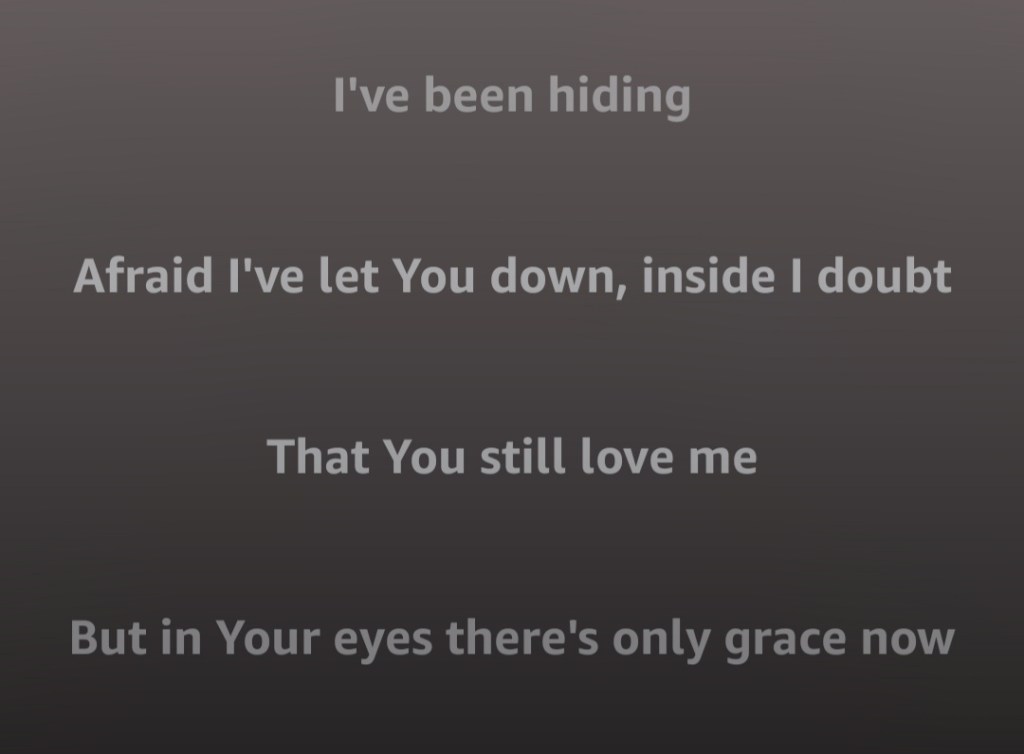
The main reason they stuck is the contrast between the doubting of love and the exchanging of grace. Been on my mind for several weeks now, so these lyrics heard through the lens of Easter stopped me in my morning routine.
That’s what grace does. Makes you pause. Humbles your expectations. Erases your doubts. Brings you back.
May we all pause in humility to be brought back from our wandering through the erasing of our doubts of God’s love this Easter!
Every Circle Grace

Grace is an interesting topic. In my years in the church, the focus of grace has mostly been on the grace we receive from God. Rightly so. And during this Lenten season, it deserves top of mind.
Devoted followers of Jesus’ teachings believe we are to give what we receive. Everything we receive from God we are to pass on. Love. Mercy. Forgiveness. Faithfulness. And even Grace.
My observation is we tend to gift grace in various degrees. Some people give themselves plenty of grace…much more than they give to others. Some people disproportionately give their family members grace in comparison to others-some more, some less. One amazing observation that stands out more and more is the grace people in the church give to themselves compared to the grace they give people outside the church. Again, it goes both ways. Some people give better grace to their fellow churchgoers while others give better grace to those outside the church.
For better or worse, I’m the latter. For the record, neither is correct. Grace is to be shared with all people equally.
Looking at Jesus’ relationship circles, we observe supernatural grace giving. He gave Peter as much grace as he gave the woman at the well. He shared his grace equally with Nicodemus and Judas. His mother and Pilate both received appropriate grace. What an example he left us.
I most often fail at giving grace to those in my closest relationship circles. That awareness provides growth opportunity so whether in the next hour I engage a stranger in the store, a friend on the phone, or a colleague in the office, my grace is for every circle.
Jesus practiced every circle grace. His resurrection power says, “So can I.”

Our Batons
This morning I listened to a student pastor speak on the importance of being for the next generation. He used the analogy of passing off a baton in a relay race. His last point was an encouragement to not waste your weakness-meaning your past brokenness, your inabilities, or your inexperience do not disqualify you from being on the track, being part of passing off your baton to the next generation. You can carry a baton and pass it on.
Got me to thinking about the actual baton. What is the baton we are passing off? Is it just a broad view of a way of life? What if each one of us knew in more detail what the baton is that we are carrying? I believe we have our own unique baton that we can pass off to countless others throughout life.
Many things come to mind for me. I have a baton of music that I have passed on in many ways. I have the baton of church leadership that is still running its course. I have a baton of living a contented single life. One could say I have a baton of running that I occasionally pass on.
Those are skills and experiences. We could, and I believe we should, consider our spiritual batons also. These spiritual batons are the core of who we are, how we live. We run with the baton of faith, surrender, peace, hope, love, mercy, humility, kindness, patience-what Paul calls the fruit of the Spirit.
Another thought about our unique baton could include the life challenges that God has used to mature us. These could be anything from experiencing loss of jobs, finances, relationships to seasons of doubt, distance, or disconnect. All of these things make up the baton that we are carrying.
What if we held tight enough to our unique baton making sure we don’t drop it but loose enough to let God keep molding it? What if we passed on these batons as often as we are prompted to while we are living rather than only after we die? What if we lived more for what we relay than what we grip?
You might have to get a wheelbarrow for all those batons. But imagine the impact when your race is over and your batons are still in the race.
Photo by Jonathan Chng on Unsplash
Remember
When the car dies
Remember what He’s already done
When the doctor isn’t smiling
Remember what He’s already done
When the check bounces
Remember what He’s already done
When 3AM parenting clocks in
Remember what He’s already done
When they move out
Remember what He’s already done
When the blue lights follow
Remember what He’s already done
When the house is empty
Remember what He’s already done
When you don’t know what you don’t know
Remember what He’s already done
When the tank runs dry
Remember what He’s already done
When shame invades
Remember what He’s already done
When your best is rejected
Remember what He’s already done
When forgiveness appears wasted
Remember what He’s already done
When eternity taps your shoulder
Remember what He’s already done
When reflection lies
Remember what He’s already done
When it’s your time
Remember what He’s already done
Photo by Mihály Köles on Unsplash
Light
Light uncovers
the begging to be
seen, corrected, confessed, forgiven, celebrated, heard, protected, cleansed.
Light pulls
out the
disfigured, undiscovered, forgotten, lonely, hurting, rotting, hidden, stolen.
Light comes
rhythmically to every
morning, home, friend, neighbor, child, field, highway, mountain.
Light resurrects
what darkness
broke, destroyed, severed, tore, distorted, invaded, belied, abandoned.
Light wins
in every
heart, mind, city, neighborhood, country, family, room, soul.
Sabbath Prayer
Before I slept I prayed
A simple request
Questioned selfish or communal
“Rain”
While I slept you replied
A gentle grant
Received familial and sacrificial
“Gladly”
After I slept I smiled
A pleasing sound
Whispered kept and fulfilled
“Clean”
Photo by Jack Finnigan on Unsplash
Grace to Fake It
I was called a liar yesterday. In jest while proofing my email, my colleague accused me of not being honest by expressing appreciation for a phone call that they understood I wasn’t really thrilled about having received. They were right, sort of.
My reply, “It’s called grace.” Amy Cuddy would call it “faking it till you become it.” (From her book Presence)
Let’s be honest. We don’t always have grace, mercy, love, forgiveness, trust-all the things we want to have, to be, to give. It’s that fruit of the Spirit list (Galatians 5:22-23) that we strive for, that we judge ourselves by, that we possibly believe just isn’t attainable.
Although Cuddy wasn’t making a spiritual statement with her suggestion, I’m suggesting we can adopt it when it comes to producing spiritual fruit. Following the Spirit’s lead, we can give grace, even if it feels less than 100%. We can forgive, even if it isn’t 100% pure…yet. Does that mean we are lying? I’d say it means we are “walking more in the Spirit than in the flesh” (back up to verse 16 in Galatians 5).
We have to start somewhere. Maybe what we all need is grace-grace to allow ourselves to fake (submit to it when it isn’t 100% what we feel) the fruit until we become it. Sorta like when your parents made you say you were sorry and you loved your sibling as part of their discipline tactics. 100%?
P.S. The reply email I received produced better results from faking it than not.
Too Comfortable?
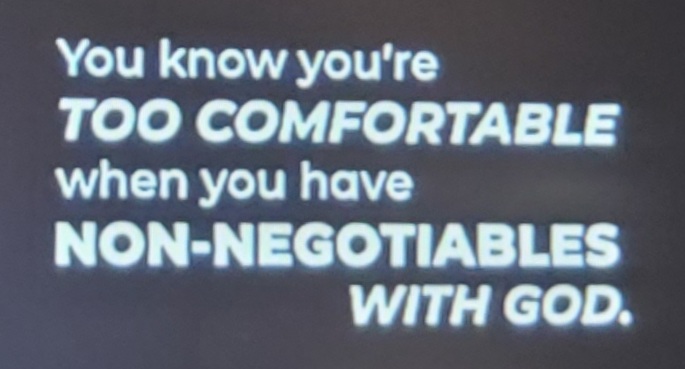
This quote is a screenshot from a Sunday morning message given this past week by Pastor Jordan Easley of First Baptist Church, Cleveland, Tn. He’s in a sermon series entitled “How the Church Acts.” In this message, he addressed that the church is to be made up of people who live with purpose. It wasn’t a message that churchgoers haven’t heard before, but this statement shed a different light on the message.
What is a non-negotiable anyway? My words-something that a person won’t budge about. For instance, I’m an Alabama fan-not going to budge on that one. I don’t eat brussels sprouts-pretty sure that’s not going to change. You get the point.
So when it comes to churchgoers, how is it possible that they have non-negotiables? According to Pastor Easley, it’s possible because they’ve become too comfortable. He wasn’t necessarily referring to being too comfortable in our lifestyle; he’s referring more to our view of God, our relationship with the Giver of Life both now and forever.
This statement made me think the rest of the day. Made me question what non-negotiables I may have. Made me wonder if I could be drawn to making some and what would be the result. Made me wonder enough that I’m sharing it with you.
Non-negotiables won’t exist in heaven. Makes me want to eliminate them today.

