The Gift of Balance: Ministry and Service (Part 1)

(This is part one of the final topic in a series on the subject of balance. It being the holidays, we thought titling this series the gift of balance seemed appropriate. By “we,” I’m referring to the series contributors. Joining me in this series are Mark Stanifer and Tonya Waechter. This entry will be the first half of the conversation continuing tomorrow with the second half.)

Tonya: All of us as Christians are called to some kind of service, in some capacity. The service may not be within the church, but it doesn’t mean you’re not serving. The right mindset is determining what God has for me and my family to do. Like when I’ve talked about hockey, those were moments when we are able to share with other families and coaches through what God had for us. It is seasonal, so we could also ask, “What does God have for me in this season, in what capacity am I supposed to serve?” This should take into account our gifts both individually and as a family.

Mark: Kingdom work is not constrained to church work. Often there is this imbalance or perception that our service is contained within a church activity. As Jesus’ followers, we are challenged to be doing kingdom work all the time, regardless of where we are. That is a key mindset for this topic.

John: When you mention seasons, Tonya, it reminds me of teaching on spiritual gifts in church membership classes and helping people find places of ministry.  One thing that is very clear is giving them the freedom to think seasonally. Maybe right now they don’t have the time to do the ministry they would like to do for multiple reasons. It’s also possible they’ve outgrown their current ministry of involvement.  They may be ready to move into a different type of ministry or into a different level of leadership. As believers grow, ministry is probably going to look different.

To answer this question, I was drawn to Matthew 22 where Jesus answered the question about the greatest commandment by saying, “Love the Lord your God with all your heart, soul, and mind; and the second is like it, Love your neighbor as yourself.” With that mindset, ministry is not confined to a location or an organization. My ministry mindset is to love God with all of my being. Out of that flows how I am to love others. I mess that up all the time. When I realize I’m off track, this is my marker to come back to. “Where am I off track on these two things?”

TonyaI’m a strong believer that if we really do take that first commandment seriously the rest of it all falls into place. We will truly be trying to hear the Lord, to do His will. We are going to make mistakes because we are human, but we are going to know it right away because of conviction. Everything we’ve talked about is about keeping God first and truly loving Him with our whole being. We’ll better love our spouse, our children, even the person in line at the store.

John: This has been a particular step of obedience for me this year. In thinking about what to do during my sabbatical, I had to work through what I wanted to do versus what God wanted me to do. If I had done what I wanted, it would have looked differently out of my own selfishness. When I put myself back in the space of answering who am I living for when I’m given an opportunity to do something, who am I to say no? If I do the Jonah thing and run in the opposite direction, my balance is wrong because it’s all about me.

Mark: That makes me think of a book I read earlier this year, Love Does by Bob Goff. His personality is so different than mine, so I lived vicariously through him. What he says in the book is, “God presents me with opportunities all the time, and I want to just keep saying yes. I don’t want to miss out on the adventure that he has for me.” When we say no to something God is inviting us into, we miss the adventure he wants to take us on and how he wants to love and bless us others through what he’s asked us to do.

John: So that brings up a big question. Why do some of us tend to be the “no replier” and some tend to be the “yes replier”? I tend to be the no replier. Now, once I’m in I’m all in, you know, get out of my way. Getting me all in may take a little while. Whereas other people, like what you’re describing, are on the opposite end of the spectrum.

Tonya: There’s so much that goes into that-personality, past history, so many pieces that go into that. That’s a hard one to answer.

John: Maybe we can come back to that next year after we’ve had time to think about it.

Tonya: Yeah, that’s a book, a title to a book.

Mark: Actually it is a title to a book. It’s called Resisting Happiness by Matthew Kelly. His assertion is beyond just responding to God, but certainly set in that content. We often tend toward resisting happiness; and in the context of following God, it’s being the person and doing the things He’s created us to be and to do. There’s a tendency for some of us to resist the change or the difference or the invitation or the unknown. When we lean into that is where we can find happiness. Some people may have that figured out or are wired that way, and other people, like myself, tend to struggle. My tendency is to resist at first; and then when it’s really important, God makes it very clear and then I make the decision to be all in also.

John: To be honest, I don’t look at these things as my avenue to happiness. I’d have to sit in that and marry the two together. My brain doesn’t naturally marry them together.

Mark: To play the other side, there are people who say yes all the time for the wrong reasons. They say yes looking for some validation, to earn something that can’t be earned through doing, or other emotional or psychological reasons. You can say yes out of an unhealthy place and contribute to some unhealthiness.

John: That makes me think of something that, Tonya, you’ve probably also witnessed. I have seen multiple guys really feel convinced that they were called into church/pastoral work and within a short amount of time they realized they were wrong and crashed and burned.

Tonya: Yeah, going in for the wrong reasons. Maybe they were a PK and felt expected to follow in dad’s footsteps, or the idea that they can only have impact for the Lord in ministry through church work. I had a pastor say to me not long ago that he has no passion for his people and he really despises being a shepherd. He was totally a square being pushed into a circle. He’s a professor; that’s what his passion is, not being a pastor.

John: To make that broader, you don’t have to be a church staff member to fall into that trap. Anybody can feel like they’ve been drawn into doing something and not fully aware of why they are saying yes. And once they get in, it doesn’t work, because of your analogy, Tonya, square and a circle.

Mark: My experience in this context is watching new believers say yes to everything and quickly get burned out. They were overbooked in this ministry space, and it wasn’t a good scenario for them.

Tonya: My husband was talking about this last night, how that pastors are doing so much of the work and people aren’t seeing themselves as helpers or servants. Some pastors also have a hard time giving up control in certain areas. Helping people find their gift and plugging into that one ministry, not ten, but the one ministry where they are gifted, the church that is plugged in like that, the labor is not overwhelming. People can get caught up in pleasing people instead of understanding what God has for them.
Dairy Farm Inspiration

“Have you ever stuck your hand up a cow’s butt?”

Not a question meant for you, really. It’s a question asked by someone on TV.

I just watched an episode of Undercover Boss from 2013 where Menchie’s frozen yogurt franchise CEO Amit Kleinberger went undercover at a dairy farm and a kids birthday party to assess his company. In his work at the dairy farm, Amit met Francisco. Francisco asked Amit that question. By the end of that day at the dairy farm, Amit had a new perspective about his company, and probably about life. What Amit saw in Francisco was a passionate employee. Francisco cares about his cows. “I love these cows. I love my job.” Amit later told Francisco that he left inspired that day. 

So why would a CEO be inspired at the dairy farm? One reason was he was able to help Francisco bring a new calf to the world. Another first for Amit. Francisco let Amit name the calf; he named him Alan. That was a memorable moment, yes. But what inspired Amit was the attitude, perspective, and focus of Francisco. The way he talked about the cows, the purpose he shared about his job, and the model he hoped to show his children inspired Amit.

How we do what we do should inspire others. It’s biblical. We are to mirror the image of God in how we do work. You may think, “But I don’t like what I do. I’d rather be doing….” So why aren’t you? Is it possible God wants to help you but you’re not letting him? How can you follow his plan for you?

You may also think, “I’m doing what I’m meant to do, but I’ve lost the joy, the passion. I’m probably not inspiring anyone.” So where did the passion go? What caused you to lose it? What would it feel like to restore it? Are you willing to do the restoration work?

Maybe we all could use a trip to the dairy farm. And stick our hands where they’ve never been before. Ready?

What’s God Missing?

Seasons. Life has them. That includes nature. That also includes humans.

God doesn’t have seasons. He is constant, the same yesterday, today, forever. So when we go through a season that doesn’t include him or creates distance between us, what does that mean for him?

What brings us into such a season? 

  • It may be a season where time management is a challenge, and one of the things that suffers is our alone time with God. 
  • It may be a season where you are transitioning into a new job, a new city, a new family dynamic, and it hasn’t dawned on you to figure out where your time with God fits into the new. 
  • It may be a season where you are simply dry, and time alone with God feels even more dry. 

Whatever brought on this season, all you know is that you miss your time with God. You know what you miss, and you’re trying to recapture it. To recapture it, maybe even enter a season yet to be experienced, what if you answered this question: What is God missing?

If you’re missing whatever you used to get out of the relationship, what is he missing that he used to get out of it? Is he missing…

  • …the opportunity to embrace you?
  • …the chance to guide you?
  • …the time to refresh you?
  • …the avenue to encourage you?
  • …the method to challenge you?
  • …the space for you to worship?
  • …the channel to inspire you?

One thing I’ve experienced is the truth to the promise God made that if we seek him we will find him. Give seeking him a shot by asking him this question. I’m guessing he can’t wait to tell you what he’s been missing.

What is God Calling Me to Become?

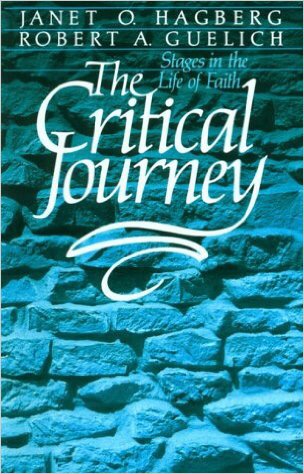
In making decisions currently, I have not asked where I am to be or what I am to do, but what it is that God is calling me to become. (p. 103, The Critical Journey: Stages in the Life of Faith)

Today’s blog and the following one will be based on thoughts from this book I’m finishing:

This quote resonated with me because it’s a question I’ve wandered in and out of over the past decade. It seems, as we go through stages/seasons of life, this would be a great question to keep in front of us. It’s very possible that the answer will change as we journey and grow.

So here is what I wrote in my journal on March 8 to answer the question, What is God Calling Me to Become:

  • A lover of all people
  • A helper to the wanderer
  • A friend to my colleagues
  • A present dweller
  • A faster forgiver
  • A questioner rather than a teller
  • A relaxed worker
  • A Spirit listener
  • A dependent child
  • A contented kingdom dweller

What is God Calling You to Become?

The Answer to Why

“For the thing I feared has overtaken me, and what I dreaded has happened to me. I cannot relax or be still; I have no rest, for trouble comes.” ‭‭

Those are some telling words at the end of Job 3.  It’s as if he is saying, “I knew this was going to happen.”  That’s a scary way to live. And that explains all his questions in this chapter as he cursed the day he was born. Understandably, he is very down, probably quite depressed. And who could blame him.

Seven of his questions start with the word “why.” When we find ourselves asking why, we most likely need to pause and ask ourselves why are we asking why. In his case, these two verses seem to give us the answer. What he feared has overtaken him, he is weary, he can’t relax. He wants to know why.

Is it possible that God allows these moments in life in order to redirect our fear back to him? 

  • When we lose that dream job?
  • When the “C” word is heard for the second or third time?
  • When she means it this time?
  • When the last shovel of dirt covers the casket?

Sounds cruel, maybe harsh, even unloving. Yet, by the end of this book, that is the realization Job has come to. His fear of God, his awe was restored as a result of this time in his life. His rest returned when he found the answer to why in the person of God.

Important Question #1

In chapter 9 of Awe, Tripp says there are two important questions to the child of God. The first one is, “What in the world is God doing right here, right now?”

Notice the question isn’t why is God allowing what is going on the world, nor is it how is God allowing what is happening to me. Those two questions, whether we like to admit it or not, turn the inquiry into worship of man rather than worship of God. Tripp suggests that our awe has been repositioned when we turn the question to focus on ourselves.

What a temptation. What natural questions. It goes against our spirit to not think how circumstances impact us directly. However, when we live life in that view, it can be extremely burdening. It’s a burden to have to understand all the whys of life. Freedom comes by changing the question from why and how to what. Focus is put back on God and away from feelings or even circumstances. When God is the object of the focus, hope is restored, faith is strengthened, and worship is realigned and unforgotten.

In these days of political uncertainty, try asking what is God doing.

In your days of family challenges, try asking what is God doing.

In your season of job insecurity, try asking what is God doing.

In the valley and on the mountaintop, in the winter and the summer, at the beginning of life and the end of life, protect your awe. Ask God what He is doing.

Entertainment or Service?

I heard a global ministry leader say this on a podcast (#5leadershipquestions) today:

A spiritual gift is not given for entertainment but for service.

When believers get that understanding of why God gave them what they have, then they are able to know better what to do with the gifts they have.

If you think your musical talent was given to you for applause, you will never fully achieve the service God intended.

If you pursue a teaching platform in order to draw bigger crowds to hear your great vocabulary or wit, the shallow foundation of your teaching ministry will eventually crumble.

If you use your hospitality gift to the max just for the pat on the back, your tank will run empty when the pats end.

Knowing your gifts is one thing. Knowing why you have them is quite another. Get there and the what question is much more easily answered.

How do you make sure your gifts are used for service and not entertainment? Leave a comment.