What is My Personal Creed?

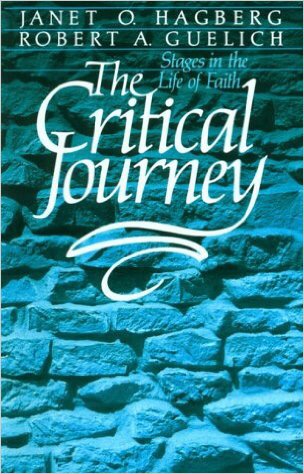
Reading this quote from The Critical Journey posed another question:

Usually people at this stage have been given a personal creed from God that guides their lives…a daily empowerment at a practical spiritual level…simple, intimate, and can extend to all people. Examples include: All will be well; God is enough; Love the Lord your God with all your heart and soul and mind; Be still and know that I am God; All is gift. (p. 210)

The question to me then was, what is my personal creed? My answer came quickly. My creed is an adaptation to the end of the Lord’s Prayer that I gleaned from reading a book on prayer. The creed is “Your will be done in my life as it is in heaven.”

Reading this quote again and writing down my creed, another thought occurred to me. Creeds certainly can come from Scripture, but it seems they could also come from songs that are scripture based. Lyrics are powerful and certainly can carry a person through a stage of life. So to further exemplify creeds, here are some of my “lyric creeds”:

  • “I want no regrets when the horses come for me.” -Margaret Becker
  • “Me without You is a lie.” -Avalon
  • “It’s your breath in my lungs…great are you, Lord.” -All Sons and Daughters
  • “I’m in awe of you…I owe all to you.” -Chris Tomlin
  • “You’re my hope.” -Danny Gokey
  • “My soul will sing your praise unending.” -Matt Redman
  • “Here I am, knees to the earth, here I am.” -Watermark
  • “I am a child of God.” -Bethel Music
  • “Be my heart’s obsession, first and only in my life. In your love alone my soul is satisfied.” -Elevation Worship

What are your scripture and/or lyric creeds?
What is God Calling Me to Become?

In making decisions currently, I have not asked where I am to be or what I am to do, but what it is that God is calling me to become. (p. 103, The Critical Journey: Stages in the Life of Faith)

Today’s blog and the following one will be based on thoughts from this book I’m finishing:

This quote resonated with me because it’s a question I’ve wandered in and out of over the past decade. It seems, as we go through stages/seasons of life, this would be a great question to keep in front of us. It’s very possible that the answer will change as we journey and grow.

So here is what I wrote in my journal on March 8 to answer the question, What is God Calling Me to Become:

  • A lover of all people
  • A helper to the wanderer
  • A friend to my colleagues
  • A present dweller
  • A faster forgiver
  • A questioner rather than a teller
  • A relaxed worker
  • A Spirit listener
  • A dependent child
  • A contented kingdom dweller

What is God Calling You to Become?

2 Love Questions

Unintentionally, I’ve read quite a bit on the subject of love in the last few weeks-more specifically, the impacts of love versus fear on one’s life-the good, the bad, the ugly. Guess which one produces the good?

Most of this reading was in Timothy Jenning’s book entitled The God-Shaped Brain. Jennings presents convincing psychological, neurological and biblical evidence of the rewards of receiving and giving the love of God. Then I read the last chapter entitled “Love is All We Need” in a coaching book, an assignment for a class. The coauthors trump the value of love for a healthy, well-lived, fruitful life.

I’ve been focusing on the discipline of journaling since the beginning of the year. As a response to these readings, I’ve let this subject of love be my jumping off spot this week. And I’ve unearthed a powerful exercise. It’s simple but thought provoking. If followed daily, it could change how each day is reviewed and how the next day is lived. The exercise includes answering the following two questions at the end of the day:

  • How did God show me his love today?

This could be in an answered prayer, through someone else’s actions, through my observation of nature, or through scripture reading and meditation.

  • How did I show his love today?

This is the more challenging question. If you are aware of the coming question, it should put you in the mindset that you want to have something to report. It doesn’t reflect well on receiving God’s love by not showing his love. This question has the potential of changing a day’s course for you and therefore for others.

Yesterday, a friend noted the good mentioned in a prayer that made them aware of God’s activity. Your focus on him, his love, his goodness will make a difference. Give these two love questions some thought and see how aware you can become of his love.

Refuge

But Boaz answered her, “All that you have done for your mother-in-law since the death of your husband has been fully told to me, and how you left your father and mother and your native land and came to a people that you did not know before. The Lord repay you for what you have done, and a full reward be given you by the Lord, the God of Israel, under whose wings you have come to take refuge!””‭‭ Ruth‬ ‭2:11-12‬ ‭ESV‬

By Ruth’s example we see where the best place of refuge is.

  • It’s not always with family.
  • It’s not always with comfort.
  • It’s not always with the expected.
  • It’s not always with what’s familiar.
  • It may involve sacrifice.
  • It may involve leaving it all behind.
  • It may involve ignoring the norm.

Under the wings of the God of Ruth we see where the best place of refuge is.

2016 Library

In some areas of my personal habits/disciplines, 2016 was a year of resurrection. Blogging was one. Another was reading. Neither have fully come back to previous stature, so it’s a work in progress.

From reader’s feedback, sharing what I’ve read has always been a source of numerous things for you, so as a look back at 2016 I thought I’d simply list my 2016 library for you. 

  • Leadership and Self-Deception, The Arbinger Institute
  • Awe, Paul David Tripp
  • Jesus and CEO, Laurie Beth Jones
  • Emotional Intelligence 2.0, Travis Bradberry
  • Breakfast with Bonhoeffer, Jon Walker
  • It Ain’t Over Till It’s Over, R.T. Kendall
  • Jesus and Mohammad, Mark A. Gabriel
  • How People Grow, Dr. Henry Cloud
  • The Essential Wooden, Steve Jamison
  • Tales from the St. Louis Cardinals Dugout, Bob Forsch
  • The Listening Life, Adam S. McHugh
  • The White Umbrella, Mary Frances Bowley
  • The Power of the Other, Dr. Henry Cloud
  • The Four Laws of Forgiveness, Brad Johnson
  • The Next Level, Scott Wilson
  • The Emotionally Healthy Leader, Peter Scazerro
  • The Prisoner in the Third Cell, Gene Edwards
  • Lincoln’s Melancholy, Joshua Wolf Shenk
  • The Allure of Gentleness, Dallas Willard

This list is in the order that I read them, no recommendations or endorsements. I did grow through their content. And enjoyed reading them all. 

Here’s to more enjoyable, growth-producing reading in 2017!

Do You Know Your Values? 

I just finished reading a chapter in a book (Becoming a Professional Life Coach) I’m reading for one of my coaching courses. The chapter was entitled “Steering Your Life by True North.”  The following statement sums up the chapter’s intent:

It’s impossible to lead a fulfilling life that does not honor or that is out of alignment with our core values.

This question then rises: do you know your core values?  To clarify, core values aren’t the things you think you should value. They may not even be the things you currently have chosen to value. Your core values are the qualities that when lived you are unashamed and satisfied with how you’re living life.

To help you identify your core values, here’s an exercise from the chapter:

Think back to the qualities you had as a child. List 5 to 10 qualities that were true of you between the ages of 6 and 12.

You’ve been naturally drawn towards certain things ever since you were a child, and some qualities were just naturally part of you. You may have been naturally creative or thoughtful, or a lover of nature or beauty. You may have been a natural helper of others or may have been drawn to things that were new or different. Or perhaps you were an experimenter or explorer. These qualities may be among your core values or may be clues to help you identify them.

Sit down and quickly list 5 to 10 of these qualities right now. Circle all of those qualities that are still a part of your life and that come naturally to you. Include anything you would be and do if your work, time, and life supported you in fulfilling them. Also include things that people cannot stop you from doing.

May you know your core values! May you know your true north!

Identity

Inspired by a few observations and conversations lately, I’ve been thinking about identity. By identity, I’m specifically thinking about how we find our worth, and also how we keep in mind who we are based on our understanding of who God is and how he sees us.

Today I flew home from a trip to Detroit. One observation I had on the plane today was of a man one row up from me. I’m guessing he was at least 75 years old. I was first drawn to him because I was trying to figure out where the smell of peanut M&Ms was coming from. Busted. But then I noticed something much more intriguing.

He was reading a book. The side of the book I could see was being held open by some type of clamp, something I hadn’t seen before. Being a reader, I thought it was maybe some type of gadget to help you keep your place. As I looked closer, the reality became clear. It was the end of a prosthetic.
As I watched this man, I saw further that his right hand appeared to be writhed by arthritis. This man had a lot going on. Yes, he was an amputee. But he was more than that. I saw that he was a reader, a lone traveler, a mobile device user, and a candy lover.

I wondered what his story was. How did he lose his limb? Was he a vet? Had he been a contractor who suffered a career-ending accident? Did he keep working regardless and now was enjoying retirement in Florida? Was he a survivor of a disease? Does he identify himself mostly as an amputee? Had it been so long ago that he’s lived longer with the prosthetic than without it? What was the basis of identity for this gentleman?

What should be the basis of anyone’s identity? 

  • What we do to make money? 
  • What we do to enjoy life? 
  • Who we know? 
  • What has happened in our life? 
  • What we hope to happen in our life?

I believe true identity is rooted in seeing ourselves as God sees us. He sees us as good creations, as males and females made in his image. Despite our choosing to reject him, he sees us as forgivable. Despite our replacing him with other gods, he sees us as worth waiting for when we return after those gods fail us. Bottom line: God sees us. He cares if we have a job or not, if we have all our limbs or not, if we love candy or not. Regardless, he sees us. Truly sees us. That’s all we really need to know in order to answer any questions about our identity.

Thank you, fellow traveler, for reminding me that we all have a story. We all have an identity. When seen as recipients of our Creator’s gift of life, we never truly have to wonder who we are. We can know that we are loved and forgiven, seen and known, observed and accepted. That’s a great identity.

The Emotionally Healthy Leader: Suggested Reading

Most likely, you haven’t read a leadership book like Peter Scazzero’s. That should tell you something.

Most likely, you haven’t considered how keeping Sabbath could make you a healthier leader. That should tell you something.

Most likely, you’ve never been told to “face your shadow.” That should tell you something.

Most likely, you’ve not fully considered how to lead out of your marriage or singleness. That should tell you something.

Most likely, you think this book isn’t for you. That should tell you something.

What if God Doesn’t Meet My Expectations?


In his book The Prisoner in the Third Cell, Gene Edwards makes you face this question. That’s a good thing. Why? Because all of mankind has silently or openly asked it but not all have dared to stop and determine their answer.

Edwards makes you face this question by telling the story of John the Baptist. His was definitely a unique life. And at the end of it, he had questions that we can’t be certain he found satisfactory answers before his life was disregardly taken.

Other biblical characters faced the same challenge-Joseph, Job, Peter, Elijah, Ruth, Mary, Noah, Jonah, John, to name a few. Some of these were graciously granted a resurrected view of God before they died, but even that cannot be guaranteed to anyone who places their faith in God.

And therein is the core of the question. How deep is your faith? When your finite expectations are tested by an infinite God, what do you do? Will you continue to follow? If you want to be challenged to meditate further on these questions, this book is a good resource. If you can’t answer yes to the blog title question, this book should be in your next-to-read pile.

Indifference: Get Some

My goal in preparing my heart for planning and decision making is to remain in a state Ignatius of Loyola referred to as indifference. By indifference, he does not mean apathy or disinterest. He simply means we must become indifferent to anything but the will of God. Ignatius taught that the degree to which we are open to any outcome or answer from God is the degree to which we are ready to really hear what God has to say. If we are clutching or overly attached to one outcome versus another, we won’t hear God clearly. Our spiritual ears will be deafened by the racket of our disordered loves, fears, and attachments. In such a state, it is almost a forgone conclusion that we will confuse our will with God’s will. Ignatius considered this state of indifference to be spiritual freedom. If we are truly free, he argued, we wouldn’t worry about whether we are healthy or sick, rich or poor. It shouldn’t even matter whether we have a long life or a short one…Arriving at this place of interior indifference and trusting that God’s will is good — no matter the outcome — is no small task. We are attached to all kinds of secondary things — titles, positions, honors, places, persons, security, and the opinions of others. When these attachments are excessive, they become disordered attachments, or disordered loves, that push God out of the center of our life and become core to our identity. (The Emotionally Healthy Leader, Peter Scazzero, p195-196)

With this definition of indifference, here are some practical questions to test your indifference:

  1. If you’re unmarried, are you indifferent towards God’s marital plans for you?
  2. If you’re a parent, are you indifferent to God’s future for your children?
  3. If you’re a leader, are you indifferent to God’s vision for your business/ministry/home?
  4. If you’re close to retiring, are you indifferent to God’s next for you?
  5. If you’re in high school or college, are you indifferent to God’s career path for you?
  6. If you’re employed, are you indifferent to waiting on God for a promotion, recognition, or pay increase?
  7. If you’re unemployed, are you indifferent to God’s timing?
  8. If you’re unhappy, are you indifferent to what God offers as the way to joy?

If you don’t have indifference, what would it take to get some?